.png)


DGD Full Form: Meaning And Use In Export Shipments

Optimize your business: use unlimited savings with Pazago fulfilled now!
Get Started ->Ever had a shipment held up because it was flagged as “dangerous goods” at the last moment? For many exporters, confusion around hazardous cargo often begins with not fully understanding the DGD and its requirements.
Dangerous goods aren’t rare exceptions. Everyday export items like chemicals, batteries, aerosols, or samples can fall into this category. One small mistake, a missing declaration, or unclear responsibility can lead to penalties, rejections, or missed sailings. So how can you stay compliant while avoiding last-minute surprises?
This blog breaks down everything you need to know about the DGD full form, from who’s responsible to common mistakes and real-world consequences. If you export regularly, this guide will give you the clarity needed before your next shipment moves.
Key Takeaways:
- DGD full form stands for Dangerous Goods Declaration, a critical document for safe hazardous goods transport.
- The shipper is responsible for accurately completing the DGD before shipment to ensure compliance and safety.
- A DGD form requires details like UN number, proper shipping name, packing group, quantity, and emergency contacts.
- Filling the DGD correctly involves documenting shipment, transport, packaging, handling instructions, and obtaining an authorised signature.
- Failing to declare dangerous goods can lead to fines, operational disruptions, and severe safety risks during transit.
What Is A Dangerous Goods Declaration (DGD)?

The DGD full form stands for Dangerous Goods Declaration, a mandatory document used in international exports involving hazardous materials. It formally informs carriers and authorities that a shipment contains regulated dangerous goods and needs special handling.
As an exporter, you use this declaration to inform carriers and logistics partners about the nature, quantity, and safety requirements of the goods. A correctly filled DGD ensures safe movement and regulatory compliance across international borders.
Examples of Goods That Require a DGD:
Once you know what qualifies as dangerous goods, the next step is understanding why declaring them correctly matters so much.
Also Read: Affordable Export Documentation Services for All Trade Needs
Why Is A Dangerous Goods Declaration Important?

The DGD plays a central role in keeping export operations safe, compliant, and predictable. For Indian exporters handling global shipments, its importance goes beyond paperwork.
- Ensures transport safety: Clear details help carriers handle, store, and move hazardous cargo without putting people or equipment at risk.
- Meets legal requirements: International regulations such as IATA Dangerous Goods Regulations (for air transport) and the IMDG Code (for sea transport) require a valid Dangerous Goods Declaration.
- Prevents shipment holds: Accurate declarations reduce inspections, rejections, and delays at ports and airports.
- Builds carrier trust: Freight partners rely on DGDs to accept and plan hazardous cargo responsibly.
- Protects your business: Proper declarations lower the risk of penalties, liability claims, and shipment returns.
Without a valid DGD, dangerous goods cannot move legally across borders. So, when exactly does this declaration become mandatory? Let’s see.
When Do You Need A Dangerous Goods Declaration?

You need a Dangerous Goods Declaration whenever your shipment includes items classified as hazardous. This applies across air, sea, and multimodal export movements.
A DGD is required in the following situations:
- When exporting hazardous materials by air, sea, or combined transport.
- When goods fall under regulated dangerous goods classifications, regardless of shipment value.
- When shipping lithium batteries, chemicals, gases, or regulated industrial materials.
- When destination country regulations demand formal hazard disclosure.
Some limited exceptions may apply for small quantities or specific packaging conditions. However, even exempt shipments often require alternative markings or supporting documents.
Missing a required DGD can result in shipment delays, fines, or rejected cargo. That risk makes it essential to clearly assign responsibility for preparing this document.
Who Is Responsible For Completing The DGD?

The responsibility for completing the Dangerous Goods Declaration always rests with the shipper. As an exporter, you are legally accountable for the accuracy and completeness of the declaration.
In practise, this responsibility often involves coordination. Here’s how responsibility typically breaks down:
- Shipper or consignor: Ultimately responsible for the correctness of the declaration and its submission.
- Trained personnel: Only individuals trained in hazardous materials regulations should prepare or authorise the DGD.
- Freight forwarders: May assist with checks, formatting, and regulatory guidance, but they do not assume liability.
Accountability sets the foundation. Accuracy comes next, starting with the information captured in the DGD.
What Details Are Required In A DGD Form?

At first glance, a Dangerous Goods Declaration may seem simple, but every field carries critical legal and safety importance for exporters shipping hazardous goods.
The DGD is divided into two broad sections. The first captures shipment and transport details, while the second focuses on the dangerous goods themselves.
When these details are clear, the declaration becomes easier to prepare consistently.
Also Read: Form Guides For Shipper's Declaration Of Non-Dangerous Goods
Step-by-Step Overview Of The DGD Process
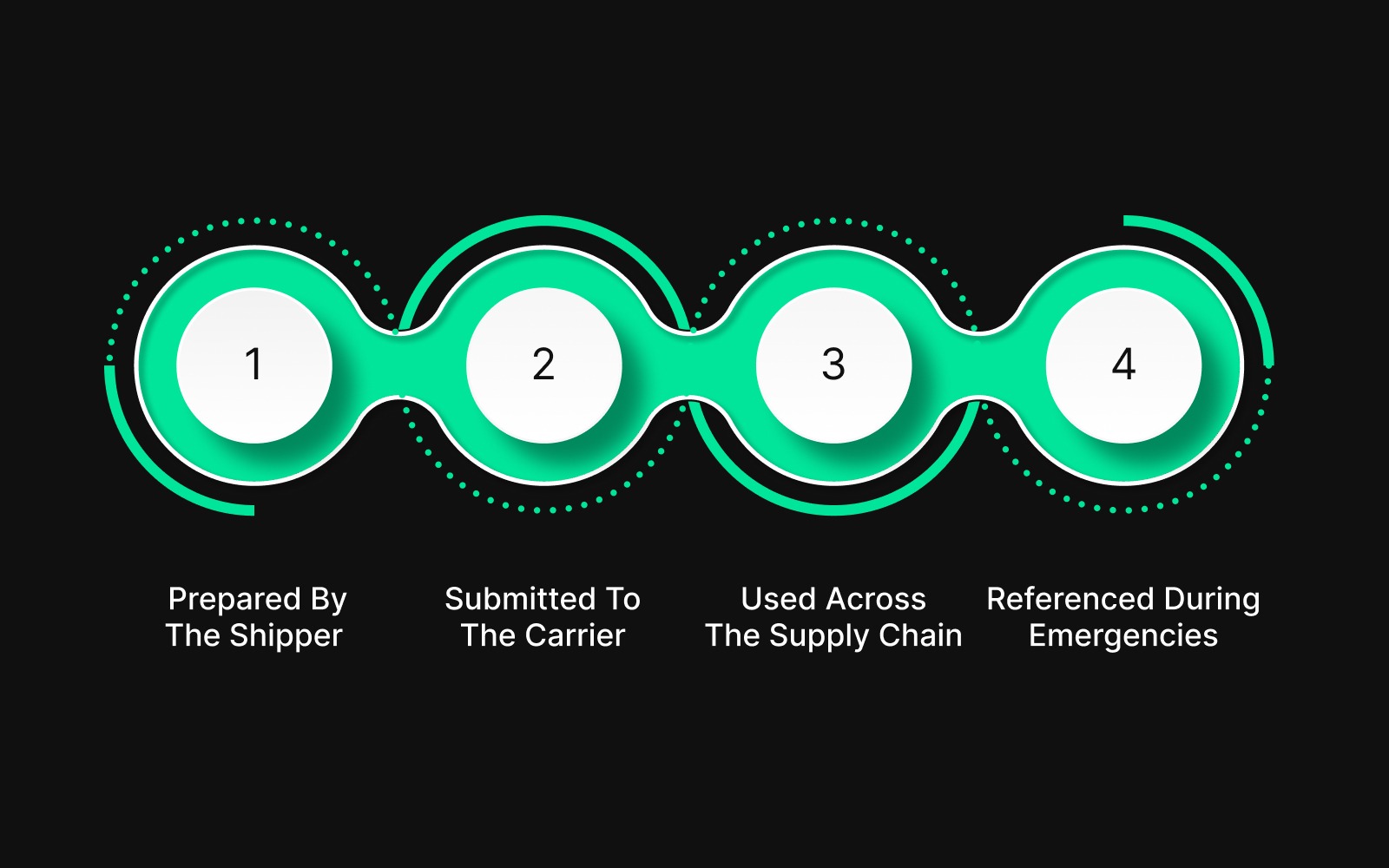
A Dangerous Goods Declaration follows a defined journey from preparation to final delivery. Understanding this flow helps you avoid last-minute corrections.
Stage 1: Prepared By The Shipper
- You classify the dangerous goods based on recognised regulations.
- You ensure correct packaging, labelling, and quantity limits.
- The DGD is completed, reviewed, and signed by an authorised person.
Stage 2: Submitted To The Carrier
- The declaration is shared with the airline, shipping line, or transporter.
- Carriers verify compliance before accepting the shipment.
- Handling, stowage, and segregation decisions rely on this document.
Stage 3: Used Across The Supply Chain
- Ports, terminals, and inspection teams refer to the DGD.
- Different rules apply for air, sea, or road transport.
- The document supports audits, checks, and regulatory reviews.
Stage 4: Referenced During Emergencies
- Emergency responders use the DGD to identify risks quickly.
- It guides safe response actions during spills or accidents.
- Clear information reduces harm to people and infrastructure.
With the process in mind, the next challenge is execution. Let's see how you can fill out the declaration without missing key details.
How Do You Fill A Dangerous Goods Declaration Correctly?

Filling a DGD is about structure, not complexity. When you follow the right sequence, the procedure becomes manageable even during busy export cycles.
Start With Shipper and Consignee Details
Confirm full legal names and addresses for both exporter and buyer. These details establish responsibility and shipment traceability.
Add Transport References
Link the declaration to the correct air waybill or bill of lading. This connection ensures the DGD always stays attached to the shipment.
Enter the Proper Shipping Description
This section requires the most attention and must follow a strict order:
- UN number and proper shipping name
- Hazard class and subsidiary risks, if any
- Packing group and packing instructions
- Quantity and type of packaging
Include Supporting and Safety Information
Add any flash points, marine pollutant declarations, or special handling instructions. Provide a valid emergency contact number where required.
Complete the Shipper’s Certification
Finish with the compliance statement, your name in capital letters, signature or electronic authorisation, and the declaration date.
Example Of A Filled Shipper’s Declaration
Below is a simplified example to show how a DGD may look in practise:
- Shipper: Sunrise Pharma Exports Pvt. Ltd., Hyderabad, India
- Consignee: MedCore Supplies LLC, Dubai, UAE
- Transport Details: Flight AI 981, Airport of Departure – Hyderabad, Airport of Destination – Dubai
- Proper Shipping Name: Ethanol Solution
- UN Number: UN 1170
- Class: 3 (Flammable Liquid)
- Packing Group: II
- Quantity and Packaging: 40 cartons × 5-litre UN-approved containers
- Handling Information: Keep away from heat sources. Store in well-ventilated conditions.
- Declaration Statement: Certification confirming accurate description, compliant packaging, and regulatory adherence
- Name and Signature: Authorised Export Officer, Sunrise Pharma Exports Pvt. Ltd.
- Date: 12 September 2025
This example shows how each field works together to present a complete, compliant declaration. However, even with a clear example, real issues often arise from small oversights during execution.
Common Mistakes To Avoid In DGD

Most DGD issues do not come from lack of intent, but from rushed preparation or outdated information. These mistakes may seem minor, yet they often trigger inspections or shipment rejections.
Avoiding these mistakes can help prevent delays and penalties:
- Listing the shipping description in the wrong regulatory order.
- Using outdated or incorrect UN numbers.
- Missing or incorrect packing group details.
- Forgetting to sign or date the declaration.
- Leaving out the emergency contact number.
- Using packaging that does not meet regulatory standards.
Maintaining consistency across orders, packaging, and documents reduces these risks. Centralised order and document records help exporters avoid repeating avoidable mistakes.
Also Read: Best Practices for Customs Documentation and Labeling for International Shipments
What Happens If You Don't Declare Dangerous Goods?

Skipping a Dangerous Goods Declaration can feel like a shortcut under pressure. In reality, it exposes your export business to serious operational and legal risks.
- Safety and Risk Exposure: Undeclared hazardous materials can leak, ignite, or react during transit. This puts transport staff, cargo, and infrastructure at immediate risk.
- Regulatory and Financial Penalties: Authorities can impose heavy fines, initiate investigations, or take legal action. These penalties apply even when non-compliance was unintentional.
- Operational Disruptions: Shipments may be detained, inspected, or returned to origin. Carriers may also suspend your booking privileges after repeated violations.
- Business and Reputation Impact: Buyers lose confidence when deliveries are delayed or rejected due to compliance issues. Over time, this can affect contracts and long-term relationships.
Strengthen Dangerous Goods Shipment Execution with Pazago
Dangerous goods shipments demand disciplined coordination from booking through vessel departure. Even when the DGD is accurate, gaps in freight booking, container allocation, or shipment updates can interrupt movement and increase exposure to penalties. Execution stability at this stage determines whether a compliant shipment actually sails as scheduled.
Pazago reinforces this execution layer by focusing on freight reliability and structured coordination across international movements. Exporters handling regulated cargo benefit from:
- Assured container booking and coordinated loading at factory, CFS, or port, reducing rollover risk for regulated shipments.
- Comprehensive pre-shipment and post-shipment support to align booking details, BL processes, and shipment clarifications tied to declared goods.
- Daily Status Reports (DSRs) covering container movement, ETD/ETA updates, transshipment alerts, and BL status for consistent visibility.
- Competitive freight rates secured through long-term shipping line relationships, supporting predictable cost planning even for regulated cargo movements.
- Equal operational support regardless of shipment volume, ensuring consistent handling standards across all dangerous goods consignments.
By reinforcing booking discipline, shipment monitoring, and carrier coordination, Pazago helps exporters maintain control over hazardous cargo movements without last-minute execution gaps.
Conclusion
Dangerous Goods Declarations are a core compliance requirement for hazardous exports. Accuracy in classification and documentation protects your shipment from rejection, penalties, and safety risks during transit.
However, documentation alone does not guarantee smooth movement. Stable freight execution, confirmed container bookings, and consistent shipment visibility determine whether declared cargo moves on time. Pazago strengthens this operational layer, helping exporters maintain shipment stability across regulated movements.
FAQs
Q. What is a DGD certificate?
A DGD certificate is a formal declaration stating that a shipment contains dangerous goods and meets transport safety rules. It confirms proper classification, packaging, and handling details for carriers and authorities.
Q. What is the difference between IMO and DGD?
IMO refers to the maritime regulations under the IMDG Code, while a DGD is the actual declaration document. The DGD follows IMO rules for sea shipments and IATA rules for air cargo.
Q. Can a shipment be rejected if a DGD is incorrect or missing?
Yes, carriers can refuse the shipment if the DGD is incomplete, inaccurate, or missing. This often leads to delays, extra charges, and re-documentation.
Q. How do carriers verify dangerous goods classifications?
Carriers cross-check the DGD against IATA or IMDG rules, packaging labels, and shipment markings. They may also conduct document reviews or physical inspections before accepting the cargo.