.png)


How to Export from India: Complete Guide for MSMEs and Businesses

Optimize your business: use unlimited savings with Pazago fulfilled now!
Get Started ->Exporting from India offers major opportunities for MSMEs and growing businesses looking to reach international markets. However, the process involves multiple steps, including legal registrations, documentation, logistics coordination, payment management, and compliance with export regulations.
Understanding how these elements work together is essential for avoiding shipment delays, payment risks, and regulatory issues.
India's export landscape offers tremendous potential. With merchandise exports at USD 437.42 billion in FY 2024-25 and government schemes like RoDTEP and the Foreign Trade Policy 2023 actively supporting exporters, the opportunity is real. But here's the catch: most Indian exporters struggle not with finding buyers or producing quality goods, but with managing the operational chaos that comes with documentation, logistics, payments, and compliance.
This guide walks you through everything you need to know about how to export from India efficiently, from legal setup and documentation to logistics coordination and payment management. More importantly, it shows you how modern solutions can transform your export operations from scattered chaos into streamlined systems.
Key Takeaways
- India's merchandise exports reached USD 437.42 billion in FY 2024-25, presenting massive opportunities for Indian exporters with the right operational systems.
- The Import Export Code (IEC), GST registration, and RCMC are mandatory legal requirements to start exporting from India and claim benefits.
- Export documentation, commercial invoice, packing list, Bill of Lading, certificate of origin, and shipping bill, forms the backbone of every export transaction.
- Payment methods like Letters of Credit, advance payment, and Documents Against Payment each offer different risk-security balances for exporters.
- Structured export management systems help businesses organise documentation, coordinate logistics activities, and maintain shipment visibility across the export lifecycle.
Why Export from India Right Now
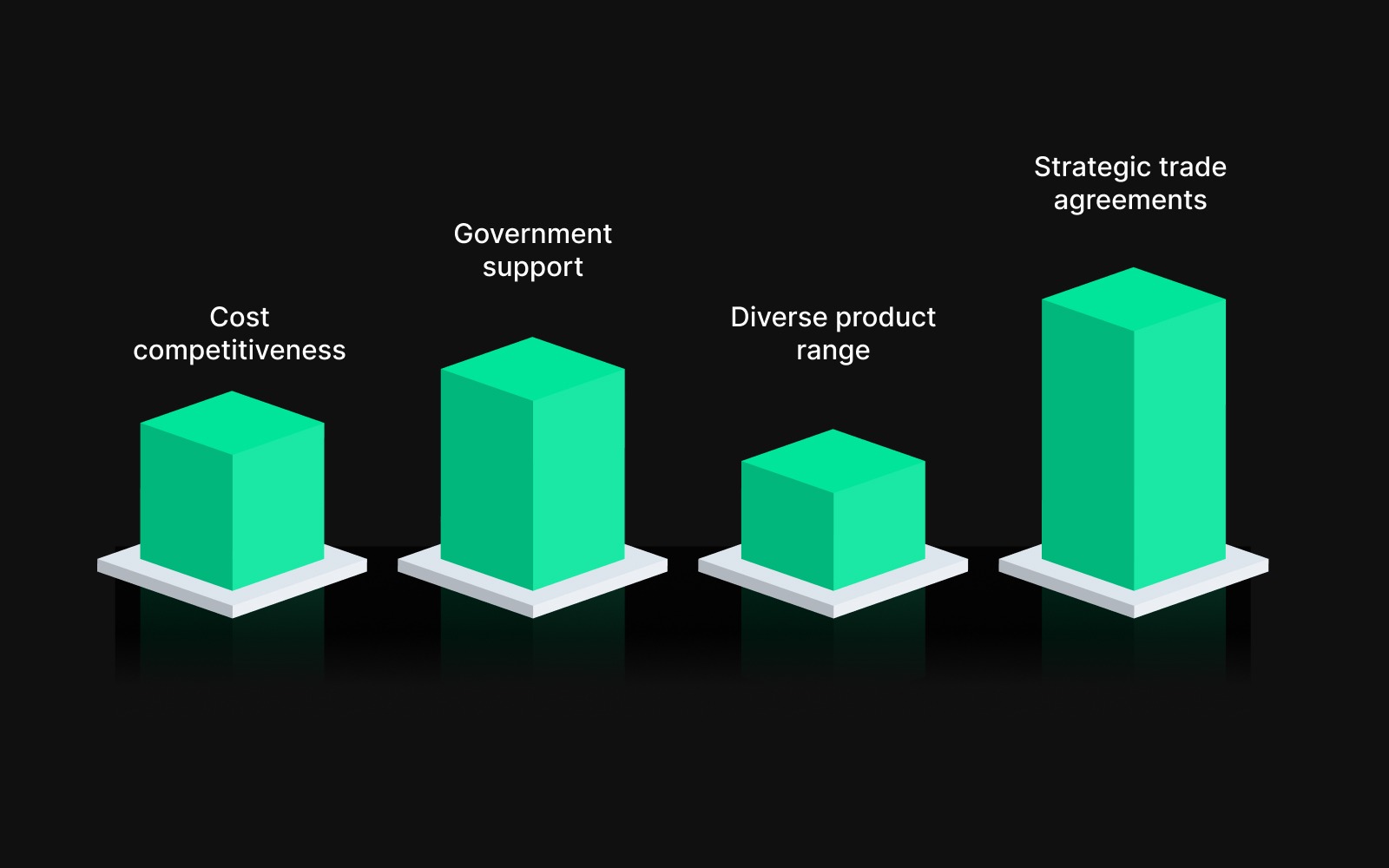
India's export ecosystem is experiencing significant momentum. The government's push towards making India a global manufacturing hub, combined with cost-effective production and a skilled workforce, positions Indian exporters competitively in international markets.
Indian exporters enjoy several distinct advantages when they export from India:
- Cost competitiveness: Labour and production costs remain lower compared to many developed economies, giving you pricing power in international markets.
- Government support: Export incentives such as RoDTEP, Advance Authorisation, and duty drawback schemes help reduce export costs and improve competitiveness in international markets.
- Diverse product range: From textiles and pharmaceuticals to engineering goods and IT services, India exports across multiple high-demand sectors.
- Strategic trade agreements: India's free trade agreements with countries in ASEAN, Europe, and the Middle East provide preferential tariff access, lowering import duties for your buyers.
However, these advantages mean little if you can't navigate the operational complexities efficiently. Let's look at what you actually need to get started.
Must Read: Your Step-by-Step Guide to Exporting from India
Legal Requirements to Export from India

Before you can ship your first container, you need to establish your legal foundation. Missing even one registration can halt your shipments at customs or block your payments.
Import Export Code (IEC)
The IEC is non-negotiable. Issued by the Directorate General of Foreign Trade (DGFT), this 10-digit code is your passport to international trade.
Without an IEC, you cannot clear goods through customs, receive foreign payments, claim export benefits, or open Letters of Credit. Applying requires your PAN card, Aadhaar, bank details, and business registration documents. The process typically takes 5-7 working days through the DGFT online portal.
GST Registration and RCMC
GST registration is mandatory for exporters. Your GST number appears on every commercial invoice and is essential for claiming GST refunds on exported goods. Exports are zero-rated under GST, meaning you don't pay GST but can claim refunds on input taxes.
The Registration-Cum-Membership Certificate (RCMC) is issued by Export Promotion Councils relevant to your industry. RCMC provides access to government export incentive schemes, trade fairs, market intelligence, and duty drawback benefits. Most incentive claims require a valid RCMC.
Product-Specific Licences
Certain products require specific export licences. Pharmaceuticals need Drug Controller approval. Electronics may need BIS certification. Chemicals often require clearances from the Ministry of Commerce. Research your product's HS code and check the DGFT's restricted items list to prevent last-minute compliance issues.
Also Read: Import and Export Procedure: A Complete Guide
Essential Documentation to Export from India
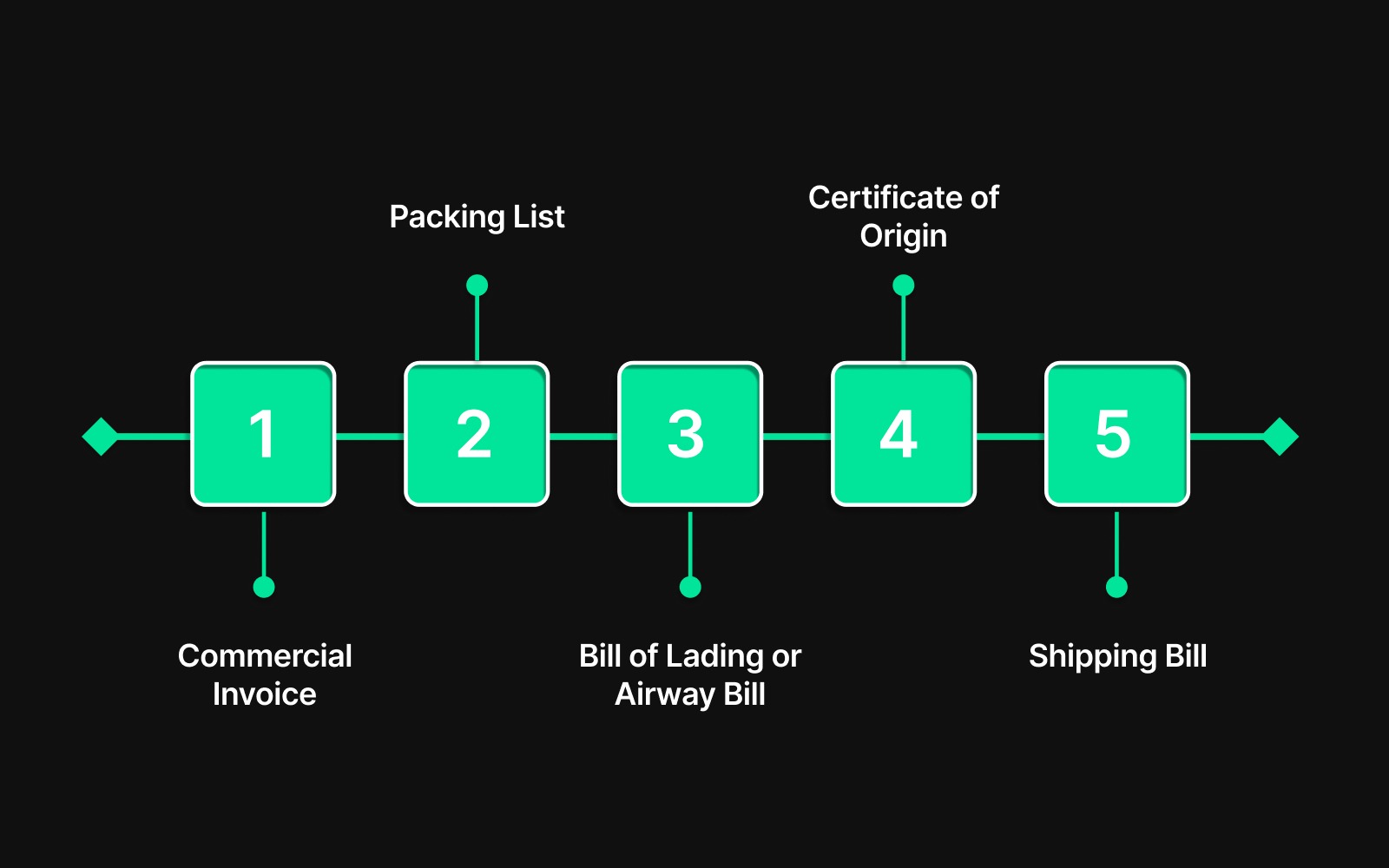
Documentation forms the backbone of every export transaction. Errors here cause customs delays, payment disputes, and costly penalties.
Commercial Invoice
Your commercial invoice is the single most important document when you export from India. It outlines the sale agreement between you and your buyer, detailing product descriptions, quantities, prices, and payment terms.
Every commercial invoice must include your complete business details with IEC and GST numbers, buyer's complete details, product descriptions with HS codes, unit prices and total invoice value, currency of transaction, payment terms (FOB, CIF, CFR), and port information.
Customs authorities scrutinise this document first. Any discrepancy between your commercial invoice and other shipping documents can trigger inspections and delays.
Must Read: Creating a Commercial Invoice and Packing List for International Export
Packing List
The packing list provides a detailed breakdown of your shipment's contents. Include number of packages, dimensions and weight of each package, gross and net weight, package markings, and contents of each package.
Customs officers and logistics teams use this to verify your shipment matches your declarations. Ensure your packing list aligns perfectly with your commercial invoice.
Bill of Lading or Airway Bill
The Bill of Lading (for sea freight) or Airway Bill (for air freight) is your proof of shipment. It serves as receipt of goods by the carrier, contract of carriage, and document of title.
There are two types: Straight Bill of Lading (non-negotiable) and Negotiable Bill of Lading (can be endorsed and transferred, commonly used with Letters of Credit).
Never release the original Bill of Lading to your buyer until payment is confirmed, unless you're working on open account terms with established trust.
Also Read: Understanding Essential Import & Export Delivery Documents
Certificate of Origin
The Certificate of Origin certifies where your goods were manufactured. This document is crucial for claiming preferential tariff rates under free trade agreements.
If you export from India to the EU under trade agreements, the Certificate of Origin helps your buyer claim reduced import duties, making your pricing more competitive. Apply through your local Chamber of Commerce or Export Promotion Council (typically 2-3 working days).
Shipping Bill
The shipping bill is your customs declaration. It contains complete details of your export shipment and must be filed electronically through the ICEGATE portal.
Types include Free Shipping Bill (for claiming duty drawback), Dutiable Shipping Bill (when export duty applies), Drawback Shipping Bill (for customs duty refund), and DEPB Shipping Bill (for Duty Entitlement Passbook scheme).
Filing is usually handled by your customs broker, but you're responsible for ensuring all information is accurate.
Must Read: Essential Documents Required for Smooth Import-Export Customs Clearance
Choosing the Right Logistics Solution
Logistics can make or break your export margins. Choosing between air, sea, or land transport depends on your product characteristics, buyer requirements, and cost considerations.
Sea Freight
Sea freight is the most cost-effective option for bulkier, heavier shipments where delivery time is flexible. Approximately 90% of global trade moves by sea.
Use sea freight for large volume shipments, non-perishable goods, products with longer shelf life, and when buyer delivery timelines allow 20-40 days transit.
Container options include 20-foot containers (TEU) for 10-12 tonnes, 40-foot containers (FEU) for 20-25 tonnes, and high cube containers for lightweight, bulky items.
Sea freight rates fluctuate based on global fuel prices, container availability, and seasonal demand. Lock in rates during negotiations and factor in potential surcharges.
Air Freight
Air freight suits time-sensitive, high-value, or perishable shipments. While significantly more expensive than sea freight, it drastically reduces transit time.
Use air freight for perishable goods (flowers, seafood, pharmaceuticals), high-value electronics or jewellery, urgent orders or just-in-time deliveries, and sample shipments.
Air freight is charged by either actual weight or volumetric weight, whichever is higher. Calculate volumetric weight by multiplying length x width x height (in cm) and dividing by 6000.
Land Transport
For exports to neighbouring countries like Bangladesh, Nepal, Sri Lanka, and Pakistan, land transport via road or rail is often the most practical option.
Border customs clearance requires additional documentation and coordination with customs officials at land customs stations. Work with experienced logistics partners familiar with specific border procedures.
Managing Payments When You Export from India
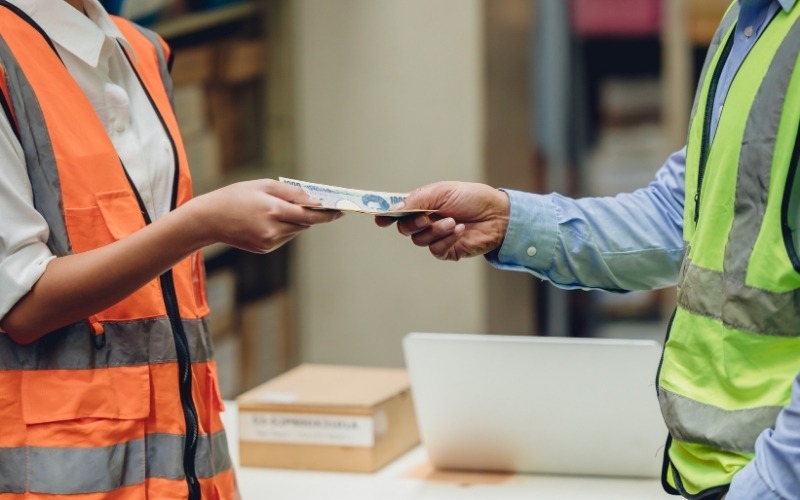
Payment risk is one of the biggest concerns for exporters. Choosing the right payment method balances security with competitiveness.
Advance Payment
The buyer pays 100% upfront before you ship the goods. This eliminates payment risk entirely but is typically only accepted by buyers with urgent requirements or when purchasing from established suppliers.
Letter of Credit (LC)
A Letter of Credit is a bank guarantee where the buyer's bank promises to pay you once you present compliant shipping documents. This offers strong protection for both parties.
The LC process works like this: buyer and seller agree on LC terms, buyer's bank issues the LC in your favour, you ship goods and submit documents to your bank, your bank verifies documents and sends them to buyer's bank, and buyer's bank releases payment if documents are compliant.
LCs provide excellent security but come with bank charges (typically 0.5-1.5% of invoice value) and require meticulous documentation. One discrepancy can delay payment significantly.
Must Read: What Is Letter Of Credit In Export Import Business?
Documents Against Payment (DP) or Documents Against Acceptance (DA)
Under DP terms, you ship goods and send documents through banking channels. The buyer can only receive documents upon payment.
DA terms allow the buyer to receive documents against accepting a bill of exchange, with payment due at a future date (30, 60, or 90 days).
These methods offer moderate risk protection and lower costs than LCs.
Open Account
The buyer pays after receiving goods, typically within 30-90 days. This is the most competitive payment term from the buyer's perspective but carries maximum risk for you.
Only offer open account terms to buyers with established payment history, large creditworthy companies, or markets with strong legal frameworks for debt recovery.
Consider export credit insurance from ECGC (Export Credit Guarantee Corporation) to protect against buyer default on open account transactions.
Common Challenges When You Export from India
Even experienced exporters face recurring operational challenges. Understanding these helps you build preventive systems.
Documentation Errors
A single typo in your commercial invoice or Bill of Lading can delay clearance for days. Discrepancies between documents trigger customs queries and bank payment rejections.
Use standardised templates for all documents. Implement a multi-level review process where at least two people verify details before submission.
Customs Clearance Delays
Customs delays occur due to missing documents, incorrect HS code classifications, or physical examination of goods. Each day of delay at port incurs demurrage charges.
Work with experienced customs brokers who understand product-specific requirements. File all documents accurately and well before the shipment arrives at the port.
Also Read: Understanding the Process of Customs Clearance in Shipment
Payment Delays and Currency Fluctuations
Delayed payments from buyers affect your cash flow, especially if you've offered credit terms. Currency fluctuations between order confirmation and payment can erode margins significantly.
Use forward contracts to lock in exchange rates for future receivables. Consider trade finance options like invoice discounting to improve cash flow while waiting for buyer payments.
Logistics Coordination
Coordinating between manufacturers, freight forwarders, customs brokers, and buyers across different time zones creates communication gaps. Missing one update can delay your entire shipment schedule.
Centralise communication through a single platform where all stakeholders have visibility into shipment status, documentation requirements, and timelines.
Compliance with Changing Regulations
Export regulations, tariff rates, and documentation requirements change frequently. Missing an update can result in non-compliance penalties or lost shipment opportunities.
Subscribe to DGFT notifications and join relevant Export Promotion Councils for timely regulatory updates. Maintain relationships with customs consultants for guidance on complex changes.
Step-by-Step Process to Export from India
Let's walk through the complete export process from order confirmation to final payment.
Step 1: Confirm Export Order
Finalise product specifications, quantities, pricing, and delivery terms with your buyer. Issue a pro forma invoice outlining all terms of sale.
Agree on payment terms, Incoterms (FOB, CIF, CFR), and delivery schedule. Get written confirmation from the buyer before proceeding.
Step 2: Arrange Finance (If Required)
If you need working capital to fulfil the order, approach banks for pre-shipment finance options like packing credit. This helps fund raw material purchases and production costs.
For post-shipment finance, consider export bill discounting where banks advance payment against export documents while waiting for buyer payment.
Step 3: Production and Quality Check
Manufacture goods according to buyer specifications. Conduct quality inspections before packing to ensure products meet agreed standards.
For certain markets or products, third-party quality inspections may be required. Schedule these inspections before final packing.
Step 4: Obtain Export Licences (If Required)
If your product requires an export licence, apply through DGFT with all necessary documents. This can take 7-15 days, so plan accordingly.
Step 5: Packaging and Labelling
Pack goods securely based on the mode of transport. Sea freight requires moisture-resistant packaging, while air freight needs lightweight packaging.
Label packages clearly with buyer's name and address, port of destination, package numbers and gross weight, and handling instructions (fragile, this side up, etc.).
Step 6: Arrange Transport and Insurance
Book freight with your chosen shipping line or airline through a freight forwarder. Provide accurate cargo details for proper space allocation.
Purchase marine insurance or cargo insurance to protect against loss or damage during transit. The cost is typically 0.5-1% of cargo value.
Step 7: Prepare Export Documents
Generate all required documents: commercial invoice, packing list, shipping bill, certificate of origin, and any buyer-specific certificates.
Triple-check all documents for accuracy, especially buyer details, product descriptions, and values. Inconsistencies cause payment delays and customs issues.
Must Read: 10 Required Pre-Shipment Documents for Export Procedure and Shipping Process
Step 8: Customs Clearance
Submit the shipping bill through ICEGATE portal along with supporting documents. Your customs broker coordinates with customs officers for examination and clearance.
Pay applicable duties (if any) and obtain the "Let Export" order. Once cleared, goods can be moved to the port or airport.
Step 9: Cargo Handover
Transport goods to the port or airport and hand them over to the carrier. Collect the Bill of Lading or Airway Bill as proof of shipment.
Ensure the Bill of Lading matches your shipping bill and commercial invoice exactly. Discrepancies create problems later.
Step 10: Submit Documents to Buyer or Bank
For LC transactions, submit documents to your bank within the LC's validity period. For DP/DA terms, send documents through banking channels.
For open account terms, courier documents directly to the buyer while retaining copies for your records.
Step 11: Follow Up on Payment
Track payment timelines based on agreed terms. Send payment reminders if needed and follow up proactively.
Once payment is received, reconcile it against the invoice considering exchange rate differences and bank charges.
Step 12: Claim Export Benefits
Apply for export incentives like RoDTEP or duty drawback through the ICEGATE portal. Submit required documents including shipping bill, bank realisation certificate, and export documents.
Processing times for incentive claims vary from 30-90 days. Track your applications and follow up on delays.
While following these steps provides the legal framework for your trade, the difference between a stalled shipment and a successful delivery lies in the precision of your logistics execution.
How Pazago Powers Professional Export Execution?
Pazago helps exporters coordinate freight planning, container bookings, and shipment visibility across international trade routes, helping teams manage export logistics more predictably.
With transparent pricing and reliable support, Pazago helps Indian MSMEs execute their global trade operations efficiently.
- Competitive Freight Rates: Access stable and transparent pricing through an extensive network of shipping line partnerships, protecting your margins from sudden market spikes.
- Daily DSRs for Total Visibility: Stay ahead of disruptions with automated Daily Status Reports (DSRs) that track every milestone, providing total clarity for you and your buyers.
- Assured Container Bookings: Eliminate the uncertainty of rolled cargo with reliable equipment allocation and synchronized loading at factories or ports.
- Support for All Exporter Sizes: Whether you are managing your first LCL shipment or a high-volume enterprise operation, benefit from dedicated service and clear, upfront costs.
By aligning your export process with a professional logistics strategy, you minimize compliance risks and ensure a smoother flow of capital.
Conclusion
Exporting from India presents great opportunities, but efficient logistics are essential for success. Partnering with a reliable logistics provider ensures smoother operations, compliance, and timely delivery to international buyers.
Pazago offers competitive freight rates, real-time updates, and comprehensive support to help businesses reduce risks and improve their export processes.
Looking for more predictable export logistics execution? Contact Pazago today and optimize your export logistics from start to finish.
Frequently Asked Questions
Q1: What is the minimum requirement to start exporting from India?
You need an Import Export Code (IEC), GST registration, and a current account with a bank that has an Authorised Dealer licence. These three form the basic legal foundation for any export business in India.
Q2: How long does customs clearance typically take for exports?
Export customs clearance usually takes 1-3 days if all documents are accurate and complete. Delays occur when there are documentation errors, incorrect HS codes, or when goods are selected for physical examination by customs.
Q3: Which payment method is safest for first-time exporters?
Letter of Credit (LC) offers the best security for first-time exporters as the buyer's bank guarantees payment once you submit compliant documents. While it costs more than other methods, the security justifies the expense when dealing with new buyers.
Q4: Can small businesses export from India without hiring agents?
Yes, small businesses can export independently by obtaining necessary registrations and working with freight forwarders and customs brokers. However, modern export management platforms significantly reduce the complexity without requiring expensive agents.
Q5: What happens if my export documents have errors?
Document errors can cause customs delays, payment rejections from banks, and potential penalties. Minor errors may be correctable through amendments, but major discrepancies can result in shipment holds or forced re-documentation at significant cost.