.png)


What Is a Freight Bill? Meaning, Purpose, and Export Implications

Optimize your business: use unlimited savings with Pazago fulfilled now!
Get Started ->Freight bills can be tricky to manage, especially when logistics costs account for 7.97% of India’s GDP. You often deal with complicated paperwork, hidden fees, and errors that slow down your shipments and create unnecessary delays. These challenges can affect your cash flow and make it harder to plan your trade operations efficiently. By understanding freight bills and adopting smarter management practices, you can simplify your processes, reduce costs, and ensure shipments move smoothly from start to finish.
Quick Overview
- A freight bill is a document from the carrier that outlines all shipping charges, helping businesses manage and verify transportation costs.
- It’s essential for financial tracking, maintaining organized records, and ensuring smooth payment transactions between parties involved.
- Key elements include the invoice number, cargo details, cost breakdown, payment terms, and tracking info, all critical for accurate shipment management.
- Different types of freight bills, prepaid, collect, third-party, and consolidated, offer various payment structures that impact cash flow and accounting.
What Is A Freight Bill?
A freight bill is the detailed document your carrier provides, showing all charges for transporting your goods efficiently. It acts as an official statement that explains shipping costs, surcharges, and any additional fees clearly. When you review a freight bill carefully, it helps you track expenses, verify charges, and maintain smooth financial operations. Understanding it ensures your shipments stay transparent, organized, and cost-effective throughout the trade process.

So, why is this document so essential in the bigger picture of logistics? Let’s break down its role and why it’s indispensable to the shipping process.
The Importance Of Freight Bill In Logistics
Understanding the freight bill is crucial for managing shipping costs and staying financially organized. By grasping its importance, you can save time, reduce errors, and make your international trade operations more efficient.
Here are the main ways a freight bill benefits your business:
- Financial Documentation: It gives you a clear breakdown of all shipping charges, helping you track expenses and control budgets effectively.
- Record Keeping: Maintaining organized freight bills allows you to quickly access shipment histories, making audits and reconciliations hassle-free.
- Smooth Transactions with Carriers: Accurate freight bills ensure timely payments and transparent communication with logistics providers, avoiding delays or misunderstandings.
Next, let’s break down the key components that make up a freight bill, so you know exactly what to look for each time you review one.
Key Components of a Freight Bill
A freight bill contains several important components that help you, as an exporter or importer, understand and manage your shipment costs effectively. Knowing each part ensures you can track your cargo, avoid billing errors, and maintain smooth financial operations.
Here are the key components you should look for in every freight bill:
- Invoice Number: A unique identifier for your freight bill, making it easy to reference and track each shipment.
- PRO Number: The carrier-assigned tracking code that links your shipment to the transport record, ensuring accountability.
- Shipper & Receiver Details: Information about who is sending and receiving the goods, which is crucial for verification and communication.
- Cargo Description: A clear outline of the goods being transported, including weight, quantity, and type, helps avoid disputes.
- Transportation Method: Specifies whether your shipment is moved by air, sea, or land, impacting cost and delivery timelines.
- Freight Charges & Cost Breakdown: Detailed listing of all fees, surcharges, and applicable taxes, so you know exactly what you are paying for.
- Payment Terms & Conditions: Outlines when and how payments should be made, preventing delays and misunderstandings with carriers.
- Tracking Information: Provides real-time updates r tracking references to monitor the shipment from dispatch to delivery.
Also read: Understanding CFR Incoterms: A 2025 Guide for Indian Exporters
In the next section, we'll see how the different types of freight bills can affect your payment structure and your bottom line.
Types of Freight Bills
Freight bills can vary depending on who pays the shipping charges and how multiple shipments are managed, which affects your cash flow and accounting. Understanding these types helps you choose the right payment method and avoid surprises in your trade operations. Here are the main types of freight bills you should know:

1. Prepaid Freight Bill
A prepaid freight bill means you, as the shipper, pay all shipping charges before the goods are transported. This ensures the carrier is paid upfront and avoids delays in delivery. For Indian SMEs, this type is useful when you want to maintain control over your shipping expenses.
2. Collect Freight Bill
A collect freight bill requires the receiver to pay the shipping charges upon delivery of the goods. It shifts the payment responsibility to the consignee, helping manage cash flow efficiently. This method is often used when you trust your business partners to handle payments promptly.
3. Third-Party Freight Bill
A third-party freight bill involves a separate party paying the shipping costs, neither the shipper nor the receiver. This is commonly used when logistics costs are billed to a head office or a centralized finance team. You can benefit by consolidating payments and simplifying bookkeeping across multiple shipments.
4. Consolidated Freight Bill
A consolidated freight bill combines charges for multiple shipments into a single document, reducing paperwork and administrative effort. It helps you track costs efficiently when sending several consignments at once. For SMEs, this can save time, improve accuracy, and make reconciliation easier.
Now, let's compare the freight bill with the bill of lading to clarify the differences.
Freight Bill vs. Bill of Lading
Although both a freight bill and a bill of lading relate to your shipments, they serve very different purposes in logistics and trade management. Understanding the differences can help you avoid confusion, prevent delays, and manage your international shipping costs more effectively.
Here’s a clear comparison:
Now that we’ve seen the distinction, we’ll move on to some practical steps you can take to effectively manage your freight bills.
Best Practices for Managing Freight Bills
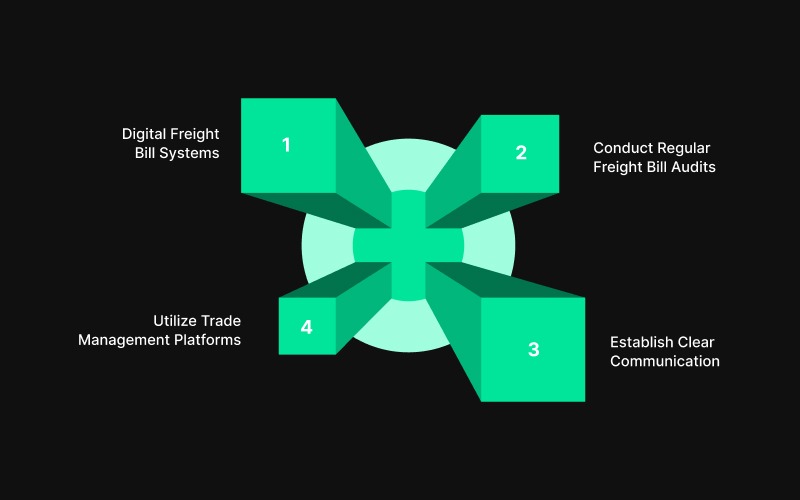
Effectively managing freight bills is essential for you to reduce errors, save time, and maintain smooth trade operations. Implementing a few simple best practices can streamline your shipping processes and improve overall efficiency. Here are the key strategies to follow:
1. Digital Freight Bill Systems
Switching to a digital system helps you avoid manual mistakes and speeds up freight bill processing. By digitizing your freight bills, you can reconcile charges faster and spot hidden fees before they impact margins. In India, the PM Gati Shakti initiative is encouraging businesses like yours to go digital for smoother logistics.
2. Conduct Regular Freight Bill Audits
Regularly auditing your freight bills helps you spot any unexpected costs or discrepancies early on. It ensures that you’re not paying for anything you didn’t agree to, like fuel surcharges or hidden customs fees. These audits also help avoid payment disputes with carriers, improving your cash flow. In India, using tools like GST reconciliation makes it easier to check for tax and customs-related errors.
3. Establish Clear Communication with Logistics Providers
Keeping the lines of communication open with your freight providers is key to avoiding confusion. By understanding the fees, terms, and surcharges upfront, you’ll reduce the risk of misunderstandings or errors. This transparency helps build trust with your logistics partners and reduces payment disputes. If you’re dealing with Indian carriers, make sure to clarify customs regulations and additional charges at the start.
4. Utilize Trade Management Platforms
Using trade management platforms helps you keep all your freight bills in one place, reducing the chances of manual errors. These platforms also provide real-time tracking of your shipments and billing, so you can stay on top of costs. Centralizing your documents simplifies the reconciliation process and improves overall efficiency. In India, adopting such platforms is part of the Digital India push to streamline export-import documentation.
Also read: Logistics Tracking for Ocean Freight: A Guide for New EXIM
How Pazago Helps Exporters Execute Freight Bills With Greater Cost Control
Freight bills often trigger disputes or payment stress when shipment timelines shift, container rates fluctuate, or supporting coordination breaks down. Many exporters receive the invoice only after delays, detention exposure, or rate changes have already impacted margins. When booking stability, container readiness, and shipment updates are predictable, freight bills become easier to reconcile and validate.
Pazago addresses these execution gaps by aligning rate stability, shipment coordination, and movement visibility so freight bills reflect planned outcomes rather than last-minute surprises.
- Competitive freight rates through long-term shipping line relationships reduce exposure to sudden rate volatility that complicates freight bill planning and budgeting.
- Assured container booking and coordinated loading at the factory, CFS, or port help exporters meet cut-offs and avoid detention, demurrage, or rollover-related billing escalations.
- Daily Status Reports (DSRs) provide structured shipment updates on container movement, ETD and ETA changes, and transit milestones so exporters can anticipate cost impacts before invoices are raised.
- Comprehensive pre-shipment and post-shipment sales support assists in resolving rate clarifications, carrier coordination, and shipment adjustments when freight billing questions arise.
- Equal operational support for exporters of all sizes ensures consistent execution reliability whether managing periodic shipments or high-frequency export cycles.
With tighter booking control and shipment coordination, freight bills become more predictable, transparent, and easier to reconcile against export plans.
Conclusion
While strong internal controls and audits improve freight bill management, execution stability plays an equally important role. Rate consistency, reliable container booking, and timely shipment updates reduce the risk of unexpected billing escalations.
Pazago helps exporters manage freight execution more reliably through stable freight rates, assured container coordination, and structured shipment updates. By improving movement predictability, exporters can reconcile freight bills with greater confidence and fewer disputes.

Frequently Asked Questions (FAQs)
1. What is the meaning of a freight bill?
A freight bill is a document that shows the cost of transporting goods from one place to another. It includes details like the type of cargo, the destination, and the shipping charges. This bill serves as a receipt and proof of payment for the transportation service.
2. What is included in the freight bill?
A freight bill includes details like the origin and destination of goods, the shipping charges, payment terms, and the freight class of the cargo. It also lists the consignee and consignor information, along with any additional fees such as insurance or fuel surcharges. This document helps in tracking and reconciling shipping costs.
3. What is the difference between a bill of lading and a freight bill?
A bill of lading serves as a receipt for goods shipped and as a contract between the shipper and carrier. In contrast, a freight bill is a request for payment, detailing the shipping costs and fees. While the bill of lading ensures the cargo is delivered, the freight bill ensures payment for the service.
4. Is a freight bill a shipping document?
Yes, a freight bill is considered a shipping document as it outlines the cost of transporting goods. It is used for billing purposes and acts as proof of the charges incurred during shipment. However, it doesn't serve as a receipt for the goods, unlike the bill of lading.
5. Why 3 bills of lading?
The practice of issuing three bills of lading provides security and flexibility in international shipping. One is kept by the shipper, one by the consignee, and one by the carrier or bank. This ensures that all parties involved have the necessary documentation for the goods and the shipment process.