.png)


Container Ship Capacity and Types in World Trade

Optimize your business: use unlimited savings with Pazago fulfilled now!
Get Started ->As an exporter, managing shipments across international waters can feel stressful and unpredictable. Choosing the right ship and container can significantly impact both timelines and costs. Many Indian SMEs face delays or unnecessary expenses because they lack clarity about container capacity in ship operations.
In 2024, the world fleet's carrying capacity reached 2.35 billion deadweight tons (dwt), an increase of 77 million dwt from the previous year. While this growth reflects expanding trade opportunities, understanding how container capacity in ship affects your shipments remains critical for planning.
In this blog, we'll explore what container ship capacity means, the different types of container ships, standard container sizes, and how to match ship and container choices to your export needs.
Key Takeaways:
- Understanding container ship capacity helps exporters plan shipping schedules and manage cargo efficiently.
- Different types of container ships serve specific cargo needs, from dry goods to refrigerated items.
- Container specifications directly influence shipping costs, affecting volume, weight limits, and port fees.
- Choosing the right ship requires evaluating cargo type, route, and delivery timelines for smoother logistics.
- Digital tools can simplify tracking, communication, and documentation, improving transparency for exporters and buyers.
What is Container Ship Capacity?
.jpg)
Container ship capacity refers to the amount of cargo a ship can carry, typically measured in TEUs (Twenty-Foot Equivalent Units). A TEU represents a standard 20-foot container, and the total number of TEUs a ship can hold indicates the container capacity in ship. Understanding this capacity is crucial because it directly affects the cost and speed of shipping your goods globally.
For exporters, the relationship between ship capacity and shipping costs can be tricky. Larger vessels tend to have lower costs per unit of cargo, but only if the ship is nearly full. If your shipment doesn't fill the container, you may end up paying more than necessary for unused space, especially on larger vessels.
Now that you understand container ship capacity, it's essential to recognize that not all ships are the same. Each type of vessel is designed for specific cargo and volume requirements.
Also Read: TEU Shipping: Capacity and Usage of Twenty-foot Equivalent Unit Containers
Different Types of Container Ships
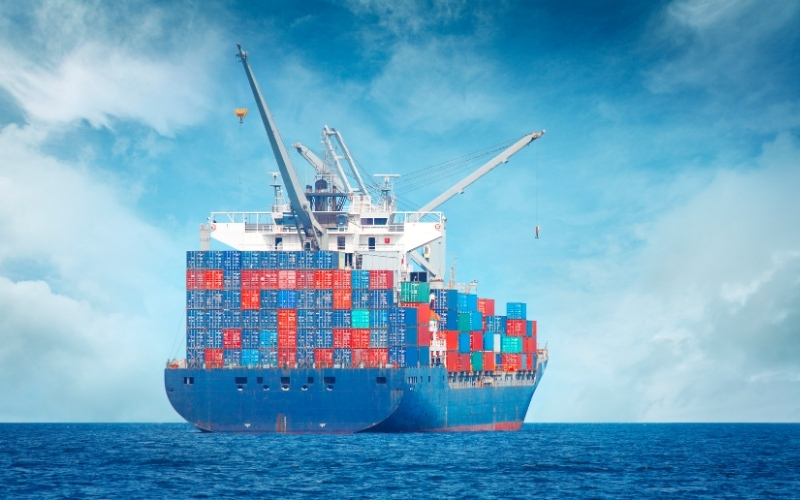
Choosing the right container ship for your exports requires understanding the different vessel types available. Each ship has specific capacities and features that influence shipping costs, transit times, and overall logistics. In this section, we outline the main types of container ships and their characteristics to help you decide based on your cargo requirements.
Here are the four main types of container ships, each catering to different shipment sizes and routes:
1. Feeder Ships
Feeder ships are smaller vessels that transport containers between smaller ports and larger hubs. These ships typically carry between 1,000 and 3,000 TEUs and are ideal for exporters who ship smaller volumes or operate in regional markets.
Capacity: 1,000 – 3,000 TEUs
Best for: Smaller cargo shipments, regional connections
Advantages: Ideal for exporters dealing with smaller quantities of cargo. These ships can access ports that larger vessels cannot reach.
Feeder ships are often the best choice for small or medium-sized exporters who need to connect to larger ports but cannot fill a large container ship. They are cost-effective for regional routes and shorter distances.
2. Panamax Ships
Panamax ships are medium-sized vessels, named after the maximum dimensions allowed for ships traveling through the Panama Canal. These ships typically have a capacity of 4,000 to 5,000 TEUs.
Capacity: 4,000 – 5,000 TEUs
Best for: Exporters shipping medium volumes over long distances, particularly to or from regions connected by the Panama Canal.
Advantages: These vessels offer flexibility, as they can travel through one of the most important waterways, offering both cost and time efficiencies.
For Indian exporters targeting markets in the Americas or Europe, Panamax ships offer a balanced approach, providing the capacity to carry a significant load without the constraints of ultra-large vessels.
3. Post-Panamax Ships
Post-Panamax ships are larger vessels, typically capable of carrying 6,000 to 14,000 TEUs. These ships cannot pass through the Panama Canal due to their size, but are commonly used on global trade routes with suitable infrastructure.
Capacity: 6,000 – 14,000 TEUs
Best for: Large exporters with substantial shipping volumes or those operating on major international routes.
Advantages: The larger capacity of Post-Panamax ships means lower per-unit shipping costs for high-volume shipments. These ships are ideal for long-distance routes where large cargo volumes need to be moved efficiently.
Post-Panamax ships are the go-to option for exporters shipping large amounts of goods, especially on long-distance routes. However, they are most cost-effective when they reach full capacity, which can be challenging for smaller shipments.
4. Ultra-Large Container Vessels (ULCVs)
Ultra-Large Container Vessels (ULCVs) are the largest container ships, with capacities that exceed 20,000 TEUs. These ships are designed for the largest trade routes, often between Asia and Europe.
Capacity: 20,000+ TEUs
Best for: High-volume exporters with consistent, large shipments on major international routes.
Advantages: ULCVs offer the lowest cost per unit of cargo when fully loaded. They are ideal for exporters who can meet the volume requirements.
Although ULCVs offer cost savings for large shipments, they are not the best choice for smaller exporters. Their massive size limits port accessibility, and smaller shipments can result in higher costs per unit.
Knowing the ship type alone isn't enough; your cargo also determines which container is most suitable. Choosing the correct container ensures safe handling and avoids extra costs.
Also Read: Standard Shipping vs Express Shipping: A Simple Guide
Container Types: Matching Ship Type to Cargo Needs

The type of container you use directly impacts the safety, cost, and timeliness of your shipment. Understanding the different container types helps you match your cargo with the ideal shipping vessel.
Here are the various container types and how each one matches with different ship types:
1. Standard Containers (20 ft and 40 ft)
Standard containers are the most common type, used for a wide variety of cargo. They come in two sizes: 20 ft and 40 ft, with the 20 ft container being the most frequently used.
Best for: General cargo like electronics, clothing, machinery parts, and dry goods.
Ideal Ship Type: Feeder ships and Panamax ships are the most common for these standard containers. These vessels can handle smaller and medium-sized shipments efficiently.
The 20 ft and 40 ft standard containers are the go-to option for most exporters. They are compatible with many ships and can easily be loaded and unloaded, reducing handling time.
2. Reefer Containers
Reefer containers are refrigerated containers used to transport temperature-sensitive goods. These containers come with built-in cooling systems to maintain the required temperature throughout the journey.
Best for: Perishable items like fruits, vegetables, seafood, and pharmaceuticals.
Ideal Ship Type: These containers can be used on all ship types, but larger vessels like Post-Panamax or ULCVs are suitable for long-distance shipments of perishable goods, due to their capacity and refrigeration systems.
When shipping perishable goods, reefer containers are essential. Their controlled environment ensures that sensitive products stay fresh, making them a crucial option for exporters in the food and pharmaceutical industries.
3. Flat Rack Containers
Flat rack containers are designed for large, heavy, or unusually shaped cargo that cannot fit into standard containers. These containers have no sides or roof, providing open space for cargo.
Best for: Heavy machinery, vehicles, and oversized industrial equipment.
Ideal Ship Type: Flat rack containers are generally used on larger vessels like Post-Panamax or ULCVs. These ships offer the capacity needed to handle oversized cargo effectively.
For exporters dealing with large or heavy equipment, flat rack containers are the most practical solution. The absence of walls allows for effortless loading of bulky items that would not fit into standard containers.
4. Open-Top Containers
Open-top containers are similar to standard containers but without a solid roof. They are ideal for cargo that is too tall to fit into a standard container or for items that require loading from above.
Best for: Tall or irregularly shaped goods such as machinery, construction materials, and building supplies.
Ideal Ship Type: Open-top containers are typically used on larger vessels, like Panamax and Post-Panamax ships, which have the necessary height clearance for loading.
When your cargo cannot fit into a standard container due to height or shape, open-top containers provide the necessary flexibility for loading and shipping these unusual goods.
5. Tank Containers
Tank containers are specially designed for transporting liquids, chemicals, or gases. These containers have built-in tanks that ensure the safe transport of hazardous or liquid substances.
Best for: Liquid products, chemicals, oil, and gas shipments.
Ideal Ship Type: Tank containers can be used on most vessels, but Post-Panamax and ULCVs are typically chosen for large-volume shipments due to their capacity to carry multiple tank containers.
Once you select the right container for your shipment, the ship's capacity directly influences your overall costs.
Also Read: Common Types of Containers for Shipping
How Container Ship Capacity Impacts Export Costs?

The container capacity in ship plays a significant role in determining shipping costs for exporters. The larger the vessel, the lower the cost per unit of cargo, as long as the ship is fully loaded. Understanding how these costs fluctuate with different ship capacities can help you manage your shipping budget more effectively.
Here are the key factors related to ship capacity and how they can influence your export costs:
- Cost per TEU: Larger vessels typically have lower costs per TEU (Twenty-foot Equivalent Unit) when fully loaded. The more containers a ship can carry, the lower the cost per unit of cargo, which helps reduce overall expenses.
- Filling the Ship's Capacity: If a ship is not filled, the cost per container increases. For exporters shipping small quantities, this can mean higher costs than expected, especially when using larger vessels.
- Port Fees: Larger ships tend to incur higher port fees due to their size. If your shipment doesn't require a large vessel, smaller ships can help reduce these additional charges.
- Shipping Time: Larger ships may take longer to load and unload due to their sheer size, which can impact delivery times. Exporters with tight deadlines may need to choose a smaller vessel that can dock and unload more quickly.
- Bulk Shipping Advantage: When exporting large volumes of goods, large vessels with high capacity offer significant cost savings per unit. This can be particularly beneficial for businesses with high-volume exports.
- Environmental Considerations: Larger ships can have a smaller carbon footprint per unit of cargo, as they carry more goods on each journey. This may align with sustainability goals for exporters concerned with reducing their environmental impact.
After reviewing how capacity affects cost, you should also evaluate additional factors before selecting a ship.
Also Read: Cost of 40-foot Shipping Container In India
Factors to Consider When Choosing the Right Ship
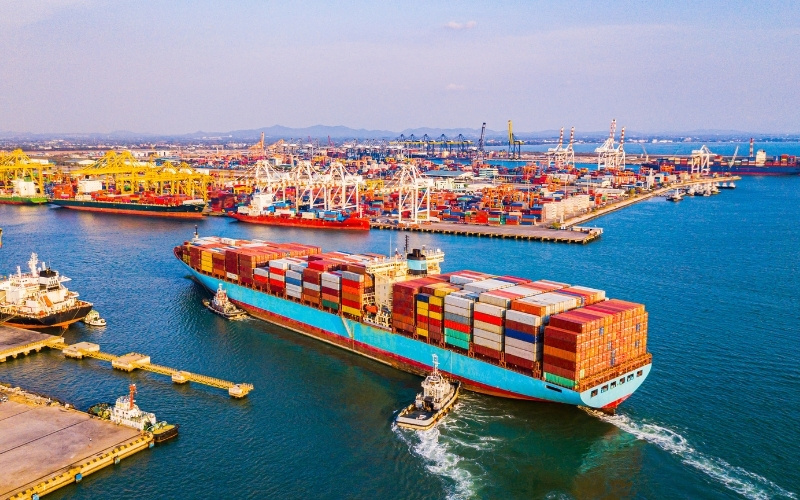
Choosing the right ship for your cargo goes beyond just selecting the largest or cheapest option. Several factors need to be taken into account, including the volume of your cargo, the destination, and the specific requirements of your goods. Making the right choice will help ensure that your shipment arrives on time and within budget.
Here are the key factors to consider when selecting a container ship that best suits your export needs:
- Cargo Volume: The amount of cargo determines the suitable ship size. Smaller shipments may fit feeder ships or Panamax vessels, while larger volumes often require Post-Panamax or ULCVs.
- Destination Ports: Not all ports can handle every ship size. Check port limits to avoid delays or rerouting caused by using a vessel that is too large.
- Shipping Speed: Larger ships may take longer to load and unload, while smaller vessels often allow quicker turnaround. Balance transit time with shipping costs.
- Cost Efficiency: Larger ships reduce cost per container when fully loaded. Smaller shipments might be cheaper on smaller vessels or consolidated with other exports.
- Type of Cargo: Perishables, hazardous materials, and oversized items need specialized containers or specific vessels. Ensure your ship can safely transport your goods.
- Environmental Impact: Larger ships may have lower emissions per unit, but the overall impact can be significant. Consider sustainability alongside costs when choosing a vessel.
Even when you know what to consider, managing shipments can feel complex and time-sensitive. A reliable platform can help you track shipments, communicate with partners, and ensure timely delivery.
Also Read: Differences and Uses of Various Shipping Container Sizes and Types
How Pazago Can Help Exporters Manage Shipping?
Exporting goods involves many steps, and managing different types of cargo can make the shipping process confusing and time-consuming for businesses. Whether you are shipping dry goods, perishable items, hazardous materials, or oversized shipments, choosing the right logistics partner is essential.
Pazago supports all cargo categories, including dry cargo, refrigerated cargo, dangerous cargo, and special cargo, offering tailored solutions to meet your specific needs.
Here are a few ways Pazago helps exporters manage the shipping process with ease:
- Comprehensive Cargo Handling: Pazago supports all cargo categories, including dry goods, refrigerated items, hazardous materials, and oversized cargo.
- Real-Time Shipment Tracking: With Pazago, you can track your shipments in real time. You'll receive updates on location, conditions, and any potential delays, ensuring complete visibility throughout the journey.
- Simplified Communication: The platform helps you connect with freight forwarders, buyers, and customs agents. This centralized communication ensures issues are resolved quickly and reduces the risk of miscommunication.
- Document Management: Pazago offers a centralized place to store and access essential shipping documents, such as invoices, customs forms, and certificates. This reduces errors and speeds up customs clearance.
With Pazago, you can keep track of your shipments, minimize delays, and make sure your cargo arrives at its destination safely and on schedule.
Conclusion
Selecting the right container ship and coordinating logistics carefully can directly affect both your overall shipping expenses and the speed of delivery. By understanding container ship types, cargo needs, and how to select the right vessel, you can ensure a smoother export process. Working with platforms like Pazago can simplify shipping, reduce delays, and improve communication.
If you're ready to improve your shipping experience, book a demo with Pazago today. Learn how we can help optimize your export process and make logistics more manageable.
FAQs
1. What determines the maximum cargo a container ship can carry?
The maximum cargo depends on the ship’s deadweight tonnage, hull design, number of containers it can safely stack, and stability during long voyages.
2. How do different container types affect shipping timelines?
Specialized containers like refrigerated or oversized cargo containers may require additional handling, inspections, and storage considerations, which can extend overall shipping time.
3. Can smaller exporters access large container ships for international trade?
Yes, smaller exporters can use shared container spaces or consolidate shipments to occupy part of a larger vessel without needing to book the entire ship.
4. What risks should exporters consider when selecting a container ship?
Exporters must account for port restrictions, weather patterns, insurance coverage, and compliance with international shipping regulations to avoid delays or damage.
5. How does cargo weight distribution impact ship safety?
Improperly balanced cargo can affect a ship’s stability, increasing the risk of tilting, collisions, or container loss during rough sea conditions.