.png)


Practical Guide to How Omnichannel Distribution Enhances Multichannel Retail
Optimize your business: use unlimited savings with Pazago fulfilled now!
Get Started ->If your business sells through stores, e-commerce, and marketplaces, omnichannel distribution ensures a seamless shopping experience. Customers expect consistent availability, pricing, and service across all channels, and logistics is what connects inventory, orders, and deliveries to meet these expectations.
The challenge is that each channel has different workflows, fulfilment timelines, return processes, and inventory tracking methods. Without coordinated logistics, businesses risk stockouts, delayed deliveries, and inconsistent service, which can hurt customer satisfaction and revenue.
This guide covers omnichannel distribution from a logistics perspective, highlighting key components, operational challenges, and strategies to streamline processes.
Key Takeaways
- Omnichannel distribution connects stores, online shops, and marketplaces, keeping inventory, orders, and deliveries linked for a smooth shopping experience.
- Each channel works differently for orders, returns, and stock, so logistics must be coordinated to avoid delays and out-of-stock situations.
- Success depends on connected processes like inventory management, order routing, transport, and last-mile delivery to ensure consistent service.
- Technology helps by linking systems, tracking orders, analysing data, and updating inventory in real time to enable faster, more accurate fulfilment.
- Good omnichannel logistics improves customer experience, increases sales, optimises inventory, cuts costs, and gives better control across all channels.
What Does Omnichannel Distribution Mean for Retail Operations and Logistics?

Omnichannel distribution connects physical stores, e-commerce platforms, and online marketplaces into a single operating model. Customers can buy, return, or exchange products across channels while expecting consistent pricing, availability, and service, regardless of where the transaction starts or ends.
For this model to function at scale, logistics acts as the critical connective layer. Inventory accuracy, order routing, fulfilment coordination, and shipment tracking must remain aligned across every channel.
Once this foundation is established, omnichannel logistics begins to deliver measurable operational and commercial advantages across the retail value chain, including:
- Enhanced customer experience: Faster deliveries, predictable returns, and consistent service across channels build trust and encourage repeat purchases.
- Increased sales and revenue: Efficient fulfilment ensures products remain available across stores and online platforms during peak demand.
- Optimised inventory and reduced costs: Centralised visibility helps balance stock levels, limit excess storage, and control operational expenses.
- Better delivery reliability with fewer exceptions: Coordinated logistics planning reduces missed dispatches, delayed deliveries, and order-level execution errors.
- Stronger operational control across channels: Unified tracking of orders, inventory, and shipments enables faster response to disruptions and more accurate planning.
Also read: Essential Shipping Documents Every Importer and Exporter Should Know
6 Key Components of Omnichannel Logistics
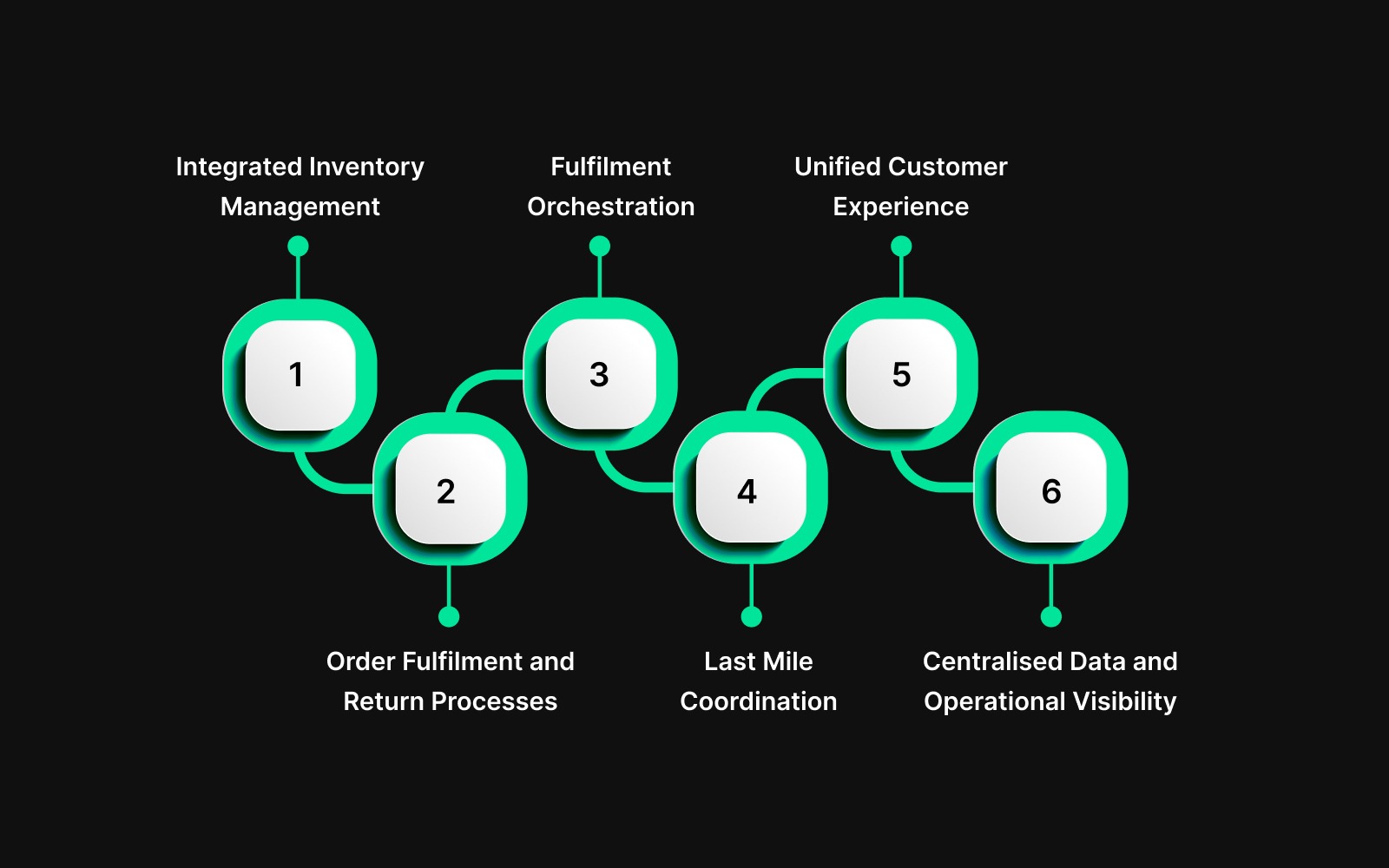
Once omnichannel distribution is in place, execution determines whether the model delivers consistent service across channels. Omnichannel logistics depends on connected logistics processes that operate as a single workflow rather than as isolated functions.
Businesses need the following core components to ensure reliable, scalable omnichannel distribution.
1. Integrated Inventory Management
Integrated inventory management keeps stock levels aligned across warehouses, retail stores, and online platforms, such as when a product sold through an e-commerce site automatically updates availability in physical stores.
This level of synchronisation reduces excess inventory, prevents stockouts, and supports accurate order fulfilment decisions.
2. Order Fulfilment and Return Processes
Structured fulfilment and return processes allow orders to move smoothly through picking, packing, shipping, and reverse logistics, such as when an online return is processed at a store without disrupting central warehouse inventory.
Clear workflows reduce handling delays, minimise errors, and keep order cycles predictable.
3. Order Routing and Fulfilment Orchestration
Order routing logic assigns each order to the most suitable fulfilment location based on inventory availability, delivery timelines, and costs, such as shipping from a nearby store rather than a distant warehouse to meet a promised delivery date. This approach helps maintain service levels while controlling logistics costs.
4. Transportation and Last Mile Coordination
Transportation planning and last-mile coordination ensure goods move reliably between fulfilment locations and customers, such as synchronising carrier pickups with store dispatch schedules.
Better coordination improves on-time delivery performance and reduces failed delivery attempts.
5. Unified Customer Experience Across Channels
A unified customer experience maintains consistent pricing, delivery options, and return policies across all channels, such as offering the same delivery promise online and in-store.
Consistency builds trust and encourages repeat purchases across multiple touchpoints.
6. Centralised Data and Operational Visibility
Centralised data connects orders, inventory, shipments, and returns in a single view, enabling tracking from online purchase through warehouse dispatch to final delivery.
End-to-end visibility allows teams to identify execution gaps early and respond before service levels are impacted.
With the core components in place, technology becomes essential to connect them efficiently and scale operations.
Top 6 Tech Solutions for Smarter Omnichannel Logistics
Using the right technology makes omnichannel distribution much easier. It connects your inventory, orders, warehouses, stores, and delivery partners into a single system. This helps improve order accuracy, speed up deliveries, and give customers a consistent experience. With these tools, you can avoid stock issues, reduce costs, and respond quickly to demand changes.
Here’s a look at the key technologies that support effective omnichannel logistics:
To see these strategies in action, let’s look at real brands that have successfully integrated their online, offline, and logistics operations.
Case Studies: 4 Successful Omnichannel Integrations in Logistics
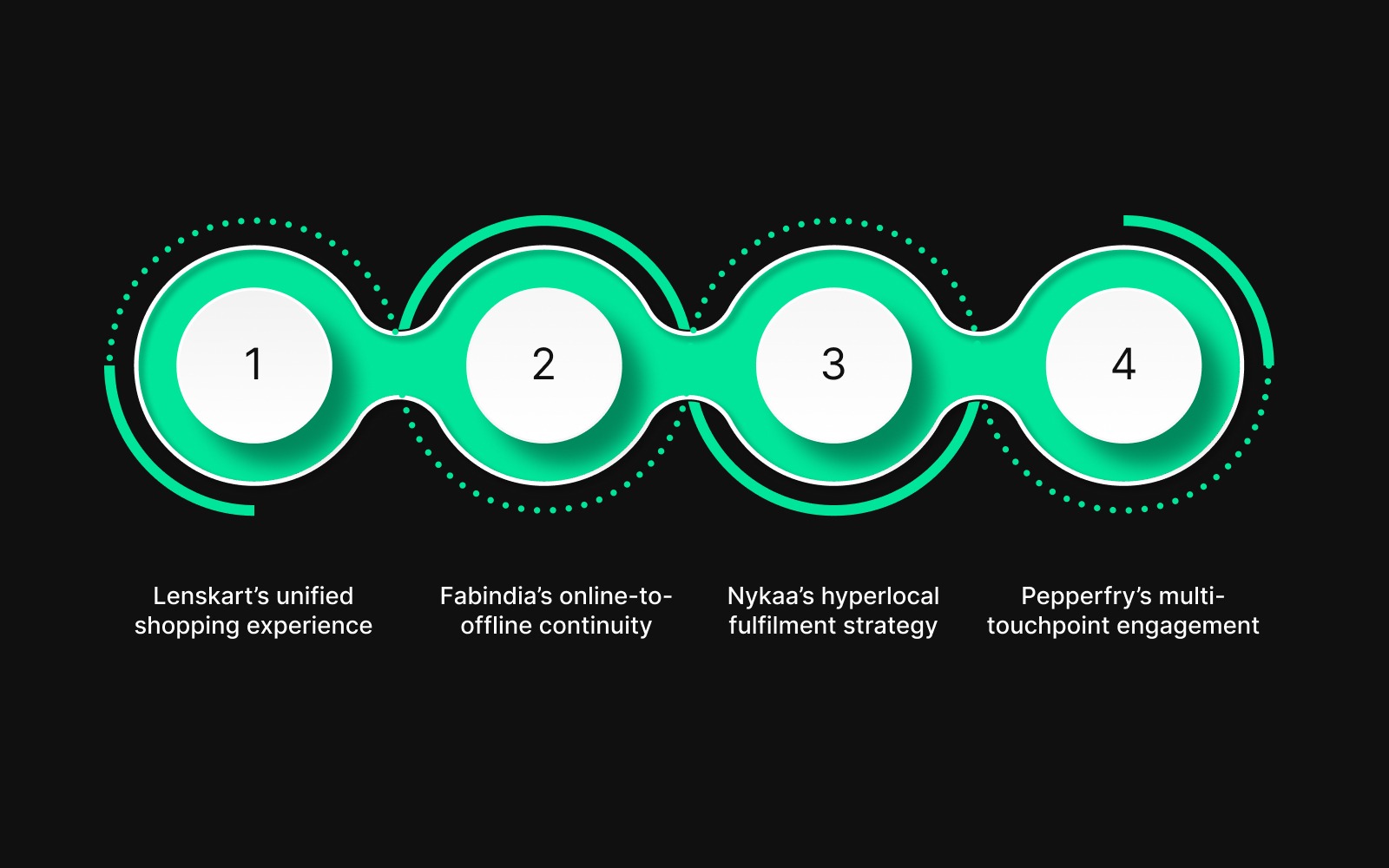
To see omnichannel distribution in action, it helps to look at how real brands tie together online, offline, and logistics operations. These examples show how coordinated logistics improve customer experience and operational outcomes:
1. Lenskart’s unified shopping experience
Lenskart integrates online browsing with in-store services, allowing customers to try products in-store before buying online or picking them up in person.
This blended approach drives higher conversions and keeps inventory moving smoothly across channels.
2. Fabindia’s online-to-offline continuity
Fabindia links its online and physical store inventories so customers can buy online and pick up in a nearby store, or check in-store products before completing the purchase digitally. This reduces delivery distance and improves fulfilment accuracy.
3. Nykaa’s hyperlocal fulfilment strategy
Nykaa uses its network of physical stores to support faster deliveries and returns. By turning stores into local fulfilment points during demand peaks, it minimises delivery times and lowers logistics costs while keeping stock usable across channels.
4. Pepperfry’s multi-touchpoint engagement
Pepperfry expanded into offline studios to complement its online platform, creating multiple inventory and service touchpoints. This strategy increases conversion and gives customers flexibility in how they engage with the brand.
These real-world examples show that integrating logistics with online and offline channels leads to faster deliveries, better stock utilisation, and improved customer loyalty outcomes that matter in competitive retail markets.
How To Manage Omnichannel Distribution: Logistics Challenges and Execution Strategies
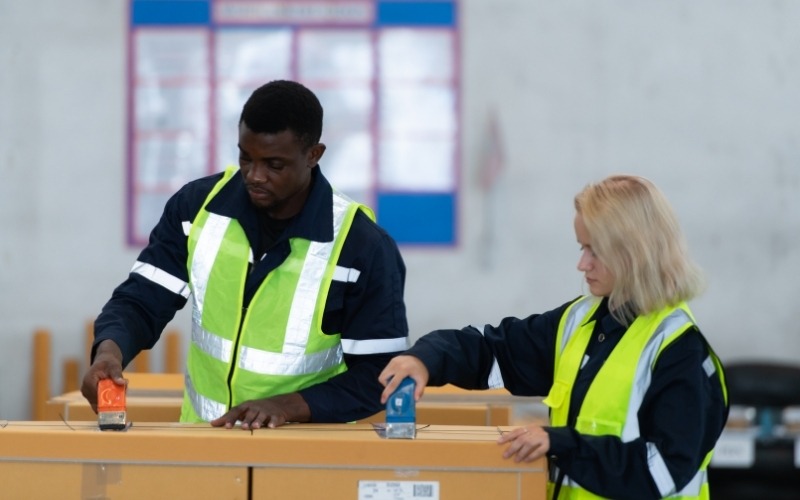
As omnichannel distribution expands across stores, warehouses, and online platforms, logistics execution becomes harder to manage. Inventory movement, fulfilment decisions, and delivery timelines must stay aligned across channels to avoid service gaps.
The following challenges commonly arise in omnichannel logistics, along with the strategies used to address them.
1. Inventory Synchronisation
Maintaining real-time inventory visibility across online platforms, warehouses, and physical stores is difficult when systems are not fully connected. Inaccurate stock data often leads to stockouts, overselling, or delayed fulfilment.
Strategy: Ship-from-store and buy online, pick up in store (BOPIS) allow businesses to use retail locations as fulfilment points, keeping inventory balanced while reducing delivery lead times.
2. Cross-Channel Order Coordination
Managing orders across multiple fulfilment locations and logistics partners can cause delays when responsibilities and handoffs are unclear. This impacts delivery timelines and order accuracy.
Strategy: Structured order routing and fulfilment orchestration, assign each order to the most suitable location based on availability, distance, and delivery timelines.
3. Returns and Reverse Logistics
Returns across channels create operational friction when returned items are slow to be re-entered into available inventory. This affects stock accuracy and customer experience.
Strategy: Drop-shipping combined with in-store return workflows allows returned products to be processed faster and made available for resale sooner.
4. Delivery Speed and Reliability
Meeting fast delivery expectations becomes challenging when last-mile planning and carrier coordination are inconsistent. Delays and failed deliveries increase exception handling costs.
Strategy: Optimised delivery route planning, last-mile coordination, and carrier selection improve on-time delivery while keeping transportation costs under control.
5. Cost Control Across Channels
Operating multiple fulfilment and delivery paths increases logistics costs when performance is not tracked at the order level.
Strategy: Centralised logistics data and performance tracking help teams monitor costs, identify inefficiencies early, and adjust execution without affecting service levels.
This approach allows businesses to manage omnichannel logistics with greater control, predictability, and scalability as order volumes grow across channels.
Ensure Reliable Freight Execution for Omnichannel Retail with Pazago
Omnichannel distribution depends on synchronized fulfilment across stores, warehouses, and online channels. Even when inventory systems are aligned, freight disruptions such as container shortages, booking rollovers, or shipment delays can interrupt delivery timelines. These execution gaps affect order commitments, increase logistics costs, and create inconsistencies across sales channels.
Maintaining delivery reliability across multiple retail touchpoints requires disciplined booking control, stable freight planning, and structured shipment monitoring. Pazago strengthens this execution layer by reinforcing freight coordination and shipment visibility across export movements.
- Assured Container Booking and Coordinated Loading: Confirmed container allocation and structured loading coordination at factory, CFS, or port reduce dispatch uncertainty during high-demand cycles.
- Daily Status Reports (DSRs): Structured updates covering container movement, ETD/ETA changes, transshipment milestones, and BL status support accurate cross-channel delivery planning.
- Competitive Freight Rates Through Long-Term Relationships: Stable and competitive rates across key trade routes support predictable logistics budgeting during seasonal demand fluctuations.
- Comprehensive Pre-Shipment and Post-Shipment Support: Active coordination around booking confirmations, documentation alignment, and shipment-level clarifications reduces execution gaps.
- Equal Operational Support Across Shipment Volumes: Consistent coordination whether managing peak volumes or steady order flows maintains fulfilment reliability.
Pazago reinforces disciplined freight execution, helping businesses sustain consistent omnichannel distribution performance without shipment-level disruptions.
Conclusion
Omnichannel distribution performs consistently when freight execution remains stable across every dispatch. Coordinated booking control, structured shipment updates, and predictable freight planning reduce disruptions that affect delivery commitments.
Pazago reinforces this execution reliability, helping businesses maintain consistent fulfilment standards across retail channels.
FAQs
1. When should a business adopt an omnichannel distribution model?
A business should adopt omnichannel distribution when it sells through multiple channels, such as websites, marketplaces, and physical stores, and needs shared inventory, unified fulfilment, and consistent delivery timelines.
2. What logistics processes are essential for omni-channel distribution?
Omni-channel distribution depends on synchronised inventory management, centralised order processing, flexible fulfilment options, and real-time shipment tracking across all channels.
3. How does omnichannel distribution impact inventory accuracy?
Omnichannel distribution improves inventory accuracy by maintaining a single source of truth across warehouses and stores, reducing stock mismatches and order cancellations.
4. Does omnichannel distribution increase logistics complexity?
Omnichannel distribution increases coordination requirements, but complexity is kept under control when logistics processes, data, and partners are managed through a centralised system.
5. Can omnichannel distribution work without advanced logistics technology?
Basic omnichannel distribution is possible, but scaling becomes difficult without technology that connects inventory, orders, fulfilment, and delivery visibility in real time.