.png)


Why Logistics Documentation Is Critical in Cross-Border Trade
Optimize your business: use unlimited savings with Pazago fulfilled now!
Get Started ->Cross-border trade is not just about moving goods from one country to another. It is a complex, documentation-driven process where even minor gaps in paperwork can result in shipment delays, customs penalties, rejected consignments, or financial disputes. In fact, 94% of businesses report delays in cross-border shipping due to incorrect item classification and documentation errors.
This makes logistics documentation far more than an administrative task; it’s a strategic tool that ensures cost control, regulatory adherence, and smooth trade operations. Businesses that handle documentation effectively enjoy faster clearance times, lower financial risks, and improved trust with international buyers.
In this blog, we’ll explore the critical role of logistics documentation in cross-border trade, the challenges businesses face, and how smart solutions can make the process easier to manage.
In a nutshell:
- Logistics documentation underpins every stage of cross-border trade, helping businesses stay compliant, manage costs, maintain smooth operations, and reduce risk for exporters and importers.
- Different categories of documents, commercial, customs, transport, insurance, and regulatory, work together to confirm ownership, value, movement, and compliance of goods.
- Accurate preparation of key documents like invoices, packing lists, bills of lading, and certificates is crucial for customs clearance, secure payments, and timely delivery.
- Strong documentation practices help businesses comply with regulations, speed up clearance, secure payments, and build trust and transparency with international buyers.
- Common documentation challenges, such as errors, misclassification, complex supply chains, payment-linked issues, and regulatory changes, require organised, well-managed processes to overcome.
What Is Logistics Documentation in Cross-Border Trade?
Every shipment in international trade is accompanied by a series of documents that prove compliance, ownership, and the fulfilment of trade agreements. Logistics documentation refers to all such paperwork required to move goods across borders, covering legal, financial, and operational aspects of the shipment.
At every stage of cross-border trade, from order confirmation to final delivery, documentation connects exporters, importers, logistics partners, banks, insurers, and customs authorities, keeping the process coordinated and transparent.
Types of Cross-Border Logistics Documents
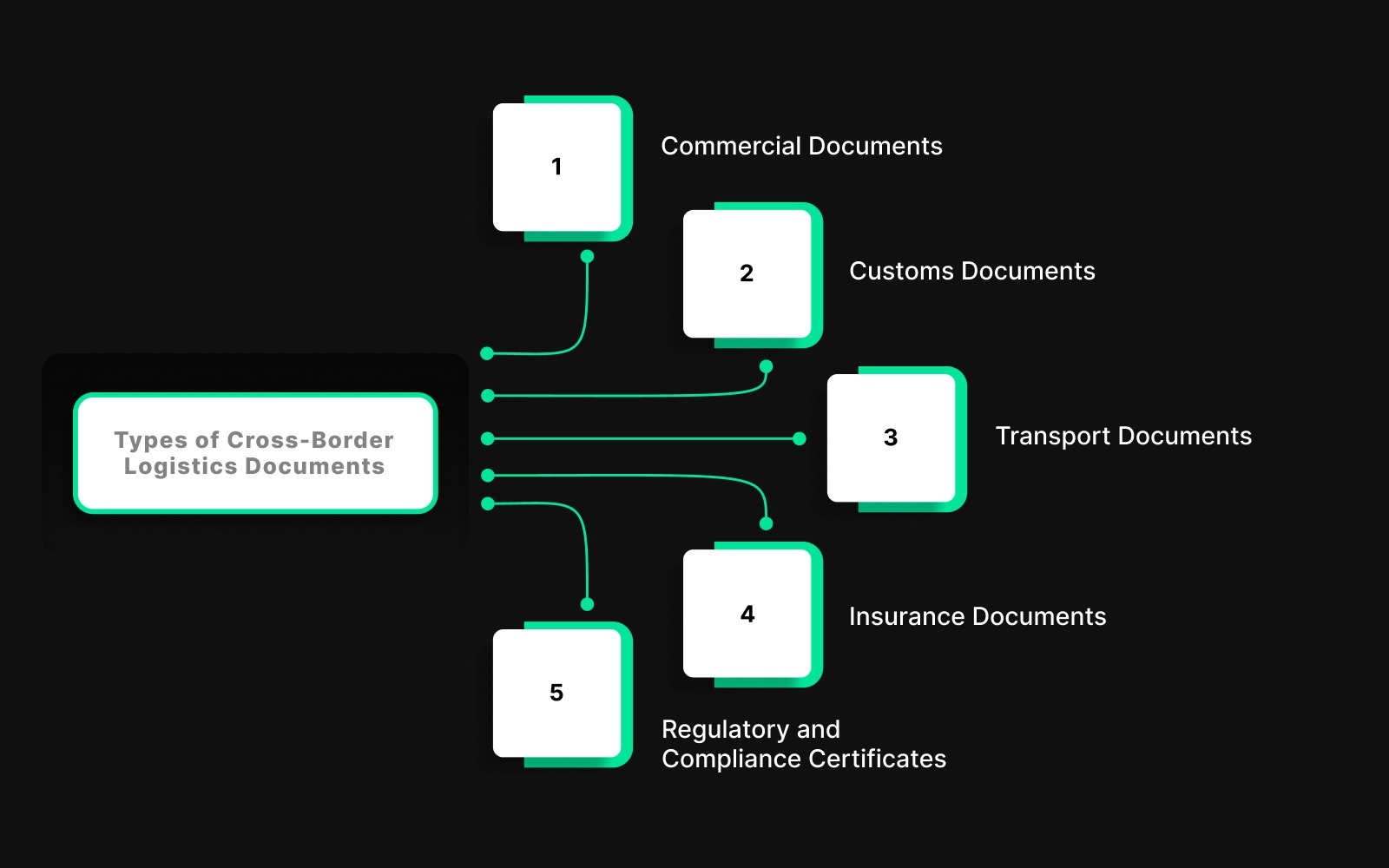
Logistics documents fall into different categories, each serving a specific purpose in the trade process. Understanding these document types helps businesses handle shipments efficiently.
- Commercial Documents: These include invoices, purchase orders, and packing lists that provide details of the transaction and the goods being shipped.
- Customs Documents: Certificates, declarations, and permits required by customs authorities in both exporting and importing countries. Examples include export declarations and import licences.
- Transport Documents: Bill of Lading (BL), airway bills, and container receipts that record and track shipments during transit.
- Insurance Documents: Policies and certificates that protect the shipment against loss, damage, or theft.
- Regulatory and Compliance Certificates: Depending on the type of goods, these may include certificates of origin, quality inspection reports, phytosanitary certificates, or product compliance certificates.
By categorising and organising these documents, businesses reduce delays, meet regulations, and provide transparency to buyers and authorities.
Key Logistics Documents Required for Cross-Border Shipments

There is no single list of documents that applies to every shipment. Instead, a number of key papers may be required depending on the mode of transport, type of goods and destination country.
Some of the key logistics documents include:
- Commercial Invoice: A legally recognised document detailing the goods, value, buyer and seller information, payment terms, and HS codes. Customs authorities use this document to calculate duties and taxes.
- Packing List: Details each item in the shipment, including quantity, dimensions, and weight. This helps customs inspect goods efficiently and verifies the commercial invoice.
- Bill of Lading (BL): A receipt issued by the shipping company that confirms goods have been loaded and specifies delivery conditions. It is essential for claiming the shipment at the destination port.
- Certificate of Origin: Confirms the country where the goods were manufactured and helps determine the tariffs that apply.
- Insurance Certificate: Provides proof of coverage against transit risks such as damage, theft, or loss.
- Export/Import Licences and Permits: Required for certain restricted products like chemicals, pharmaceuticals, or food items.
- Inspection Certificates: Required for regulated or sensitive goods to prove they meet quality, safety, or regulatory standards.
- Letter of Credit (LC) or Payment Guarantee: Provides assurance that payment will be made once the shipment meets agreed conditions.
Properly preparing and cross-checking these documents ensures that shipments progress smoothly through customs, avoid penalties, and maintain trust with buyers.
Why Is Logistics Documentation Non-Negotiable in International Trade?

Proper logistics documentation plays a key role in keeping international trade operations on track. Here’s why it is crucial:
1. Compliance with Regulations
Cross-border shipments must meet the legal and regulatory requirements of both the exporting and importing countries. Customs authorities rely entirely on logistics documents to check the nature, value, and origin of goods before allowing clearance.
- Customs validation: Documents such as commercial invoices, packing lists, and certificates of origin help authorities verify shipment details and apply the correct duties and taxes.
- Avoiding shipment holds: Missing or incorrect paperwork can cause cargo to get stuck at ports, leading to delays and storage charges.
- Regulatory audits: Accurate documentation creates a clear audit trail, helping exporters stay protected during inspections or compliance checks.
This makes regulatory compliance one of the strongest reasons documentation must be handled carefully from the very beginning.
2. Cost Control
Documentation errors often translate directly into financial losses for exporters and importers. Even minor inconsistencies can trigger additional charges that affect shipment profitability.
- Correct duty calculation: Accurate invoices and HS codes prevent overpayment or underpayment of customs duties.
- Reduced penalty exposure: Incomplete or incorrect documents can lead to fines, which are common in cross-border trade.
- Lower operational costs: Proper paperwork helps avoid demurrage, detention fees, and reprocessing charges at ports.
When documentation is managed systematically, businesses maintain better control over both expected and unexpected costs.
3. Faster Clearance and Shipment Processing
Speed in international trade depends heavily on how quickly customs and logistics partners can verify shipment details. Well-prepared documentation removes delays from the process.
- Quicker customs approval: Clear and consistent documents allow customs officials to process shipments without repeated clarifications.
- Better logistics coordination: Freight forwarders and carriers rely on accurate documents to plan container movement and vessel schedules.
- Improved delivery timelines: Faster clearance helps exporters meet buyer delivery commitments and production planning deadlines.
Reliable documentation keeps shipments moving without unnecessary pauses across the supply chain.
4. Financial Security
Payments in international trade are closely tied to documentation accuracy. Banks and financial institutions release funds only when document conditions are met.
- Letter of credit compliance: Even small document mismatches can cause delayed or rejected payments under LC terms.
- Payment milestone tracking: Accurate documents support advance and partial payment structures common in export transactions.
- Insurance claim support: Proper documentation strengthens claims in cases of cargo damage, loss, or disputes.
Strong documentation practices help exporters avoid cash flow disruptions and payment-related disputes.
5. Trust and Transparency with Buyers
Buyers depend on documentation to confirm shipment details, track consignments, and plan inventory. Clear paperwork builds confidence and long-term trade relationships.
- Shipment visibility: Consistent documentation allows buyers to track cargo status without repeated follow-ups.
- Dispute reduction: Accurate records help resolve quality, quantity, or delivery-related disagreements quickly.
- Professional credibility: Reliable documentation reflects operational maturity and strengthens buyer trust.
In global trade, trust is built on accuracy, and documentation plays a central role in maintaining transparency.
In these ways, documentation helps exporters and importers reduce risk, protect revenue and build trust with global partners.
Also Read: What is the HS Code in Imports and Exports? A Beginner's Guide
Common Logistics Documentation Challenges Faced by Exporters and Importers
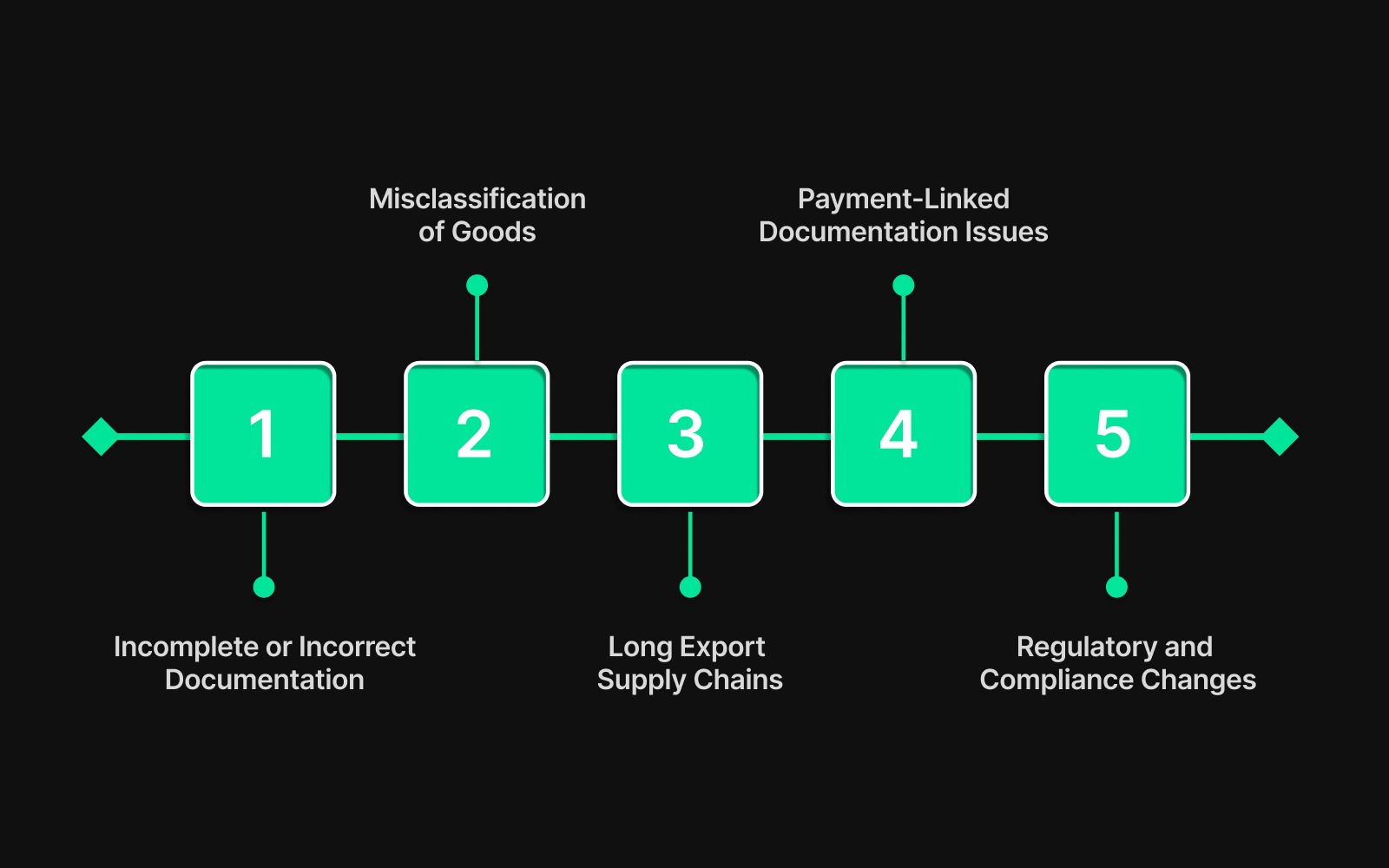
Even experienced traders face issues with logistics documentation. Recognising these challenges is the first step in tackling them effectively.
Some of the most common include:
1. Incomplete or Incorrect Documentation
Incomplete forms, missing signatures, or incorrect HS codes can slow down customs or lead to penalties.
How you can fix it:
- Verify all document fields against regulatory requirements before submission.
- Use digital templates with pre-filled order information to minimise manual errors.
- Conduct internal audits of documents prior to shipment dispatch.
2. Misclassification of Goods
Every product must be classified under the correct Harmonised System (HS) code. Misclassification can lead to incorrect tariff application and even legal penalties.
How you can fix it:
- Use trusted tools and tariff guides to find accurate HS codes.
- Engage customs brokers or classification experts for complex products.
- Regularly review product classifications as regulations change.
3. Long Export Supply Chains
Complex shipments involve multiple freight forwarders and cross-border checkpoints, making it hard to track documentation at each stage.
How you can fix it:
- Assign a dedicated logistics coordinator for each shipment.
- Implement a system to log all shipment milestones and attach related documents.
- Use digital tracking tools to monitor container movement and documentation status in real-time.
4. Payment-Linked Documentation Issues
Export payments are often staggered, and buyers may delay payment if documentation is missing or incomplete.
How you can fix it:
- Align invoice generation with payment milestones.
- Automate reminders for submission and approvals of critical documents.
- Keep all supporting documents linked to payment records for quick reference.
5. Regulatory and Compliance Changes
Export regulations change frequently, and missing updated requirements can lead to shipment rejection.
How you can fix it:
- Subscribe to regulatory updates for each country you trade with.
- Conduct periodic training sessions for your operations team.
- Implement a platform that updates templates and document requirements automatically.
These challenges highlight the need for strong documentation processes that combine accuracy with adaptability.
How Pazago Reinforces Documentation Discipline in Cross-Border Logistics
Cross-border logistics documentation carries direct financial and compliance risk. A missing certificate, incorrect HS code, or mismatch between invoice and bill of lading can delay clearance, trigger penalties, or block payment release under LC terms.
The execution gap usually appears between document preparation and shipment movement. Pazago strengthens this execution layer by aligning freight coordination, shipment visibility, and pre- and post-shipment support with documentation control. Here is how disciplined export execution supports stronger logistics documentation outcomes:
- Comprehensive Pre-Shipment and Post-Shipment Sales Support: Pazago coordinates booking confirmations, BL processing, and shipment-level clarifications, reducing documentation mismatches that commonly arise between exporters, forwarders, and carriers.
- Assured Container Booking and Coordinated Loading: Confirmed container bookings and coordinated equipment release protect planned dispatch timelines, reducing last-minute document amendments caused by rollover or vessel changes.
- Daily Status Reports (DSRs) for Shipment Visibility: Structured shipment updates covering container movement, ETD changes, transshipment progress, and BL status help exporters keep documentation aligned with actual cargo movement.
- Competitive Freight Rates Through Long-Term Industry Relationships: Stable freight allocations across key trade routes reduce reactive booking changes that often force invoice or document revisions.
- Equal Operational Support Across Shipment Volumes: Consistent coordination standards ensure documentation discipline is maintained, whether shipments are large or smaller in scale.
Reliable freight execution reduces the likelihood of document amendments, customs rechecks, and payment disputes in cross-border trade.
Conclusion
Logistics documentation in cross-border trade demands precision across invoices, certificates, transport documents, and payment-linked paperwork. The risk of delay or penalty increases when documentation is disconnected from freight coordination and shipment visibility.
Freight volatility, container rollovers, and delayed BL issuance often create documentation mismatches that impact clearance timelines and buyer payments. Structured coordination across booking, shipment milestones, and post-shipment support reduces these risks significantly.
By reinforcing stable freight allocation, assured container booking, shipment-level visibility, and coordinated support across export cycles, Pazago helps exporters maintain stronger documentation discipline in cross-border trade operations.
FAQs
1. What is a bill of lading, and why is it important?
A bill of lading is a legal document issued by a carrier to acknowledge receipt of goods for shipment. It serves as proof of ownership, a contract of carriage, and is crucial for customs clearance, payment processing, and ensuring the cargo reaches its intended destination.
2. How does documentation support tariff and duty calculations?
Accurate documentation provides essential details like product description, value, origin, and HS codes. Customs authorities use this information to calculate tariffs, duties, and taxes correctly, ensuring compliance with trade regulations and avoiding penalties or shipment delays.
3. What steps ensure accurate logistics documentation?
Accurate logistics documentation involves verifying shipment details, using standardised forms, double-checking product descriptions and quantities, confirming HS codes, and maintaining proper records. Regular audits and cross-checks with invoices, packing lists, and shipping instructions help prevent errors and delays.
4. Are there special documents for hazardous or food shipments?
Yes, hazardous goods require a dangerous goods declaration, safety data sheets, and special handling instructions. Food shipments often need health certificates, sanitary permits, and origin certifications to comply with safety regulations and international standards.
5. How do I determine the correct HS code for my product?
To determine the HS code, identify the product’s material, function, and category. Use national customs databases, the World Customs Organization’s HS classification, or consult a customs broker. Accurate codes ensure proper tariffs, duties, and compliance with international trade regulations.