.png)


How to Find Genuine Buyers for Export: 7 Verified Steps for 2026

Optimize your business: use unlimited savings with Pazago fulfilled now!
Get Started ->Finding genuine buyers is one of the biggest challenges for exporters, especially when entering new international markets. As global trade grows more digital in 2026, opportunities have expanded, but so have risks related to fraud, payment defaults, and unreliable partners.
If you are planning to scale exports from India, knowing how to find genuine buyer for export is no longer optional. It directly affects payment security, shipment planning, and long-term business growth.
This guide explains verified, practical methods for identifying trustworthy buyers, analysing demand, and reducing risk while building sustainable export relationships.
Key Takeaways
- Knowing how to find genuine buyers for export is critical in 2026, as digital inquiries have increased both opportunities and fraud-related risks for exporters.
- Buyer verification must happen early, covering company credentials, trade history, financial capability, and compliance readiness to avoid payment and shipment issues.
- Structured, step-by-step screening reduces export risk by using verified directories and starting with small trial shipments before scaling volumes.
- Unverified buyers create cascading operational problems, including delayed payments, cargo clearance issues, misuse of documents, and compliance exposure.
- Centralising buyer data, communication, and order tracking improves reliability, helping exporters build long-term, repeat-buyer relationships rather than chasing unreliable leads.
Why Finding Genuine Buyers for Export Matters in 2026

Exporters receive more inquiries through digital channels, but many of these leads lack credibility, financial readiness, or long-term intent. At the same time, rising compliance checks, payment risks, and logistics costs leave very little room for buyer-related errors.
Buyer authenticity now directly impacts cash flow, shipment timelines, regulatory exposure, and the ability to scale exports sustainably. Exporters who fail to validate buyers early often face delayed payments, blocked cargo, or avoidable disputes.
This makes identifying genuine buyers a core operational requirement, not just a sales activity.
Key reasons buyer authenticity matters more than ever:
- Increased digital buyer discovery: Most export inquiries now come from online marketplaces, trade portals, and direct outreach, limiting face-to-face verification and increasing reliance on structured checks.
- Tighter payment and credit conditions: Global liquidity pressure has increased payment delays, making unverified buyers more likely to default and to trigger financial disputes.
- Stricter compliance and documentation scrutiny: Banks and customs authorities review buyer details and transaction consistency more closely, increasing audit and incentive-claim risk.
- Rising logistics and holding costs: Higher demurrage, detention, and storage charges mean buyer delays can quickly turn into direct financial losses.
- Shift toward long-term buyer relationships: Export growth depends on repeat orders, predictable volumes, and stable payment cycles, which only genuine buyers can support.
- Greater need for order-level control: Managing multiple buyers and destinations requires aligned buyer, document, payment, and shipment data to avoid execution gaps.
Also read: Key KPIs to Track and Improve in Supply Chain Management.
Once the importance of buyer authenticity is clear, the next step is to follow a structured, practical approach to identifying and validating buyers before committing to export transactions.
7 Practical Steps to Identify Genuine Export Buyers in 2026
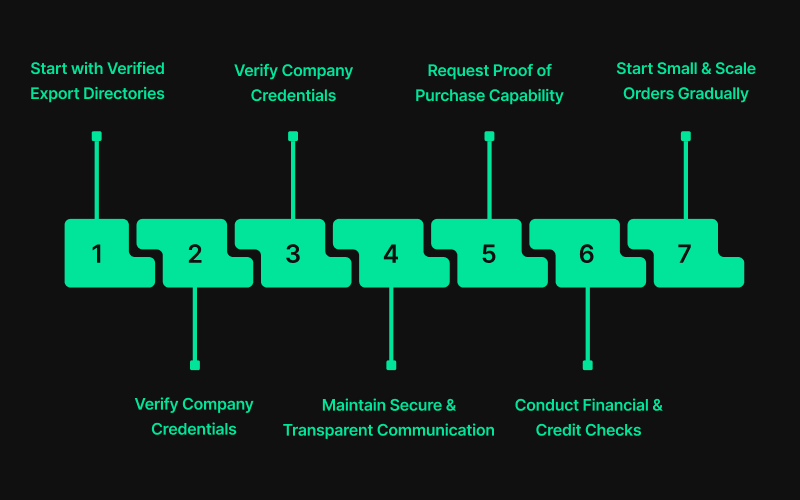
A single wrong lead can result in delayed payments, disputes, or even financial losses. With exports growing in 2026, verifying buyers is more important than ever.
Below, we break down step-by-step strategies that exporters can follow to find trustworthy buyers and maintain a seamless export workflow.
Step 1: Start with Verified Export Directories
The first step in identifying genuine buyers is to use trusted export directories that pre-screen companies for credibility. These directories reduce the risk of fraud and save you time by providing verified leads.
Key Actions:
- Search through reputable directories and government trade portals to find potential buyers.
- Filter search results by industry, product category, region, and verified status to ensure relevance.
- Shortlist buyers who have a proven track record of completing international transactions successfully.
Step 2: Verify Company Credentials
Before engaging with any buyer, it is important to verify their legal and compliance credentials. This step helps ensure that you are dealing with a legitimate business entity.
Key Actions:
- Check the buyer’s GST/VAT registration and confirm that their import/export licenses are valid and up to date.
- Verify the company's existence in government databases or with trade authorities.
- Use store-verified buyer credentials and link them to each order for easy compliance tracking.
Step 3: Evaluate Trade History and Reputation
A buyer’s trade history and reputation provide valuable insight into their reliability and credibility. Assessing past performance minimises the risk of delays or disputes.
Key Actions:
- Request references from previous suppliers or exporters who have worked with the buyer.
- Check the buyer’s import volumes, transaction frequency, and on-time payment record.
- Review online ratings, testimonials, or feedback to gauge reliability and reputation.
Step 4: Maintain Secure and Transparent Communication
Clear, secure communication with potential buyers is essential to building trust and reducing the risk of fraud.
Key Actions:
- Always communicate via official company email rather than personal accounts.
- Avoid finalizing deals through informal messaging apps that lack documentation.
- Record all communications to maintain an audit trail and ensure accountability.
Step 5: Request Proof of Purchase Capability
Before committing to large shipments, confirm that the buyer has the financial ability and intent to complete the transaction.
Key Actions:
- Request official purchase orders (POs), letters of credit (LCs), or pro forma invoices to validate their interest and capability.
- Verify past transaction records and confirm the buyer’s readiness to provide advance payments or guarantees.
- Keep a record of all purchase confirmations for reference and risk management.
Also read: Essential Shipping Documents Every Importer and Exporter Should Know
Step 6: Conduct Financial and Credit Checks
A buyer’s financial health is a critical factor in ensuring timely payments and reducing risk. Conducting proper checks helps safeguard your business.
Key Actions:
- Review the buyer’s credit rating, bank references, or trade finance reports to assess financial stability.
- Analyse historical payment behavior to identify potential red flags.
- Track payments and due dates to maintain financial visibility and avoid delays.
Step 7: Start Small and Scale Orders Gradually
Testing buyers with smaller shipments allows you to evaluate reliability before committing to larger orders.
Key Actions:
- Begin with pilot shipments to monitor the buyer’s compliance, payment, and communication.
- Evaluate delivery performance, customs clearance, and adherence to contractual terms.
- Increase order volumes gradually as trust and a working relationship are established.
Even with structured steps, exporters often face recurring buyer-related risks that require proactive controls and clear operating discipline.
5 Challenges and Best Practices in Finding Genuine Buyers for Export
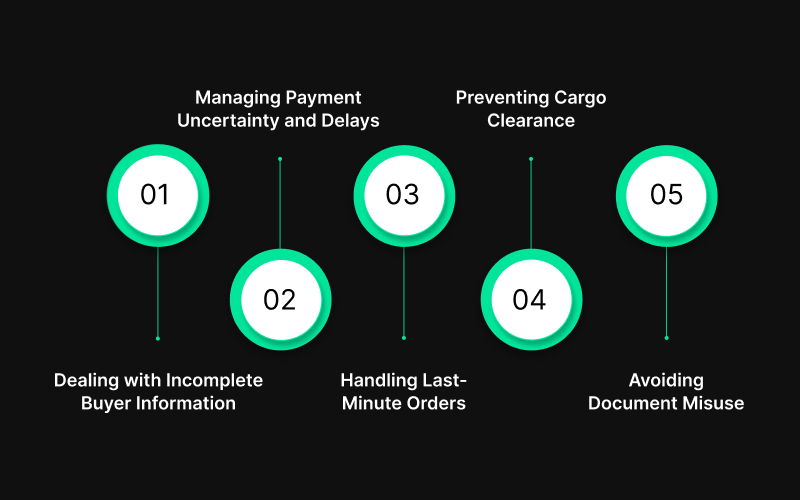
Before applying verification tools or platforms, exporters must clearly identify the sources of buyer-related risks. These challenges often appear early but can impact payments, shipments, and long-term business stability if left unmanaged.
1. Dealing with Incomplete or Misleading Buyer Information
Buyers may provide limited business details or inconsistent information across emails, invoices, and trade platforms. This lack of clarity makes verification difficult and increases the risk of misrepresentation.
Best Practices:
- Request complete company profiles, including registered address, tax numbers, and authorised signatory details.
- Match buyer information against purchase orders and official correspondence.
- Maintain structured buyer records to track verified and unverified data points.
2. Managing Payment Uncertainty and Delays
Even legitimate buyers may delay payments, request repeated extensions, or alter agreed payment terms. This disrupts cash flow and creates operational stress, especially when shipments are already in transit.
Best Practices:
- Define advance payment requirements and payment timelines at the quotation stage.
- Use payment instruments such as letters of credit or staged payments for new buyers.
- Track payment milestones at the order level to avoid follow-up gaps.
3. Handling Last-Minute Orders and Contract Changes
Buyers may revise quantities, delivery terms, or pricing after orders are confirmed. These changes often lead to documentation mismatches and shipment delays.
Best Practices:
- Lock commercial terms before issuing proforma invoices or confirming production.
- Document all changes through formal revisions rather than informal communication.
- Align updated terms across commercial invoice, packing lists, and shipping instructions.
4. Preventing Cargo Clearance and Destination Issues
Some buyers fail to clear cargo on time due to financial constraints, documentation issues, or a lack of import permissions. This can result in demurrage, detention charges, or cargo abandonment.
Best Practices:
- Confirm the buyer’s import eligibility and clearance capability before shipment.
- Share shipment timelines and document requirements clearly in advance.
- Monitor shipment status and buyer responsiveness throughout transit.
5. Avoiding Document Misuse and Compliance Risks
Unverified buyers may misuse commercial documents or submit incorrect paperwork, exposing exporters to legal and compliance issues across jurisdictions.
Best Practices:
- Issue export documents only after confirming buyer authenticity and payment terms.
- Ensure document data remains consistent across all export records.
- Maintain audit-ready documentation for every order and buyer interaction.
Bridging the Gap: From Verified Buyers to Seamless Fulfillment
Finding a genuine buyer is only half the battle. Once you’ve secured a trustworthy partner, the focus shifts to fulfillment. Inefficient logistics, fluctuating freight rates, and lack of shipment visibility can sour a new relationship with a buyer before it even begins. This is why having a robust logistics strategy is the natural next step after buyer verification.
Pazago: Helping Exporters Run Smooth International Operations
Pazago helps exporters maintain buyer confidence by keeping shipments predictable and visible. Once commercial terms are confirmed and cargo is ready, Pazago supports execution through stable freight planning, confirmed bookings, and shipment-level tracking that reduces avoidable delays.
- Competitive Freight Rates: Stable, lane-level freight options that help you plan export costs and quote with fewer surprises.
- Assured Container Booking & Loading Coordination: Confirmed equipment and coordinated loading at factory/CFS/port to reduce rollovers and missed cut-offs.
- Daily Status Reports (DSRs) & Shipment Visibility: ETD/ETA changes, container movement, and transshipment updates to help you keep buyers informed with facts.
- Operational Support Across Shipment Stages: A single coordination layer to reduce execution gaps between stakeholders during export movement.
- Support for Exporters of All Sizes: Same operational attention for single shipments and repeat export cycles.
Conclusion
Finding genuine buyers for export is crucial for businesses aiming to grow in international markets. When prospecting, screening, and vetting are done early using structured methods, connecting with genuine buyers becomes predictable and efficient, reducing the risk of fraud or non-payment.
By pairing buyer verification with reliable logistics partner like Pazago, you can convert new orders into predictable and well-coordinated shipments.
Contact Pazago to strengthen your export operations and protect buyer relationships.
FAQs
1. What is the first step to find genuine buyers for export?
Start by identifying your target market and industry. Research potential buyers through trade directories, B2B platforms, and verified export databases to ensure credibility.
2. How can I verify if an export buyer is genuine?
Check the buyer’s business registration, financial stability, previous trade references, and online presence. Using third-party verification services or trade credit agencies adds an extra layer of confidence.
3. Which platforms are best for finding verified buyers?
Trusted platforms include Alibaba, TradeIndia, GlobalSources, and official trade promotion agencies. Verified buyer listings on these platforms help reduce the risk of fraud.
4. Can attending trade fairs help find genuine buyers?
Yes, international and domestic trade fairs allow direct interaction with buyers, enabling you to assess their credibility, negotiate deals, and build long-term relationships.
5. How do I maintain a long-term relationship with verified buyers?
Consistently deliver quality products, maintain transparent communication, and formalise agreements with contracts and clear payment terms. This builds trust and encourages repeat business.