.png)


Why Go Global: 8 Key Benefits of International Business

Optimize your business: use unlimited savings with Pazago fulfilled now!
Get Started ->You've built a successful business within the demanding Indian market. Yet, as you seek to expand, the familiar concerns return: market saturation, currency volatility, and the perennial pressure to maintain cash flow. While the challenges of global trade, from customs delays to tariff changes, are real, staying focused solely on domestic sales limits your potential.
Cross-border trade is not a luxury; it is the most reliable way to secure growth. Data confirms this: India’s Micro, Small, and Medium Enterprises (MSMEs) contributed over 45.79% to the nation's total exports in 2023-24. Expanding your reach is a proven path for ambitious Indian firms.
This guide explores the key benefits of international business that directly protect your enterprise against domestic fluctuations. Let’s see why deepening your global operations is essential for achieving long-term stability and growth.
Key Takeaways
- International trade is essential for established Indian SMEs, providing risk diversification against domestic economic fluctuations and unlocking greater profit margins (ASPs).
- Scaling globally requires selecting the right engagement model, from simple Export/Import to high-control Joint Ventures, to manage risk and use intellectual property (IP).
- Sustained success hinges on proactively managing complex variables: FX volatility, geopolitical stability, and claiming benefits from Trade Agreements (e.g., RoO).
- Manual freight coordination and booking gaps slow execution. Pazago improves rate stability, container reliability, and shipment visibility for controlled international operations.
What Is International Business?
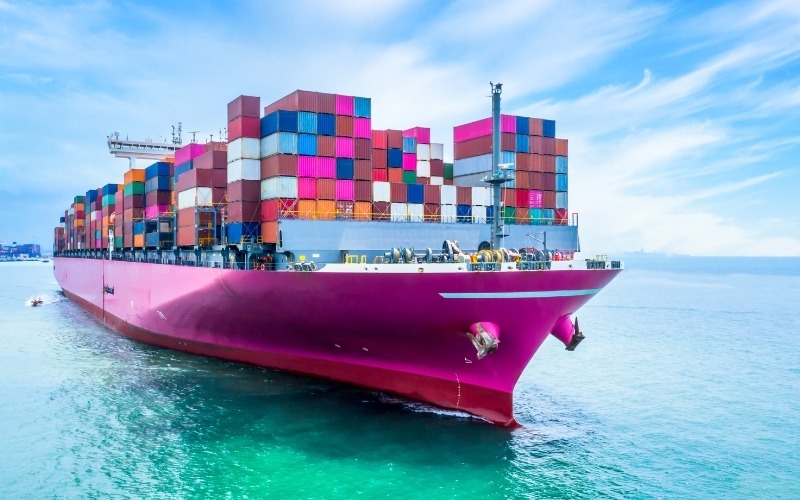
For Indian enterprises, international business is more than just exporting a container or filing a Bill of Entry. It is the deliberate expansion of commercial activity, such as goods, services, capital, and technology, across national boundaries to achieve greater scale and security. It is fundamentally about managing two distinct economic and regulatory ecosystems simultaneously.
The Fundamental Characteristics of Global Trade
Your daily operations confirm that international trade differs fundamentally from domestic commerce due to these inherent market characteristics:
- Cross-Border Transactions: All trade involves movement across judicial and customs boundaries, instantly triggering mandatory documentation and regulatory oversight in at least two countries.
- Multiple Currencies: Transactions rarely settle in Rupees (INR), meaning every sale or purchase involves Foreign Exchange (FX) risk. Managing exchange rate fluctuations is essential to protecting your profit margins.
- Regulatory Divergence: You must satisfy the tax and customs regulations of both India (e.g., GST refunds, export incentives) and the importing nation (e.g., duties, product standards).
- Cultural and Distance Barriers: Success requires managing vast geographic distances, ensuring robust logistics, and adapting products and business etiquette to align with distinct foreign preferences.
Example: Consider your garment unit in Delhi that sources specialised zippers from China (Import) and then exports finished jackets to the USA (Export). This single business cycle means you are simultaneously managing:
- Paying the Chinese supplier in Yuan or USD (FX Risk).
- Dealing with Indian Customs for your imported raw materials (Bill of Entry).
- Negotiating freight rates for the finished goods across the Atlantic (Logistics).
- Ensuring the final jacket meets US labelling standards (Compliance).
This intricate, multi-layered process, where domestic and foreign transactions overlap, is the true essence of international business.
Also Read: Key Documents Required for Foreign Trade
Key Benefits of International Business
For an enterprise that is already exporting or importing, the real value of global engagement lies in turning trade complexities into sources of competitive advantage. Here are the strategic benefits you gain by deepening your international footprint:
- Unlock Global Market Access: Entering multiple economies allows you to smooth out cyclical demand. If consumption drops in Europe, your sales in the Middle East or North America will maintain your revenue flow, protecting your overall top line.
- Achieve Higher, Sustainable Profits: Global markets often sustain higher Average Selling Prices (ASPs) for premium goods or specialised services compared to hyper-competitive domestic pricing. This raises your profit per unit without necessarily changing your production costs.
- Attract Diverse Global Talent: Operating internationally requires and attracts a higher calibre of multilingual staff, compliance experts, and specialised logistics managers. This diverse, skilled talent pool ensures your operations are resilient and capable of entering new, complex geographies faster.
- Outpace Rivals with Reduced Domestic Competition: By scaling up globally, you quickly move into a different league than your smaller domestic competitors. The operational complexity and compliance standards you master to serve international clients become a significant barrier to entry for local rivals.
- Drive Enhanced Innovation and Process Excellence: Competing against global rivals demands faster innovation in product design, packaging, and efficiency. This constant pressure ensures your firm adopts best-in-class processes before domestic competitors, giving you a lasting edge.
- Ensure Stability through Risk Diversification: Distributing your sales and sourcing across different economies acts as a crucial financial safeguard, protecting your company's financial health if a single major market (like India) faces a sudden economic or regulatory challenge.
- Maximise Resource Utilisation: By producing for a larger global volume, you can run your plant or service centres closer to full capacity. This reduces the per-unit cost of fixed overheads (rent, machinery, core staff salaries), making your entire operation more cost-efficient.
- Expand Your Available Product Market: International exposure forces you to adapt products for specific niches (e.g., lower voltage for a Southeast Asian market or specific certifications for the EU). This adaptation widens your available product market by opening up segments you couldn't access with a generic, domestic offering.

Understanding the core benefits is the first step. Next, we explore the different forms of international business your firm can use to realise these advantages.
Also Read: Definition, Types, and Effects Of Tariffs In International Trade
Forms of International Business
How you choose to enter or expand in a foreign market defines your level of risk and control. While you may have mastered direct trade, exploring these models shows you how to evolve your global presence, from simple transactions to deeper market control.
Transactional Methods (Low Risk, High Flexibility)
These are the most common ways Indian SMEs initially engage with the global market.
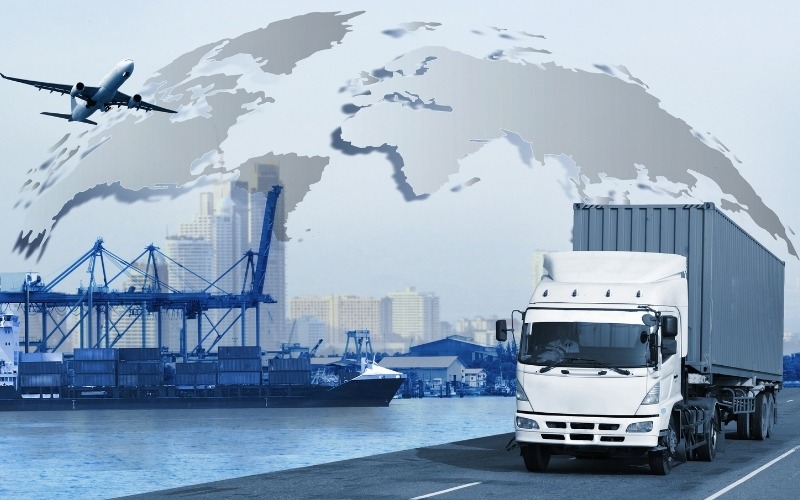
- Export and Import Trade: This involves the direct physical movement of goods and services.
- Export: Selling goods made in India to foreign buyers (e.g., a garment exporter shipping jackets to the UK).
- Import: Sourcing goods or components into India (e.g., importing specialised integrated circuits from Taiwan). This is the foundation of global trade and requires mastery of complex documentation.
Contractual Methods (Medium Risk, IP Focused)
These methods allow you to access foreign markets without significant capital investment or setting up full operations abroad:
- Licensing: Granting a foreign company the right to use your Intellectual Property (IP), such as a patent, manufacturing process, or trademark, in their market for a fee (royalty). Ideal for Indian tech firms or manufacturing SMEs with unique, patented processes that want revenue from a market without managing foreign production.
- Franchising: A specialised form of licensing where you sell a complete business model (brand name, operations manual, marketing system) to a franchisee in a foreign country. Best for successful Indian food chains, service providers, or educational institutions aiming for rapid, capital-light expansion into the Middle East or Southeast Asia.
- Strategic Alliances: A formal agreement between your firm and a foreign partner to collaborate on a specific project or market without creating a new entity. Useful for Indian logistics or IT service providers who partner with a local firm in a new country to bid on large government contracts, sharing risks and using local expertise.
Investment Methods (High Risk, Full Control)
These methods involve committing significant capital abroad to gain greater control over production and market share.
- Joint Ventures (JVs): Creating a new business entity with a foreign partner, where both parties share ownership, capital, profits, and risk. A practical way for an Indian manufacturer to set up a small assembly unit in the USA, sharing the cost and regulatory burden with a local distributor.
- Foreign Direct Investment (FDI): The deepest form of commitment, where your Indian enterprise fully owns and controls a facility, subsidiary, or operation in a foreign country (e.g., setting up a wholly-owned subsidiary office in Singapore). Reserved for highly successful SMEs ready to commit capital to fully control their supply chain, quality, and brand perception in a key target market.
To fully capitalise on these expansion methods, your firm must proactively address the external variables that influence global success.
Also Read: Best Practices for Customs Documentation and Labeling for International Shipments
Factors Influencing Global Success
For established Indian SMEs, the biggest difference between simply exporting and achieving sustained global success lies in anticipating and managing external forces. These factors, which are often outside your direct control, determine market profitability and operational risk.
Economic Conditions
Understanding the macro-economy is essential for protecting your profit margins from external shocks.
- Foreign Exchange (FX) Volatility: Your profit is made when the invoice is paid, not when the product is shipped. Fluctuations in the INR against the USD or Euro can wipe out margins quickly. You must actively monitor currency trends and use hedging tools to secure predictable revenue.
- Inflation and Consumer Spending: High inflation in a key target market (e.g., the US or UK) reduces consumer disposable income. This requires your firm to adjust product mix or pricing strategies to remain competitive against cheaper local alternatives.
Example: If the Euro weakens significantly, your European importer suddenly finds your USD-priced goods much more expensive, potentially forcing you to absorb a price cut to save the relationship.
Political Climate and Trade Policies
Government decisions and geopolitical stability directly affect access and costs.
- Trade Agreements and Tariffs: Free Trade Agreements (FTAs), like those India is pursuing, can instantly reduce or eliminate customs duties. Knowing the specific Rules of Origin (RoO) is critical to legally claim these benefits and pass the cost savings to your foreign buyer.
- Geopolitical Risk: Trade routes, manufacturing locations, and raw material sourcing can be disrupted by global conflicts or sanctions. Strategic sourcing requires maintaining backup suppliers in stable regions to avoid supply chain collapse.
Example: The imposition of anti-dumping duties by the EU on a specific chemical product from India can instantly make that entire export line unprofitable unless you can legally reclassify or source differently.
Technological Advancements
Technology defines the speed and efficiency of your cross-border operations.
- Digital Compliance Platforms: Reliance on manual documentation and separate systems (for finance, logistics, and customs) introduces delays and errors. Adopting unified digital platforms for customs filing and financial reconciliation is no longer optional; it is a requirement for scale.
- Automation in Logistics: Integrating your systems with global freight forwarders and carriers allows real-time visibility and predictive analytics. This reduces demurrage charges and helps guarantee delivery times, which builds buyer confidence.
Example: A competitor using Electronic Data Interchange (EDI) to file their Bill of Entry gets customs clearance in hours, while your team, relying on emails and spreadsheets, takes days, leading to higher port charges.
Cultural Dynamics
Successful global trade is built on mutual understanding, not just transactions.
- Business Etiquette and Negotiation: What is acceptable in an Indian business environment may be seen as aggressive or rude in markets like Japan or Germany. Adapting your negotiation style and communication protocol is essential for building long-term trust.
- Product Localisation: Cultural sensitivity dictates success. For instance, packaging colours, marketing messaging, or even product dimensions must be altered to appeal to local tastes or comply with local unit standards.
Example: A food product successful in India might fail in the Middle East simply due to inadequate compliance with specific Halal certification requirements, a cultural and regulatory necessity.
Also Read: Common Challenges and Issues in International Business
The constant thread running through all these factors is the need for centralised control and information accuracy. Managing these complexities manually is where most promising SMEs encounter bottlenecks and escalating costs.
How Pazago Strengthens Logistics Execution in International Business
Expanding into international markets increases revenue potential, but it also increases freight exposure. Longer transit cycles, multi-country routes, and tighter buyer delivery windows mean execution gaps quickly translate into financial impact. Rate volatility, container unavailability, and missed vessel cut-offs can erode margins even when demand is strong.
While strategic expansion decisions shape growth, shipment reliability determines whether those gains materialize. Pazago focuses on stabilizing freight execution so international trade remains commercially predictable rather than operationally reactive.
Here is how Pazago supports exporters operating across global markets:
- Competitive Freight Rates Across Key Trade Lanes: Long-term relationships with major shipping lines help reduce sudden rate fluctuations, allowing exporters to plan margins and pricing with greater confidence.
- Assured Container Booking and Coordinated Loading: Confirmed container allocation and alignment at the factory, CFS, or port reduces the risk of rollovers, missed sailings, and cascading supply chain delays.
- Daily Status Reports (DSRs) for Shipment Visibility: Structured shipment updates covering container movement, ETD and ETA changes, and transshipment milestones enable exporters to anticipate disruptions instead of reacting to them.
- Comprehensive Pre-Shipment and Post-Shipment Support: Ongoing coordination with carriers and logistics partners helps resolve booking changes, schedule shifts, and operational exceptions without disrupting buyer commitments.
- Equal Operational Support for Exporters of All Sizes: Whether managing growing export volumes or established trade lanes, exporters receive consistent freight coordination support without scale-based limitations.
By reinforcing freight stability across international movements, Pazago helps exporters convert global demand into dependable delivery performance and protected margins.
Conclusion
International business offers higher revenue potential and stronger market positioning for Indian SMEs. Converting that opportunity into sustained growth requires dependable logistics execution across borders.
Pazago supports exporters with stable freight access, coordinated container handling, and structured shipment visibility, helping maintain control over international delivery commitments as global operations expand.
FAQs
1. What is the first step an established SME should take to further expand into a new foreign market?
The first step is conducting deep market research to identify specific consumer demand, legal requirements, and optimal distribution channels for your product in the target country.
2. How can I finance large export orders without straining my working capital?
You can use trade finance tools like export credit insurance, pre-shipment credit (Packing Credit), or post-shipment financing (Factoring/Forfaiting) provided by banks or specialised fintech platforms.
3. What is the difference between an FTA (Free Trade Agreement) and a CETA (Comprehensive Economic and Trade Agreement)?
An FTA focuses mainly on reducing or eliminating tariffs on goods, whereas a CETA covers a broader scope, including services, investment, intellectual property, and regulatory cooperation.
4. What is the "Rules of Origin" (RoO), and why is it critical for my export business?
RoO determines the 'economic nationality' of your product. It is critical because only goods that meet the RoO criteria can claim preferential reduced or zero duties under trade agreements like FTAs.
5. Should I use an open account or a Letter of Credit (LC) for my first high-value international sale?
For the first high-value sale, an irrevocable Letter of Credit (LC) is safer as it substitutes the bank's credit risk for the buyer's risk, ensuring guaranteed payment upon confirmed shipment.