.png)


Letter of Indemnity (LOI) in Export: Purpose, Process & Example
%20in%20Export.jpg)
Optimize your business: use unlimited savings with Pazago fulfilled now!
Get Started ->Delays, missing paperwork, or last-minute document discrepancies can disrupt export shipments and trigger avoidable costs. In such situations, cargo often cannot move forward unless one party agrees to assume responsibility for potential risks. This is where a Letter of Indemnity (LOI) enters the export workflow.
Exporters and importers often treat a Letter of Indemnity as a routine document and miss its seriousness. An LOI is a legally binding commitment that shifts responsibility for losses, claims, or disputes when shipments move forward despite document gaps or errors. Handled correctly, it protects cargo flow and business continuity. Handled casually, it exposes companies to significant legal and financial risk long after delivery.
This guide explains how Letters of Indemnity are used in export transactions, the situations in which they become necessary, and the risks involved across the shipment lifecycle.
Key Takeaways
- A Letter of Indemnity transfers financial and legal responsibility for specific risks tied to a transaction or shipment.
- LOIs may be issued directly by exporters or importers, or by banks and insurance providers acting on their behalf.
- These documents are used across trade, shipping, finance, and logistics wherever parties need formal risk coverage.
- An LOI is enforceable only when it clearly defines parties, scope of indemnity, shipment or transaction references, and authorized execution.
What Is a Letter of Indemnity?

A Letter of Indemnity (LOI) is a written commitment where one party agrees to take responsibility for loss, damage, or claims if a specific situation goes wrong. For Indian exporters, LOIs are particularly relevant in shipping when standard procedures cannot be fully met but cargo still needs to move.
In shipping, an LOI is often issued by the exporter to assure carriers, ports, or other stakeholders that any loss or claim arising from the shipment will be handled responsibly. In some cases, banks or insurance providers may support the indemnity through guarantees or financial backing.
For instance, a textile exporter shipping goods before a seasonal deadline may issue an LOI when the original documents are delayed, ensuring the shipment can proceed without holding up buyer deliveries. This document confirms that the exporter will cover any resulting claims or losses, protecting both the exporter and the buyer relationship.
Purpose of a Letter of Indemnity (LoI)

A Letter of Indemnity serves several practical purposes in international trade and shipping:
- Protect Against Financial Loss: An LOI confirms that the issuing party accepts responsibility for specific risks linked to the transaction or shipment.
- Clarify Responsibility: It clearly assigns risk, so exporters know who is accountable, whether it’s the exporter, carrier, or bank, helping prevent confusion during disputes.
- Keep Shipments Moving: When documentation or procedural issues arise, an LOI allows shipments to continue without waiting for full compliance, preventing missed delivery timelines.
- Support Time-Sensitive and High-Value Cargo: For shipments of high-value goods like pharmaceuticals, engineering components, or textiles during peak season, an LOI ensures exporters can meet buyer deadlines while taking responsibility for risk.
- Reduce Disputes: By documenting responsibility upfront, exporters can avoid prolonged liability discussions after the shipment reaches the destination.
- Provide Assurance to Stakeholders: Carriers and ports are more willing to handle shipments when an LOI confirms that any financial or legal claims will be addressed, giving exporters operational confidence.
What’s Included in a Letter of Indemnity
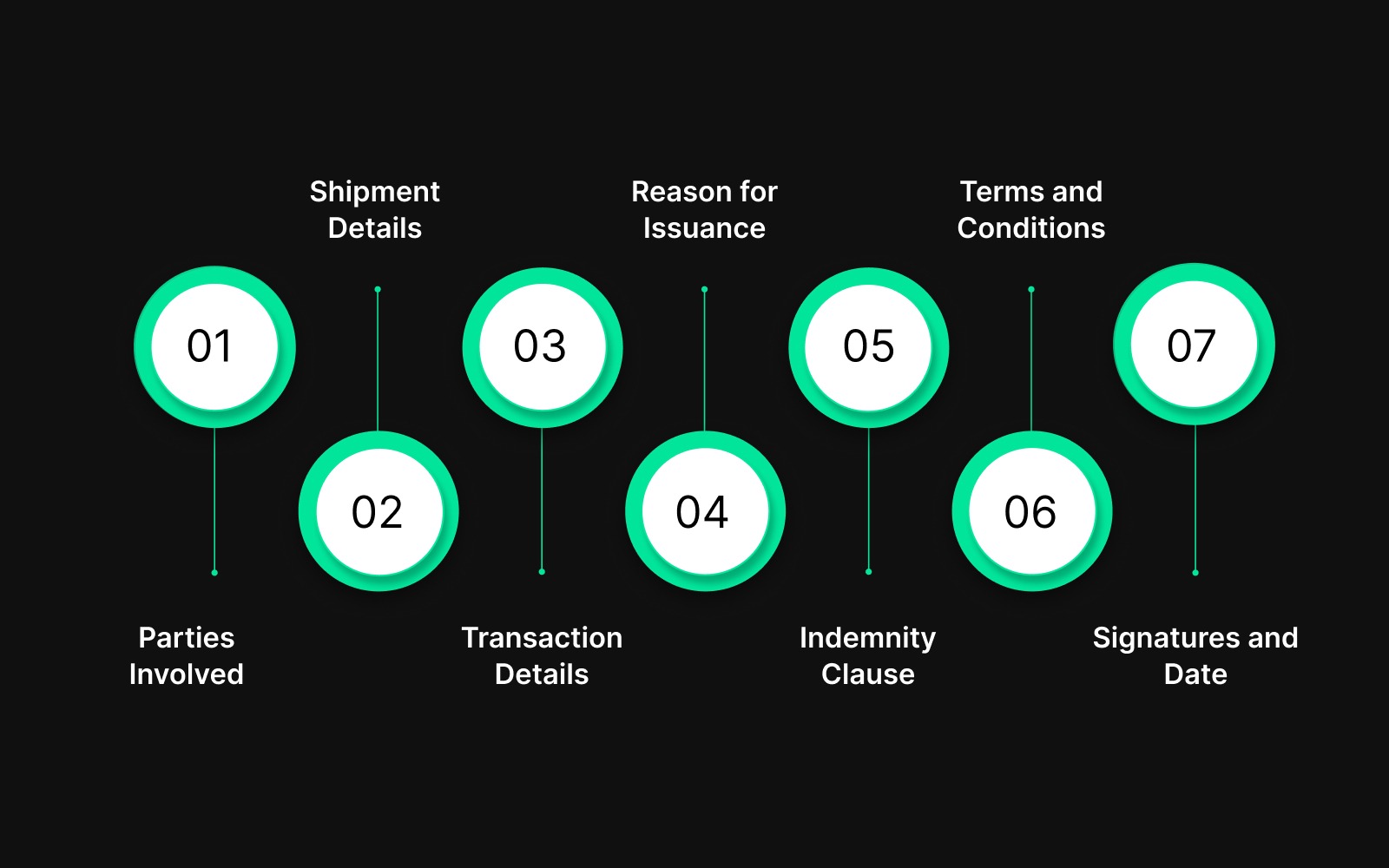
When an exporter issues or receives a Letter of Indemnity (LOI), knowing exactly what it should contain helps avoid disputes, delays, or financial exposure. Missing details or vague language can create operational and legal headaches during the shipment lifecycle.
A standard LOI in Indian export shipping usually includes these core elements:
1. Parties Involved
Include full legal names and addresses of all parties connected to the transaction, exporter, importer, carrier, and, if relevant, the issuing bank or insurer. Accurate identification ensures accountability and reduces the chance of claims being contested.
2. Shipment Details
Provide a clear description of the cargo, including type of goods, quantity, weight, marks, and shipment identifiers. Precise details prevent misdelivery or discrepancies at customs and during handling.
3. Voyage or Transaction Details
Specify the vessel name, port of loading, port of discharge, and any shipment references. Linking the LOI to a particular shipment ensures it is enforceable and understood by all parties.
4. Reason for Issuance
State why the LOI is being issued, highlighting the operational or commercial situation that requires indemnity. This helps exporters justify the document in case of claims.
5. Indemnity Clause
Clearly define the responsibility of the issuing party to compensate the other party for losses, claims, or liabilities arising from the agreed action. A precise clause limits ambiguity in disputes.
6. Terms and Conditions
Include the scope of responsibility, validity period, and governing law. This helps exporters understand the extent of their obligations and legal exposure.
7. Signatures and Date
Ensure authorized representatives sign the LOI and include the issuance date. Bank or insurer countersignatures, if applicable, add credibility and acceptance.
Each of these elements is essential for the LOI to be valid and enforceable. Missing or vague details can weaken the document and increase exposure to disputes or financial loss later in the shipment lifecycle.
Also read: Essential Shipping Documents Every Importer and Exporter Should Know.
Letter of Indemnity Examples: Sample Letter

Below is a simple sample Letter of Indemnity used in shipping and export transactions. This is for reference only. Actual wording may vary based on trade terms, jurisdiction, and legal advice.
How to Obtain and Prepare a Letter of Indemnity

Once the need for a Letter of Indemnity is clear, the process should be handled carefully and in a structured way to avoid exposure later.
1. Identify the Requirement
Start by confirming why the LOI is needed and who is requesting it. The purpose, scope, and parties involved must be clearly understood before any document is prepared.
2. Obtain the Letter of Indemnity
Depending on the transaction, the LOI may be issued directly by the exporter or importer, or arranged through a bank or insurance provider. Ensure the issuing party is authorized and financially capable of standing behind the commitment.
3. Use a Standard Format
Always rely on a recognized or industry-accepted format. Avoid informal or custom wording that may weaken enforceability or leave gaps in responsibility.
4. Fill in Shipment and Party Details
Complete all required fields accurately, including party names, shipment references, cargo details, and transaction identifiers. Incomplete or incorrect information can invalidate the LOI.
5. Include a Clear Indemnity Clause
The indemnity clause must clearly state the responsibility being assumed and the circumstances under which compensation will apply.
6. Add Governing Law and Validity Terms
Specify the applicable law and, where required, the validity period of the indemnity to avoid jurisdictional disputes.
7. Sign and Secure Backing
Ensure the LOI is signed by authorized representatives. Where required, obtain bank or insurer backing to strengthen credibility and acceptance.
Letter of Indemnity vs Bill of Lading vs Bank Guarantee

These documents are often discussed together in export and shipping transactions, but each serves a very different function. Below is a table that clearly compares the Bill of Lading, Letter of Indemnity, and Bank Guarantee across purposes, risks, and uses.
Risks of Using a Letter of Indemnity
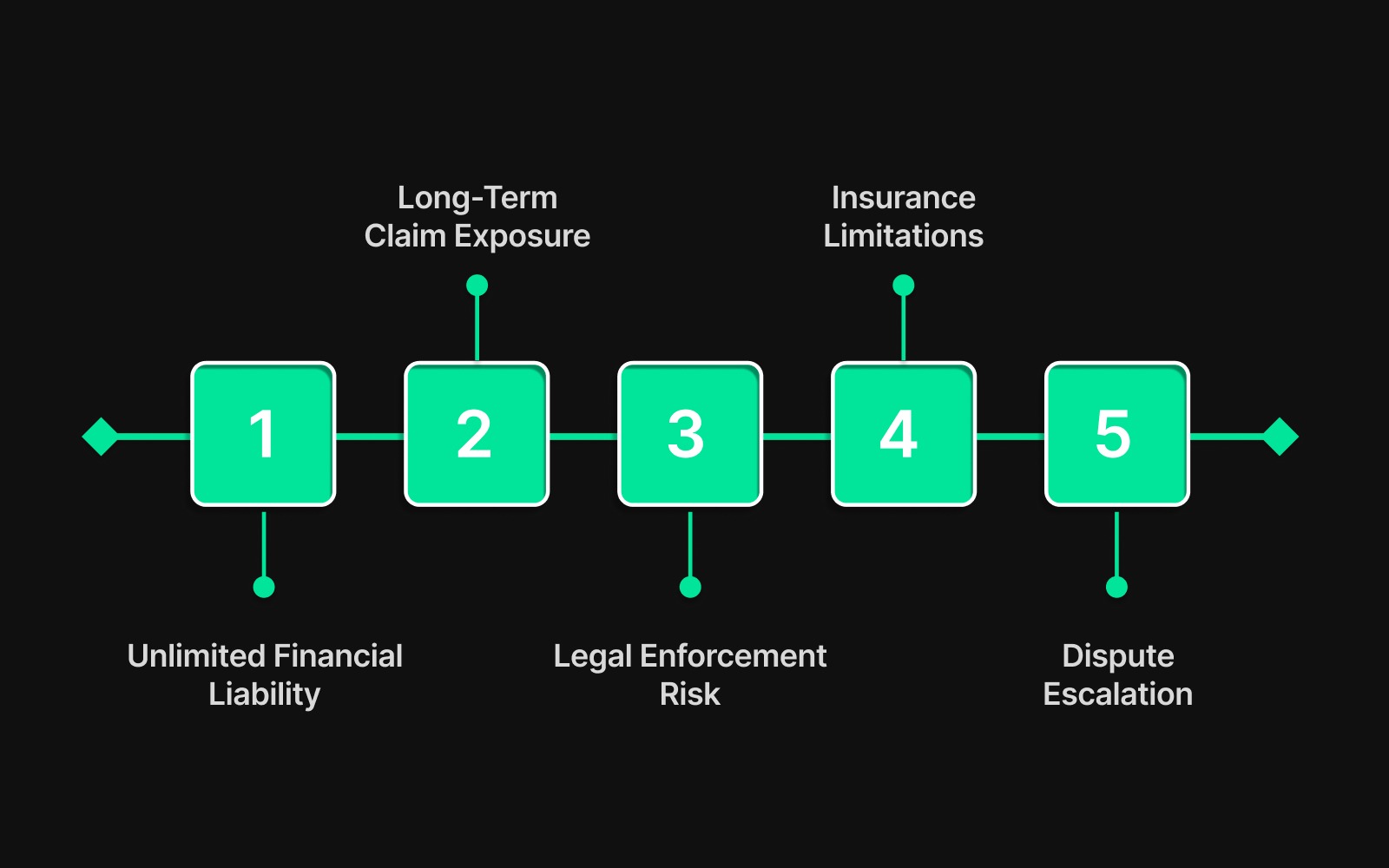
Issuing a Letter of Indemnity carries significant risk, especially when it is treated as a routine document rather than a binding commitment.
- Unlimited Financial Liability: An LOI can expose exporters to open-ended claims, such as cargo loss, third-party disputes, and legal costs. Without proper controls, these liabilities can exceed shipment value.
- Long-Term Claim Exposure: Claims may surface months after delivery, when records are harder to retrieve, creating challenges for dispute resolution.
- Legal Enforcement Risk: Even poorly drafted LOIs can be legally enforceable. Ambiguity or vague terms may still hold you responsible in court or arbitration.
- Insurance Limitations: Many insurance policies do not automatically cover losses arising from LOIs. You may face out-of-pocket costs if the indemnity is invoked.
- Dispute Escalation: Unclear responsibilities can trigger prolonged disputes between carriers, buyers, and exporters, disrupting operations and straining buyer relationships.
These risks make it critical to issue an LOI only with full awareness of the obligations being accepted.
Best Practices for the Correct Use of an Indemnity Letter

Using a Letter of Indemnity requires careful handling, as it creates direct legal and financial responsibility. Following established practices helps reduce exposure and prevents avoidable disputes during or after shipment execution.
Key practices to follow include:
- Confirm the exact requirement before issuing: Understand why the indemnity letter is needed and what specific action or risk it is meant to cover.
- Use a standard, legally vetted format: Rely on recognised formats to avoid unclear or weak wording.
- Limit the scope of liability: Ensure the indemnity applies only to a defined shipment, transaction, or event.
- Verify the issuing authority: Confirm the letter is signed by an authorised party capable of honoring the commitment.
- Review governing law and jurisdiction: Check applicable law to avoid enforcement complications later.
- Maintain clear records: Store signed copies with related shipment and transaction documents.
- Seek legal review for high-risk cases: Legal review is advisable for high-value or complex situations.
By following these steps, you reduce legal exposure and operational risk. Yet, managing LOI documentation and ensuring consistent compliance can be challenging; this is where specialized logistics support can make a difference.
How Pazago Helps Exporters Manage Letter Of Indemnity Documentation?
Letters of Indemnity often arise when shipment execution moves faster than documentation processes. Situations such as delayed Bills of Lading, document mismatches, or urgent cargo release requests can require exporters to issue an LOI so the shipment can proceed without disruption.
Pazago helps exporters manage these situations by keeping shipment coordination, documentation updates, and logistics communication aligned during export execution.
Here’s how exporters benefit from Pazago’s support:
- Documentation Visibility Linked To Shipment Execution: LOIs are usually issued when cargo movement or BL release cannot wait for final documentation. Pazago keeps LOIs connected with related shipment documents such as Bills of Lading, invoices, and packing lists so exporters can quickly verify details when carriers or forwarders request confirmation.
- Shipment Coordination Across Export Stakeholders: LOIs often involve multiple parties, including shipping lines, freight forwarders, and buyers. Pazago helps exporters coordinate these interactions so documentation issues do not delay cargo release or vessel loading.
- Pre-Shipment And Post-Shipment Support:: Exporters frequently require assistance when LOIs are issued for urgent shipment movement or delayed document release. Pazago supports exporters before and after shipment by helping them stay aligned with carriers, documentation timelines, and BL processes.
- Clear Shipment Updates Through Daily Status Reports: When LOIs are issued to keep shipments moving, exporters still need visibility into container movement and vessel schedules. Pazago provides shipment updates so exporters can stay informed and communicate accurately with buyers.
Conclusion
LOIs play a critical role in keeping export shipments moving, but they also introduce long-term legal and financial exposure if handled casually. For exporters dealing with multiple shipments, extended transit periods, and changing stakeholders, the real risk lies less in issuing an LOI and more in losing control over its context, approvals, and supporting records. Treating LOIs as structured, traceable commitments rather than one-off documents reduces disputes and protects margins.
Operational control becomes essential when shipments, documentation timelines, and stakeholder coordination start to overlap. Exporters who maintain visibility over shipment execution and document processes are better positioned to avoid delays, disputes, and costly misunderstandings.
Pazago helps exporters maintain this control by supporting shipment coordination, documentation alignment, and logistics visibility throughout the export lifecycle.
Book a demo to see how Pazago helps exporters manage shipping execution with greater predictability and control.
FAQs
1. Who issues a Letter of Indemnity?
A Letter of Indemnity is usually issued by the exporter or importer. In some cases, it may be issued by a bank or insurance provider on behalf of the trading party.
2. How much does a Letter of Indemnity cost?
The cost depends on who issues it. Exporter-issued LOIs may involve no direct fee, while bank- or insurer-issued LOIs typically include charges based on risk, value, and validity period.
3. How long is a Letter of Indemnity valid?
Validity depends on the terms stated in the document. Some LOIs are open-ended, while others specify a fixed duration or expire once a defined condition is met.
4. Can a Letter of Indemnity be revoked?
Once accepted and acted upon, an LOI generally cannot be revoked unilaterally. Any withdrawal usually requires consent from all involved parties.
5. How should exporters store Letters of Indemnity?
LOIs should be stored alongside related shipment, order, and transaction records so they remain accessible for audits, claims, or disputes long after shipment completion.