.png)


Proof of Delivery (POD): What It Is and Why It Matters
.jpg)
Optimize your business: use unlimited savings with Pazago fulfilled now!
Get Started ->Shipping your goods internationally comes with pressure at every step. You might have confirmed bookings, yet buyers keep calling about delays. Couriers report deliveries, but you are unsure if the documents or cargo reached the right hands. Any missing signature or delayed proof can stall payments, trigger disputes, and even damage your reputation. Instead of focusing on growth, you end up chasing carriers while your cash flow and reputation hang in the balance.
You can avoid these problems by ensuring you have a reliable proof of delivery process in place. By actively tracking the POD of courier shipments and confirming delivery details promptly, you can reduce disputes, secure faster payments, and maintain control over each shipment.
In fact, the global proof of delivery software market is expected to reach nearly $4.9 billion by 2033, reflecting how critical structured delivery verification has become for businesses worldwide. Staying proactive helps you meet buyer expectations and keep operations running smoothly without constant firefighting.
In this blog, we’ll explore what POD is, the types and processes involved, common challenges exporters face with it and best practices for managing it effectively.
Key Highlights:
- Proof of Delivery (POD) is a documented confirmation that shipments or documents have reached the intended recipient, providing operational and commercial evidence for exporters.
- POD includes critical details like delivery date and time, recipient name and signature, location, tracking number, and cargo condition, documenting validity in disputes and compliance.
- Various POD types exist, including physical signatures, electronic POD (ePOD), courier confirmations, geo-tagged records, and email acknowledgments, with guidance on how exporters should select the right type based on risk, cost, and buyer requirements.
- A verified POD reduces payment disputes, helps release payments under LC deadlines, provides evidence for insurance claims, clarifies delivery status for buyers, and documents compliance obligations.
- Effective POD management requires proactive tracking, verifying authorized recipients, digital record-keeping, timely communication, and cross-verifying delivery details across the supply chain.
What is Proof of Delivery (POD)?

Proof of Delivery (POD) is the documented confirmation, physical or digital, that your shipment has been received by the intended party at the agreed place and time. In international trade, this confirmation serves as operational and commercial evidence that the exporter has fulfilled a delivery obligation.
For Indian exporters, POD can relate to:
- Physical cargo delivered to a buyer’s warehouse
- Couriered original documents, such as Bills of Lading
- Sample shipments
- Replacement documentation
It is not just a delivery acknowledgment. It is evidence that may influence payment release, insurance claims, dispute resolution, and compliance verification.
Key Information Included in POD
A POD must contain specific data points to hold value in trade transactions. Missing information reduces its usefulness in disputes or compliance reviews.
A commercially valid POD should include the following:
- Date and Time of Delivery: This shows whether the shipment or document arrived on time. Exporters relying on LC terms or tight payment cycles can face delayed payments if deadlines are missed, so confirming delivery promptly is critical.
- Name and Signature of Recipient: The recipient’s identity matters. If an unauthorised person signs, buyers can dispute acceptance. Exporters should verify authorized recipients before shipment to avoid payment delays or disputes.
- Delivery Location Details: The exact address or department where delivery occurred helps avoid internal buyer-side confusion. Large overseas buyers may have multiple offices or warehouses.
- Tracking or Reference Number: This connects the POD to the shipment or courier booking. It prevents misidentification and allows cross-verification.
- Condition Acknowledgment (if applicable): In cargo deliveries, noting the visible condition can be relevant for future claims.
Knowing which details are critical helps exporters assess if their current POD process is reliable or needs improvement to prevent payment or compliance issues.
Also Read: Understanding Proof of Delivery: A Guide for Businesses and Consumers
Now that we know what a POD contains, the next step is understanding the different types of POD available in modern logistics.
Types of Proof of Delivery
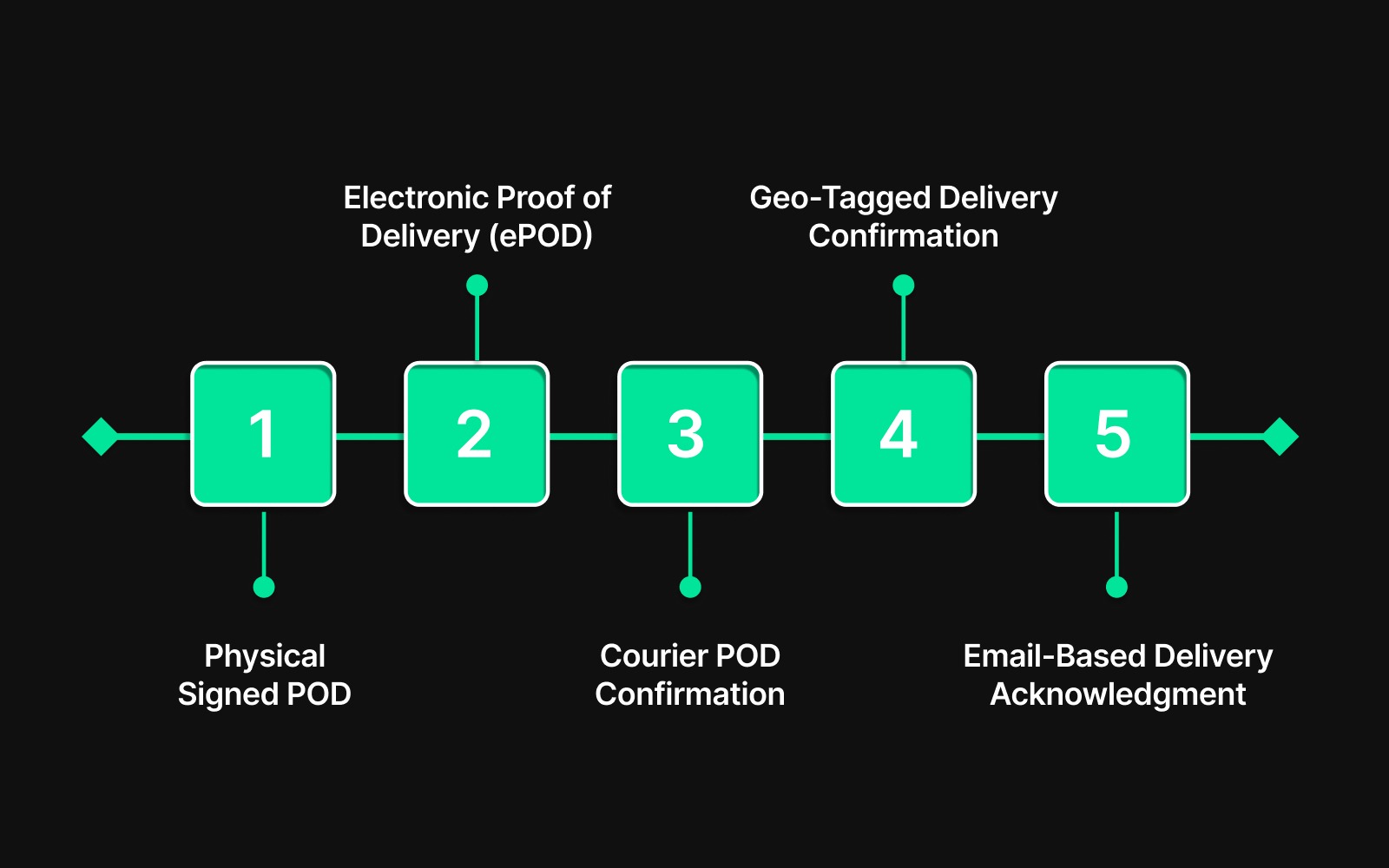
Proof of delivery has evolved beyond paper slips. As supply chains digitise, exporters encounter different forms of POD depending on shipment type and delivery method.
The common types include:
1. Physical Signed POD
This is the traditional method where the recipient physically signs a delivery slip at the time of cargo or document handover. The signature serves as a legal acknowledgment of receipt.
Best for: Cargo deliveries to warehouses or ports where physical acknowledgment is required.
2. Electronic Proof of Delivery (ePOD)
Signatures are captured digitally through handheld devices or tablets, with the data stored centrally for immediate access. Exporters can check confirmations quickly without manual follow-ups.
Best for: Exporters sending multiple shipments requiring quick, trackable confirmation.
3. Courier POD Confirmation
For international document shipments, courier companies provide digital copies of signed acknowledgments. This is particularly critical for original Bills of Lading, commercial invoices, and other trade documents, ensuring exporters have verifiable proof.
Best for: Exporters sending original shipping or compliance documents internationally.
4. Geo-Tagged Delivery Confirmation
Coordinates and timestamps record the exact location and time of delivery. Exporters can use this information to confirm receipt of high-value or regulated goods.
Best for: Shipments where verification at a precise location is important, such as high-value goods or regulated cargo.
5. Email-Based Delivery Acknowledgment
Buyers may confirm receipt via official email, providing a written acknowledgment. While convenient, exporters should treat this as supplementary evidence rather than the main POD.
Best for: Small shipments or document dispatches where courier POD is unavailable but buyer confirmation is required.
Each type carries a different level of evidentiary strength. Exporters must know which format is acceptable for their buyer's contract and payment terms.
Next, let’s examine why POD plays such a critical commercial role.
Benefits of Proof of Delivery
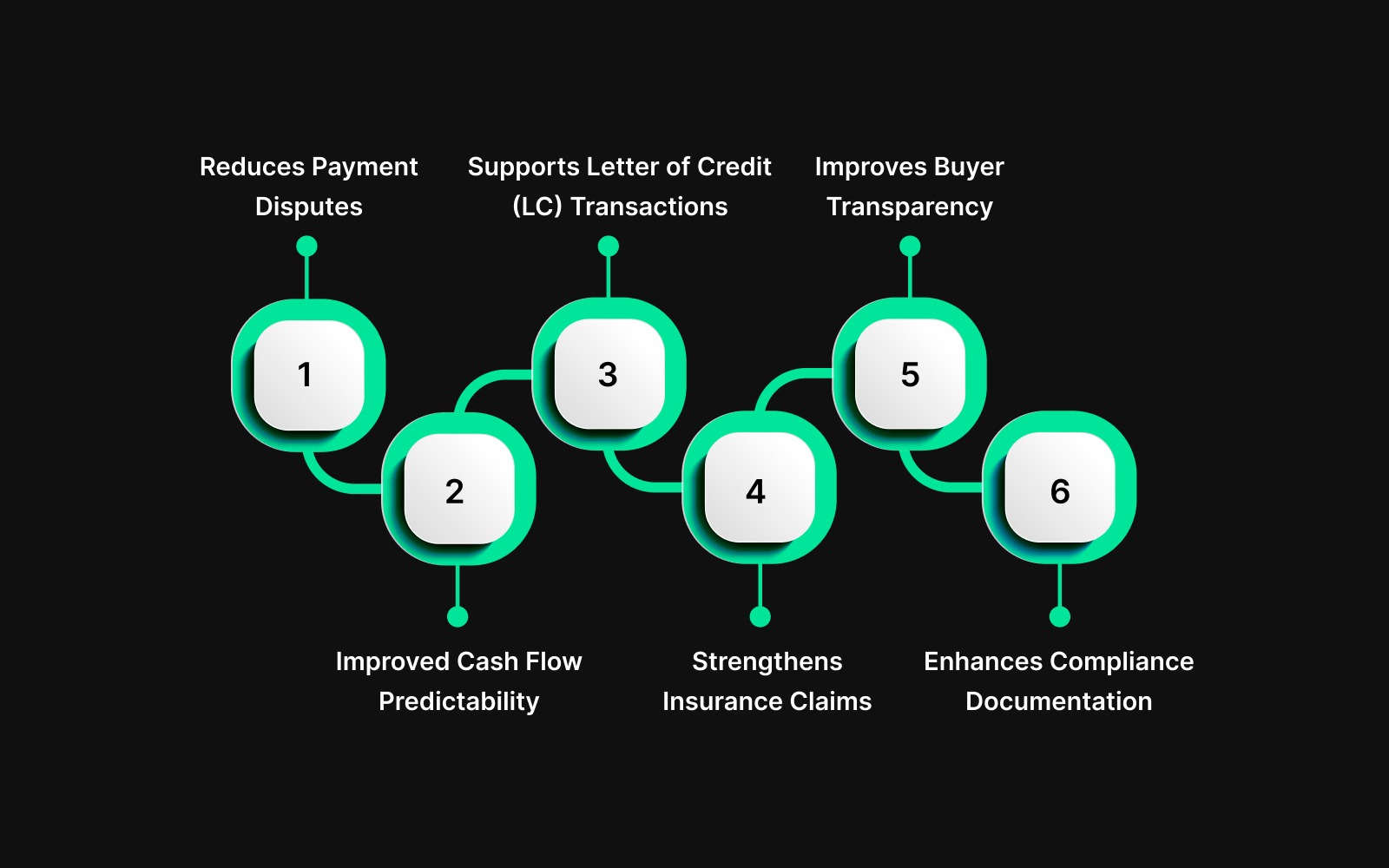
Proof of delivery protects exporters in ways that are often underestimated. It affects cash flow, legal standing, and buyer confidence.
Here is why it matters:
1. Reduces Payment Disputes
A verified POD provides clear evidence that goods or documents have reached the intended recipient.
- Acts as proof when buyers question the delivery status.
- Minimises disagreements over late or missing shipments.
- Helps exporters provide factual backup when following up on payments.
With POD ready, exporters can avoid long email threads and maintain smoother commercial relationships.
2. Improved Cash Flow Predictability
Delays in delivery confirmation can hold up payments and affect working capital.
- Immediate access to POD allows faster invoice processing.
- Exporters can plan their cash flows knowing when payments are likely to clear.
- Reduces the risk of stalled receivables caused by uncertainty in delivery acknowledgment.
This allows exporters to allocate resources without disruption from delayed payments.
3. Supports Letter of Credit (LC) Transactions
In LC-based transactions, documentary compliance is critical for payment release.
- A POD confirms that the goods have been delivered according to contract terms.
- Acts as supporting evidence in case of LC discrepancies.
- Helps exporters meet banking requirements without unnecessary delays.
Aligning POD with LC documentation strengthens the exporter’s position during payment processing.
4. Strengthens Insurance Claims
Goods in transit may face damage, loss, or delay. A verified POD provides the basis for insurance claims.
- Confirms exact delivery time and recipient details.
- Supports claims if partial or damaged consignments are reported.
- Provides an auditable trail that insurers can reference.
Exporters can recover compensation faster and reduce the risk of claim rejection.
5. Improves Buyer Transparency
Buyers expect clarity on shipment status. POD helps exporters provide timely updates.
- Enables exporters to proactively share delivery confirmations.
- Builds buyer confidence and trust in the exporter’s reliability.
- Reduces back-and-forth communication caused by uncertainty over delivery status.
Transparent communication strengthens long-term business relationships and repeat orders.
6. Enhances Compliance Documentation
Maintaining POD records is essential for regulatory and audit purposes.
- Serves as proof of compliance for customs or trade authorities.
- Provides a clear record of shipment handover for internal audits.
- Helps exporters demonstrate operational accountability in case of disputes or inspections.
Organized POD records prevent last-minute stress and make compliance easier to verify.
Also Read: Understanding Essential Import & Export Delivery Documents
These benefits show that POD is not administrative. It directly influences commercial stability. To see how it fits into real operations, let us examine how POD functions within modern supply chains.
How Proof of Delivery Works in Modern Supply Chains?

In export logistics, POD is the final verification point in a chain that begins long before cargo reaches the buyer.
Here’s how POD typically works in modern supply chains:
1. Shipment Dispatch from Factory or CFS
The process begins with goods being ready for export. Exporters must ensure cargo is packed, labeled, and documented correctly before handing it over to the carrier or CFS (Container Freight Station). Careful verification at this stage reduces the risk of missing POD confirmations.
2. International Transit
Once the shipment is on the vessel or aircraft, the exporter can monitor its progress through booking and tracking details. Delays or incomplete updates can affect verification. Exporters who schedule regular status checks can confirm POD sooner.
3. Arrival at Destination Port
When goods arrive at the foreign port, customs clearance and local handling begin. Delays or miscommunication can impact buyer receipt and payment timelines. POD confirms that the shipment has entered the buyer’s jurisdiction.
4. Customs Clearance at Destination
Customs processing ensures shipments comply with local import regulations. Delays may postpone handover to the buyer. A properly documented POD, including courier confirmations, shows exporters fulfilled their responsibility up to this point.
5. Final Delivery to Buyer Warehouse
This is the stage where the shipment reaches the buyer or their designated agent. Exporters should verify the signatory and department to prevent disputes. Signed POD or courier confirmation confirms delivery.
6. Delivery Confirmation Recorded
Once the recipient acknowledges receipt, the POD is recorded digitally or physically. Exporters benefit by having records ready for compliance, payment, and dispute resolution. Digital storage allows faster access and avoids delays in accounts receivable or LC-based payments.
Exporters who actively monitor these stages have greater control. Assuming everything proceeds automatically can result in delays or unresolved issues.
However, even with technology in place, several operational challenges continue to affect POD reliability.
Common Challenges Businesses Face with POD

Despite improvements in digital systems, exporters still encounter practical difficulties related to proof of delivery. Recognizing these issues helps prevent repeated operational gaps.
Common issues include:
- Incomplete Recipient Details: Courier systems may show only a first name or an unclear signature. If the buyer later denies receipt, exporters may struggle to prove correct delivery.
- Delivery to Wrong Department: In large organisations, documents may be received by front-desk staff who are not responsible for import documentation. Internal misplacement can lead to false non-receipt claims.
- Delayed POD Availability: Some courier systems update tracking status but delay signature uploads. Exporters who follow up too early may not have full confirmation available.
- Incomplete Signature Capture: Sometimes signatures are unclear, or recipient names are missing. This weakens documentation strength during disputes.
- Delivery to Unauthorised Recipient: Documents may be received by administrative staff rather than authorized commercial contacts. Buyers may later deny formal receipt.
- Over-Reliance on Verbal Confirmation: Exporters sometimes accept buyer confirmation via phone without securing formal acknowledgment.
To address these risks, exporters must adopt structured practices for POD management.
Best Practices for Using POD

Managing proof of delivery effectively requires discipline and coordination. Exporters who stick to consistent processes face fewer disputes and payment delays.
Here are practical measures:
- Confirm Authorized Recipient in Advance: Before dispatching documents, verify the correct contact person and department. This reduces misdelivery risk.
- Track POD of Courier Actively: Do not wait for buyers to confirm receipt. Monitor courier tracking and obtain signed POD copies proactively.
- Digitally Archive Records: Store all POD documents in a structured digital folder linked to shipment references. This helps during audits and payment follow-ups.
- Align POD with Payment Terms: If payment is triggered upon document receipt, track timelines closely and follow up immediately after confirmed delivery.
- Cross-Verify Delivery Details: Match POD data with shipment references to prevent confusion between multiple consignments.
- Communicate Promptly: Share POD confirmation with buyers to close communication loops and reinforce transparency.
Following these practices reduces payment delays and minimises operational risks.
However, consistent execution requires structured logistics coordination. This is where the right logistics partner, like Pazago, becomes crucial.
How Pazago Simplifies and Secures Proof of Delivery?
For Indian exporters managing multiple shipments, tracking POD of courier deliveries manually often creates visibility gaps. Delayed or unclear confirmations can directly impact payment timelines and buyer communication.
Pazago addresses this through logistics-focused support tailored to exporters.
- Clear POD of Courier Tracking and Visibility: Exporters often depend on fragmented updates when dispatching original documents. Pazago provides structured visibility and coordinated tracking, reducing uncertainty around document delivery.
- Pre- and Post-Shipment Coordination Support: POD is closely linked to document accuracy and timing. Pazago supports exporters before dispatch to confirm schedules and documentation alignment, reducing last-minute courier stress.
- Operational Communication During Transit: Delays or routing changes can affect delivery timelines. With continuous updates and coordinated follow-ups, exporters are better positioned to respond quickly if courier movement slows.
- Support Across Exporter Sizes: Whether it is a single LCL shipment or multiple container movements, exporters receive structured assistance. This consistency improves control across all transactions.
By placing exporter priorities first, Pazago helps turn POD from a manual, uncertain process into a managed milestone that supports cash flow, dispute avoidance, and compliance.
Conclusion
Reliable proof of delivery is more than administrative confirmation. For Indian exporters, it protects payment cycles, supports compliance clarity, and reduces disputes tied to shipment or document receipt. Missing or unclear POD records can directly affect working capital and buyer relationships.
As global trade becomes increasingly time-sensitive and digitally monitored, exporters who actively manage POD of courier processes gain stronger control over operations. Structured tracking, proper documentation, and timely communication reduce uncertainty across transactions.
If you want stronger visibility, clearer shipment tracking, and better control over your export logistics processes, connect with Pazago to understand how your delivery verification can be better managed. Contact us today.
FAQs
1. How does POD support invoicing and payment reconciliation?
Proof of Delivery (POD) confirms that goods were delivered as agreed, including date, time, and recipient details. This verification helps businesses issue accurate invoices, reduce payment disputes, and streamline reconciliation by matching delivery records with billing data, ensuring faster approvals and improved cash flow management.
2. What role does POD play in building customer trust and satisfaction?
POD provides transparent confirmation that an order reached the intended recipient in good condition. By sharing delivery evidence such as signatures or timestamps, businesses demonstrate accountability and reliability, which strengthens customer confidence, reduces complaints, and enhances overall satisfaction with the service experience.
3. Who typically generates and retains POD records?
POD records are usually generated by the carrier or logistics provider at the time of delivery. Drivers capture signatures, photos, or digital confirmations, which are stored in the carrier’s system. Both the carrier and the shipping business typically retain copies for compliance, record-keeping, and dispute resolution purposes.
4. What details, like tracking numbers and recipient info, are standard in POD?
Standard POD details include the tracking number, delivery date and time, recipient’s name and signature, delivery address, and sometimes a photo of the package. Some records also include driver identification and shipment status updates to ensure complete traceability and accountability.
5. How can businesses request POD from carriers like FedEx or DHL?
Businesses can request POD through the carrier’s online tracking portal, customer service, or integrated shipping software. By entering the shipment’s tracking number, they can download digital proof, such as a signed confirmation or delivery image, for records, billing, or dispute resolution.