.png)


Sea Freight Rates Guide: How Exporters Can Calculate Costs
Optimize your business: use unlimited savings with Pazago fulfilled now!
Get Started ->For Indian exporters, quoting accurate prices to overseas buyers has become increasingly challenging in 2026. Freight rates are no longer static, and relying solely on a forwarder’s quote can expose exporters to cost overruns, missed deadlines, and operational stress. In fact, container freight rates on key India–Europe routes have jumped by up to 50- 60% within weeks in 2025, making cost planning highly unpredictable for exporters.
What you need is not another freight quote. You need a structured way to calculate sea freight from an Indian exporter’s point of view. Calculating freight costs systematically helps you quote accurately, safeguard margins, and prevent last-minute issues that could affect buyer trust.
This guide will explore how Indian exporters can calculate sea freight costs accurately, anticipate hidden charges, and how you can use tools and structured approaches to manage and forecast sea freight expenses effectively.
At a Glance:
- Sea freight rates include base ocean freight plus multiple origin charges and surcharges, all of which impact profitability and delivery commitments.
- Understanding and breaking down cost components like THC, documentation, CFS charges, BAF, PSS, CAF, and detention helps exporters calculate accurate total freight.
- Freight rates in 2026 are influenced by factors such as fuel price fluctuations, geopolitical disruptions, port congestion, equipment shortages, and carrier capacity management.
- Exporters can calculate costs systematically by confirming ports, container types, Incoterms, adding local charges and surcharges, and including buffers for rate volatility.
- Monitor hidden fees and track shipments using digital tools to control costs, anticipate surcharges, and ensure timely delivery to buyers.
What Are Sea Freight Rates and Why It Matters?
Sea freight rates represent the cost charged by a shipping line to transport cargo from an Indian port to a destination port overseas. However, for an Indian exporter, the “freight rate” is rarely just the base ocean rate. It is a combination of base charges and multiple origin-related costs that together determine the total shipping outflow.
Here’s why it matters:
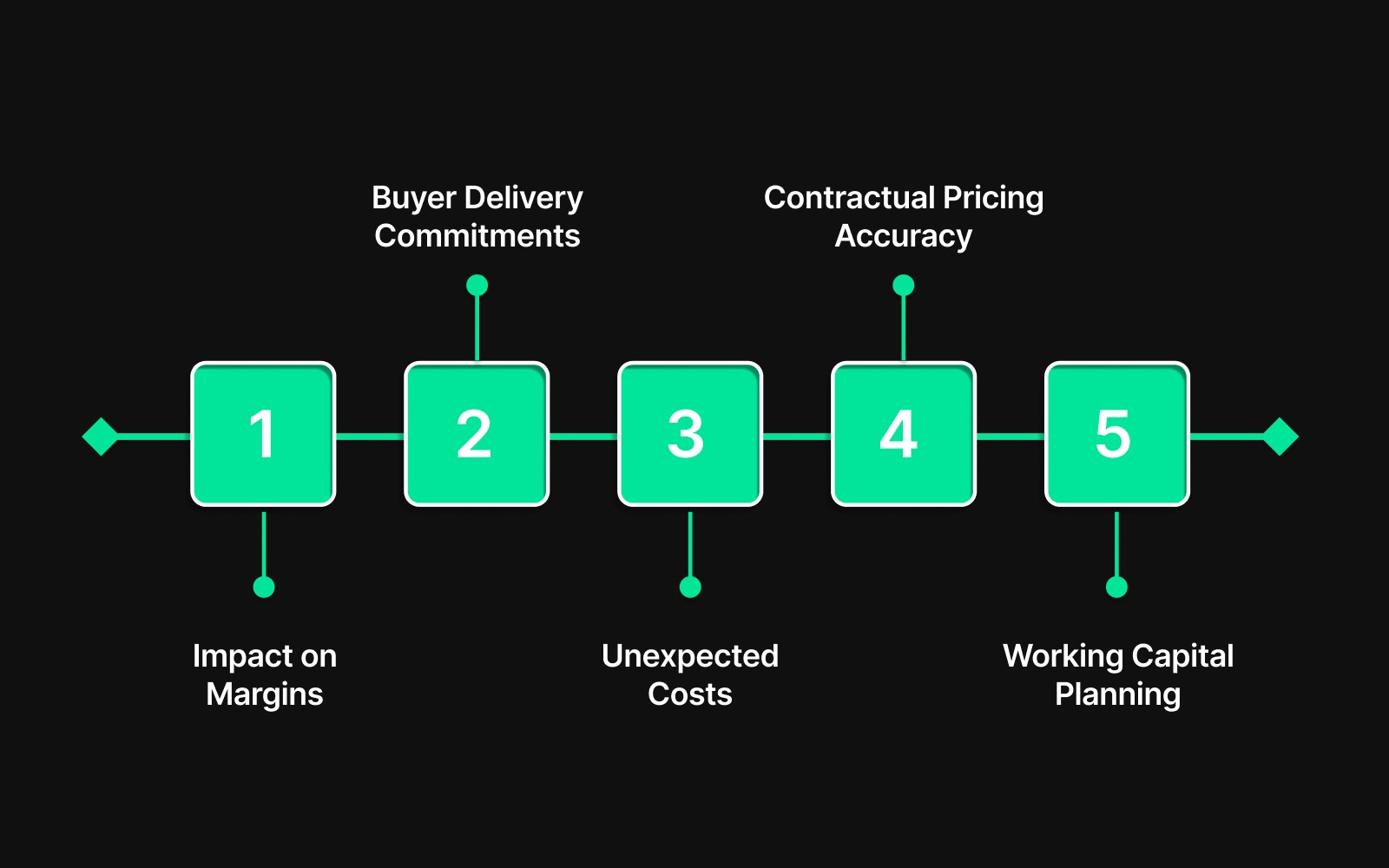
- Impact on Margins: Quoting only the base ocean rate may erode profits once THC, surcharges, and documentation fees are added.
- Buyer Delivery Commitments: Ignoring rate components can delay dispatch, putting promised timelines at risk.
- Unexpected Costs: Missing elements like fuel surcharges or peak-season fees often lead to last-minute cost adjustments.
- Contractual Pricing Accuracy: Proper calculation ensures CFR or CIF pricing reflects the actual total payable, reducing disputes with buyers.
- Working Capital Planning: Knowing total freight exposure helps manage cash flow, especially for small and mid-sized exporters.
Also Read: Freight & Cartage Explained: A Must-Know Guide for Indian SMEs
Key Components of Sea Freight Costs

A freight quote from India to Europe, the US, or the Middle East consists of more than one number. To calculate sea freight costs accurately, an exporter must break down the total cost into its major components. Each component matters because small oversights can lead to large unexpected charges.
Below are the primary cost elements Indian exporters must account for when calculating freight from the origin port.
1. Base Ocean Freight
The base ocean freight is the primary cost paid to the shipping line for transporting a container from the Indian port of loading to the destination port. It varies based on:
- Trade lane: Freight rates differ between routes such as India–Europe, India–US, or India–Middle East.
- Container type: 20FT, 40FT, High Cube, and Reefer containers have different pricing.
- Carrier capacity: Availability and seasonal demand can affect the rate.
For exporters, focusing solely on the base freight can be misleading. It forms the foundation of your cost, but additional origin charges, surcharges, and operational fees must be added to understand the total expense.
2. Terminal Handling Charges (THC)
THC covers the handling of the container at the port terminal before it is loaded onto the vessel. Key points include:
- Varies by Indian port: Nhava Sheva, Mundra, Chennai, Kolkata, Visakhapatnam, etc.
- Includes container movement, stacking, and loading fees.
- Regularly revised; exporters using outdated charge lists risk underestimating costs.
THC is often overlooked during early quotation stages, but missing it can reduce quoted profit margins or create unexpected additional expenses for the exporter.
3. Documentation & Bill of Lading Charges
Documentation fees include shipping bills, BL issuance, amendments, and related paperwork. These charges are crucial for exporters because:
- Minor errors in HS codes, consignee names, or export declarations can trigger amendment fees.
- Timely and accurate documentation reduces port hold-ups and additional storage or correction costs.
- BL charges can vary between carriers and port facilities.
Handling documentation correctly avoids port delays and extra costs.
4. Container Freight Station (CFS) Charges
When cargo moves through a CFS, exporters incur handling, stuffing, and storage fees. Considerations include:
- Stuffing charges: Costs of packing cargo into containers at the CFS.
- Storage charges: Fees for holding cargo if there are delays in stuffing or documentation.
- Handling charges: Movement within the CFS facility before vessel loading.
Exporters often underestimate these costs, especially if cargo is delayed due to incomplete documentation or factory readiness issues.
5. Bunker Adjustment Factor (BAF)
BAF is a fuel-related surcharge applied to account for fluctuations in bunker fuel prices. Key aspects for exporters:
- Volatile fuel prices in 2026 mean mid-cycle adjustments are common.
- BAF varies by trade lane and shipping line.
- Ignoring BAF when quoting buyers can result in sudden cost increases.
Monitoring BAF adjustments allows exporters to keep costs predictable and avoid margin surprises.
6. Peak Season Surcharge (PSS)
PSS applies during high-demand periods, typically aligned with festive seasons or trade peak periods. For exporters:
- Commonly observed on routes to Europe, North America, and the Middle East.
- Can significantly increase shipping costs if not anticipated.
- Advance planning and booking reduce exposure to PSS impact.
Booking early for peak seasons helps exporters avoid sudden rate increases.
7. Currency Adjustment Factor (CAF)
CAF accounts for exchange rate fluctuations between the Indian Rupee and the currency used by the carrier. Key points:
- Particularly relevant for exporters quoting in USD, EUR, or other foreign currencies.
- Prevents margin erosion due to currency volatility.
- CAF is often applied per container and can vary between carriers.
Exporters who ignore CAF in their cost calculation risk unforeseen financial impact when currency shifts after booking.
8. Container Detention and Demurrage
These charges apply when containers are not returned or cleared within the allowed free time. Key considerations:
- Detention: Applies if containers are held outside the port beyond the free period after unloading.
- Demurrage: Applied if containers remain inside the port or terminal past the free period.
- Often triggered by late documentation, customs clearance, or late factory dispatch.
Submit documents and schedule container returns on time to avoid detention and demurrage charges.

Each of these components plays a role in the final freight exposure. In the next section, we examine what drives these numbers up or down in 2026.
Factors That Influence Sea Freight Rates in 2026
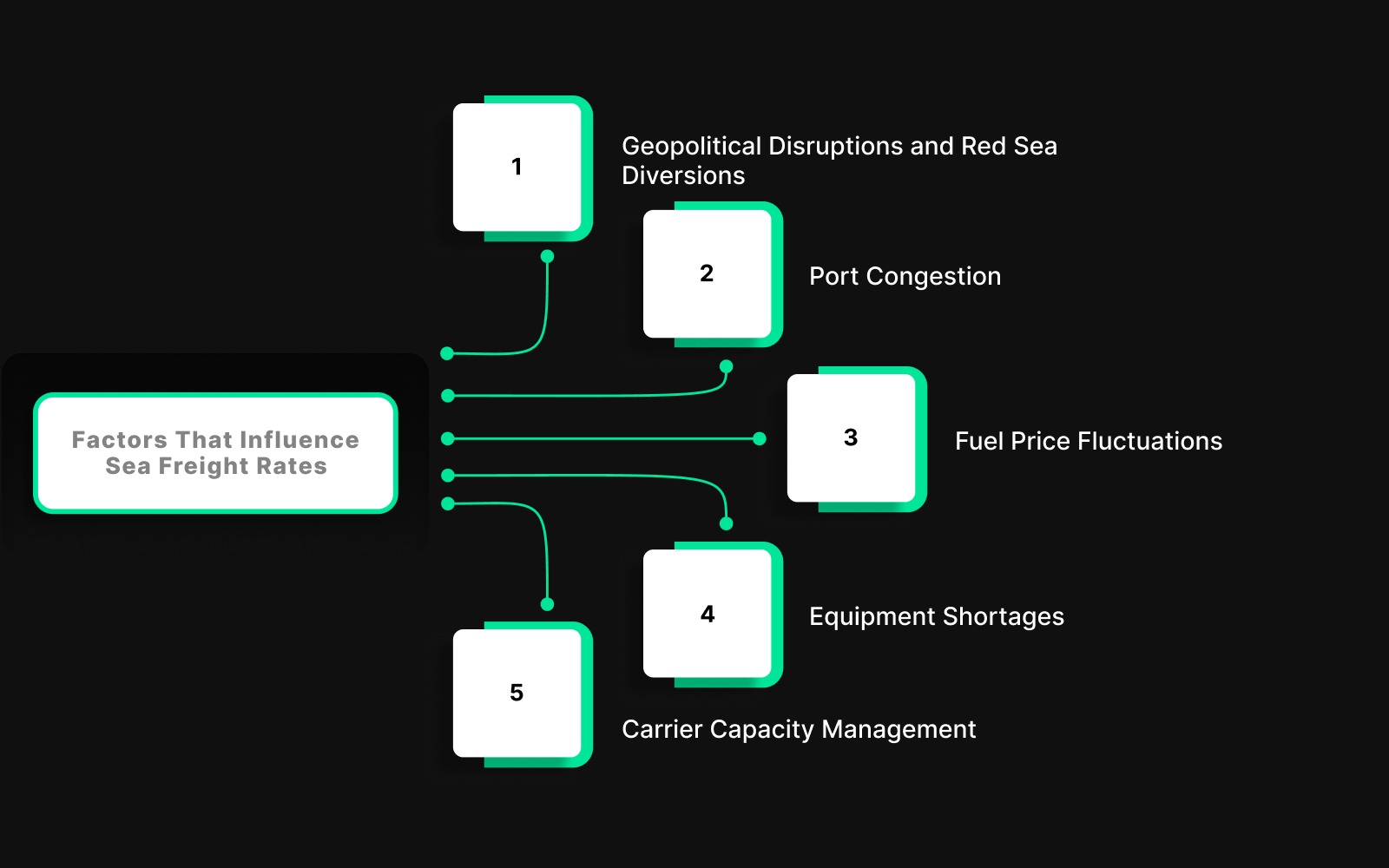
Freight rates in 2026 are shaped by operational and geopolitical disruptions that directly affect Indian export trade lanes. You need to understand how these factors translate into cost changes.
1. Geopolitical Disruptions and Red Sea Diversions
Ongoing instability in the Red Sea has forced vessels to reroute around the Cape of Good Hope in certain cases. For Indian exporters shipping to Europe, this leads to:
- Longer transit times
- Higher fuel consumption
- Increased freight levels
- Revised ETAs
If vessels are rerouted, exporters may miss buyer deadlines unless schedules are adjusted.
2. Port Congestion
Congestion at transshipment hubs such as Colombo or Jebel Ali can delay onward connections. For exporters shipping via transshipment routes, congestion increases rollover risk.
This affects:
- Cut-off compliance
- Delivery commitments
- Inventory planning for buyers
Account for port congestion when planning shipments to meet buyer timelines.
3. Fuel Price Fluctuations
Fuel remains one of the largest cost components in shipping.
When fuel rises:
- BAF increases
- Overall freight climbs
- Contracts may be revised
Ignoring fuel-linked adjustments makes protecting margins difficult.
4. Equipment Shortages
Peak seasons, uneven container distribution, and trade imbalances often result in container shortages, especially for:
- 40FT and High Cube containers
- Refrigerated containers for perishable goods
Operational risk:
- Booking cancellations
- Equipment delays to factory
- Premium charges for urgent allocation
Planning container requirements in advance and confirming allocations with forwarders reduces cost surprises.
5. Carrier Capacity Management
Shipping lines strategically adjust capacity through blank sailings, schedule changes, or route consolidations. Indian exporters relying on last-minute bookings may face higher freight or missed sailings.
Impact on exporters:
- Limited availability can increase spot rates during peak periods.
- Changes in vessel schedules can affect buyer delivery commitments.
- Exporters may need to adjust dispatch or choose alternate routes.
Confirm container bookings early and coordinate with forwarders to avoid last-minute rate spikes or delays.
Exporters who monitor these factors can better anticipate cost changes. The next step is applying this awareness into a structured calculation method.
Also Read: Top Ocean Freight Companies & Brokers In India 2025
How Exporters Can Calculate Sea Freight Rates: Step-by-Step Process

Calculating sea freight costs is more than noting down a shipping line quote. Indian exporters need a systematic method to capture all charges, anticipate surcharges, and maintain clear profit margins.
Below is a step-by-step framework that simplifies this process.
Step 1: Confirm Port Pair and Trade Lane
Before calculating any freight cost, exporters must clearly define the origin and destination ports. Freight varies based on port pair, trade lane, and whether the route is direct or involves transshipment.
Key considerations:
- Origin port: Nhava Sheva, Mundra, Chennai, Kolkata, Cochin
- Destination port: Confirm exact final port for accurate cost projection
- Transshipment: Routes via Colombo, Jebel Ali, or Singapore may increase transit time and add handling fees
Understanding the port pair early ensures base rates and surcharges are calculated correctly, avoiding last-minute adjustments that could affect buyer pricing.
Step 2: Identify Container Type and Volume
Container choice and cargo volume directly impact freight rates. Not all shipments use standard 20FT or 40FT containers, and special cargo types require different handling.
Points to note:
- Container type: 20FT, 40FT, High Cube (HC), Reefer
- Volume and weight: Overweight containers may incur additional charges
- Cargo-specific considerations: Hazardous or temperature-sensitive goods require extra handling
Correct container selection prevents extra fees and ensures compliance with shipping line requirements.
Step 3: Check Incoterms and Responsibilities
Incoterms define who bears the freight cost and risk during shipment. Misunderstanding Incoterms can lead to incorrect cost calculation and buyer disputes.
Exporter-focused checks:
- CIF/CFR: Freight cost is included in buyer pricing; it must be accurate
- FOB: Freight cost may not be invoiced to the buyer, but is essential for internal cost analysis
- DDP/DDU: Additional delivery costs at the destination need consideration
Understanding your obligations under each Incoterm helps calculate the total cost accurately and avoid margin surprises.
Step 4: Add Origin Local Charges
Base freight rates rarely cover all origin-related charges. These must be factored in to estimate the true shipping cost.
Typical origin charges include:
- Terminal Handling Charges (THC): Port handling costs before loading
- Container Freight Station (CFS) handling: Stuffing, storage, and supervision fees
- Documentation charges: Bill of Lading preparation and amendments
- BL fees: Release and amendments, if applicable
Accounting for these charges upfront prevents unexpected deductions from planned margins.
Step 5: Include Applicable Surcharges
Surcharges protect shipping lines against variable costs but can significantly impact exporter budgets. Tracking these ensures accurate buyer quotes.
Surcharges to monitor:
- Bunker Adjustment Factor (BAF): Fuel cost fluctuations
- Peak Season Surcharge (PSS): Applied during high-demand periods
- Currency Adjustment Factor (CAF): Exchange rate fluctuations affecting invoice value
- Emergency or ad-hoc surcharges: Vessel reroutes or regulatory changes
Including surcharges in calculations helps exporters quote buyers reliably and reduce mid-cycle disputes.
Step 6: Add Buffer for Volatility
Even with all components included, sea freight rates remain volatile in 2026. Exporters should plan for fluctuations to protect margins proactively.
Practical steps:
- Add a 5–10% buffer depending on route and season
- Monitor weekly shipping line updates for early warning of rate hikes
- Adjust quotes to buyers where contracts allow for surcharges
This buffer prepares exporters for rate changes between booking and vessel sailing.
Step 7: Consolidate and Review Total Freight Cost
After identifying all components, exporters should consolidate them into a single calculation.
Checklist for review:
- Base ocean freight
- Origin port charges (THC, CFS)
- Documentation and BL charges
- Surcharges (BAF, PSS, CAF)
- Volatility buffer
Reviewing the complete cost before finalising quotes prevents underestimation and keeps buyer pricing transparent.

Following this structured method allows exporters to move from reactive quoting to planned freight budgeting. In the next section, we’ll examine tools that help exporters track rate changes effectively.
Tools & Modern Ways to Estimate Sea Freight Costs
Relying on phone-based quotations limits visibility. Exporters should adopt digital tools to get clearer estimates and anticipate possible delays.
Modern cost estimation methods include:
- Historical Rate Tracking: Analyse previous shipment rates for similar ports and container types to forecast likely cost ranges and surcharges. This helps exporters decide pricing while avoiding unexpected margin losses.
- Digital Freight Dashboards: Use online platforms to compare multiple shipping lines, track updated rates, and monitor vessel capacity. Exporters can plan sailings to reduce delays or extra fees.
- Forward Rate Agreements: Lock in quarterly or monthly rates with shipping lines to limit exposure to sudden cost changes. Exporters can calculate buyer quotes confidently without last-minute surprises.
- Automated Cost Comparison Tools: Input shipment details to calculate a full estimate, including origin charges, surcharges, and documentation fees. This allows exporters to quote buyers more accurately.
- Alerts for Surcharge Updates: Subscribe to notifications for BAF, PSS, or GRIs to act before finalising quotes, helping avoid unexpected costs.
- Integration with ERP or Planning Software: Combine rate estimates with internal invoicing and inventory systems to simulate total export costs. Exporters can see the full financial impact before shipment.
Even with these tools, exporters must watch for hidden costs that may not appear in digital estimates.
Common Hidden Fees in Sea Freight Rates

Even experienced exporters face unexpected additions to freight invoices. Identifying hidden charges protects margins.
Below are common areas where Indian exporters encounter unexpected costs.
- Container Detention: Exporters must return containers within the free period. Late returns incur detention charges, increasing total shipment cost.
- Rollover Charges: Missing vessel deadlines due to late gate-in or congestion can lead to revised freight or extra fees. Exporters should schedule shipments to minimise this risk.
- Bill of Lading Amendment Fees: Incorrect HS codes or consignee details result in amendment charges. Careful document verification prevents unnecessary expenses.
- Storage Charges at Port: Delays in customs clearance or missed cut-offs can incur port storage fees. Exporters should track timelines closely.
- General Rate Increases (GRI): Shipping lines may announce GRIs with short notice. Exporters who finalise buyer pricing without checking pending GRIs face unexpected costs.
These hidden fees show why exporters must control operational timelines and verify all cost elements. The next section focuses on practical cost control strategies.
Tips for Exporters to Control & Reduce Sea Freight Costs

Freight volatility cannot be eliminated. However, exporters can reduce exposure through better planning and operational discipline.
Below are practical actions you can adopt.
- Plan shipments well in advance: Early booking minimises exposure to peak season surcharges and equipment shortages.
- Negotiate quarterly or fixed-rate agreements: Locking in rates over a period reduces the risk of mid-cycle price fluctuations.
- Monitor cut-offs and vessel schedules closely: Regularly confirm ETD/ETA changes with your forwarder to avoid rollovers and storage charges.
- Ensure accurate documentation: Correct HS codes, BL details, and consignee information prevent amendment fees and customs delays.
- Optimize container usage: Consolidate shipments or select appropriate container types to reduce unnecessary empty space or multiple bookings.
- Track hidden surcharges proactively: Monitor BAF, PSS, CAF, and GRIs to factor them into your costing before quoting buyers.
- Coordinate efficiently with factories and CFS: Timely readiness of cargo prevents container delays and additional handling charges.
- Leverage digital tracking tools: Monitor shipment dashboards to track vessel schedules, potential delays, and additional charges.
Controlling freight costs requires both internal planning and reliable logistics coordination. This is where a structured logistics partner like Pazago becomes essential.
How Pazago Can Support Exporters With Sea Freight Cost Planning?
Calculating freight is not just about receiving a quote. It is about building predictability across booking, documentation, and transit. This guide to understanding sea freight rates highlights the need for structured cost visibility, and this is where Pazago’s logistics focus becomes crucial.
Pazago supports Indian exporters in the following ways:
- Stable and Competitive Freight Structures: With long-term relationships with major shipping lines, Pazago offers predictable freight rates across key trade lanes. Exporters can plan buyer quotations and protect margins without worrying about sudden price hikes.
- Assured Container Booking and Loading Coordination: Pazago confirms container availability in advance, coordinates equipment release, and ensures smooth factory or CFS loading. This helps exporters avoid rollovers and costly delays, especially during peak seasons.
- Daily Status Reports for Complete Visibility: Exporters receive daily updates on container movement, vessel ETD/ETA, transshipment changes, and BL status. This allows proactive communication with buyers and minimises operational surprises.
- Pre- and Post-Shipment Guidance: From checking documentation and packing lists before dispatch to coordinating BL release after shipment, Pazago ensures that exporters have a reliable point of contact throughout the process.
- Support Across Exporter Sizes: Whether it’s a first-time exporter with a single LCL shipment or a large enterprise shipping 100 containers, Pazago provides tailored logistics support, helping every exporter plan costs and manage operational risks effectively.
By aligning freight stability with shipment visibility, exporters gain stronger cost control across the entire dispatch cycle.
Conclusion
Freight volatility will likely remain a defining feature of global trade. Indian exporters cannot depend solely on one-time quotations or base ocean rates. Sea freight is a layered cost influenced by fuel, congestion, equipment, and geopolitical developments.
By breaking freight into components, tracking influencing factors, applying a structured calculation method, and monitoring hidden charges, exporters can reduce margin surprises and improve buyer reliability. Strategic freight planning, supported by better visibility and structured cost estimation, is no longer an option; it is a commercial requirement.
If you are looking to bring predictability and visibility into your sea freight cost planning, Pazago can support your export operations with stable rate structures, assured booking coordination, and ongoing shipment tracking. Contact us today.
FAQs
1. How do FCL and LCL shipments differ in pricing?
FCL (Full Container Load) pricing is based on a fixed rate per container, regardless of how full it is. LCL (Less than Container Load) is charged per cubic metre (CBM) or weight, whichever is higher. LCL includes consolidation fees, making it costlier per unit but ideal for smaller shipments.
2. What is the chargeable weight in sea freight calculations?
Chargeable weight in sea freight is the higher of actual gross weight (in metric tons) or volumetric weight. For LCL shipments, freight is usually charged per CBM, where 1 CBM equals 1,000 kg. The higher value between weight and volume determines the freight cost.
3. How do you calculate CBM for LCL cargo?
CBM (Cubic Metre) is calculated by multiplying the cargo’s length, width, and height in metres:
Length × Width × Height = CBM.
For multiple packages, calculate each package’s CBM and add them together to determine the total chargeable volume for LCL freight billing.
4. What role does container type play in rate calculations?
Container type directly impacts freight rates. Standard 20ft and 40ft containers are priced differently, while specialised containers like high-cube, reefer, or open-top units attract higher rates due to added capacity, equipment costs, or handling requirements. Larger or specialised containers typically increase total shipping costs.
5. How do peak season and fuel prices impact rates?
During peak shipping seasons, demand for vessel space rises, leading to higher freight rates and surcharges. Similarly, increases in bunker fuel prices raise carrier operating costs, resulting in bunker adjustment factors (BAF) added to base freight rates, directly impacting overall shipping expenses.