.png)


20 Critical Logistics Terms Every Business Should Know for Logistic Processes

Optimize your business: use unlimited savings with Pazago fulfilled now!
Get Started ->In 2026, knowing logistic processes is essential for smooth and cost-effective supply chains. From buying and storing goods to shipping and delivery, each step uses terms and concepts that affect efficiency, compliance, and costs. Missing these details can cause delays, mistakes, and financial losses.
Logistics words are not always the same everywhere. Different industries, countries, and trade platforms may use different meanings for the same term. For example, “reverse logistics” in e-commerce differs from that in industrial exports, and shipping documents vary by country. Relying only on past experience can create risks.
This guide explains 20 key logistics terms. It shows why each term matters, how it applies to import and export operations, and how understanding them can help you work faster, reduce risks, and follow rules.
Key Takeaways
- Understanding key logistics terms helps businesses manage their logistics processes more efficiently and avoid costly errors.
- Familiarity with terms such as inbound and outbound logistics, KPIs, and supply chain visibility ensures smoother operations and faster decision-making.
- Well-structured logistic processes improve coordination across procurement, inventory, warehousing, transportation, and documentation.
- Using real-time tracking and centralised tools enables businesses to proactively address delivery, compliance, and inventory challenges.
- Optimising logistic processes enhances operational efficiency, reduces costs, and ensures goods move seamlessly from suppliers to customers.
Understanding Logistics in Business Operations
Logistics defines how goods are planned, moved, stored, and delivered throughout business operations. In import–export activities, logistics acts as the operational backbone, linking sourcing, warehousing, transportation, documentation, and final delivery into one coordinated system.
Effective logistics processes allow businesses to control timelines, manage costs, and meet compliance requirements at every stage of trade. When executed correctly, logistics ensures goods arrive at the intended destination on schedule, in proper condition, and without regulatory or operational delays.
Core Components of Efficient Logistics Processes
Logistics operations rely on multiple connected processes that work together to support end-to-end trade execution. Each component plays a specific role, and gaps in coordination can quickly disrupt the entire supply chain.
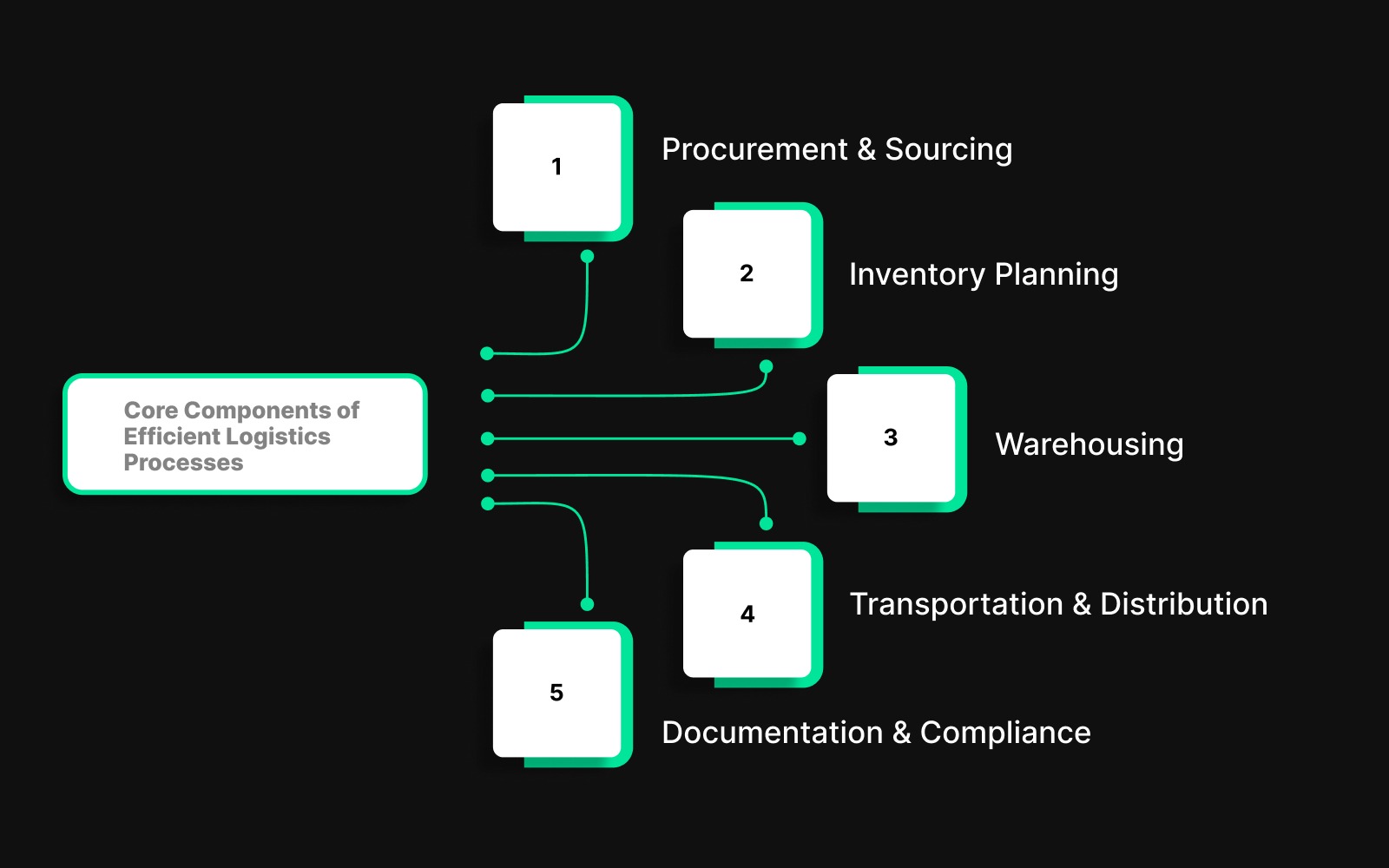
Core logistics process components include:
- Procurement and sourcing, which focuses on securing goods from suppliers aligned with quality and delivery requirements
- Inventory planning, which ensures stock availability while minimising excess storage and carrying costs
- Warehousing, which supports safe storage, handling, and order fulfilment activities
- Transportation and distribution, which manages the physical movement of goods across domestic and international routes
- Documentation and compliance, which ensures adherence to customs regulations and trade documentation standards
These components function as a continuous workflow. Accurate data, timely communication, and cross-team coordination are essential to maintaining efficient, disruption-free logistics operations.
Also read: Essential Shipping Documents Every Importer and Exporter Should Know
With the basics in place, the next step is understanding commonly used logistics terms.
20 Important Key Logistics Terms Concepts You Should Know
As export volumes grow, managing multiple suppliers, warehouses, carriers, and international regulations becomes increasingly complex. Without a strong grasp of key logistics concepts, even minor oversights can lead to delays, unexpected costs, or compliance issues.
Understanding these 20 essential logistics terms equips exporters with a strategic advantage, enabling smoother supply chain operations, better team coordination, and faster, more informed decision-making.
Let’s explore each term, how it applies to export operations, and why understanding these concepts is crucial for scaling your business in 2026.
1. Inbound Logistics
Inbound logistics covers the movement of raw materials or goods from suppliers to your warehouse or manufacturing facility. This includes coordination with overseas suppliers, customs clearance, and inland transport after port arrival.
2. Inventory Management
Inventory management ensures you maintain optimal stock levels to meet demand without overstocking. Accurate tracking minimises holding costs and prevents production delays.
3. Outbound Logistics
Outbound logistics focuses on moving finished goods from your facility to buyers or distributors. Export packing, documentation, shipping bookings, and final delivery are all part of this process.
4. Reverse Logistics
Reverse logistics manages the return of goods due to damage, expiry, or quality issues. In exports, this also covers rejected shipments and re-export documentation.
5. Logistics Process Flow
This term refers to the structured sequence of logistics activities from procurement to delivery. A clear process flow reduces errors, improves timelines, and ensures compliance.
6. Freight Forwarding
Freight forwarding involves coordinating the shipment of goods via sea, air, or land. Forwarders handle documentation, booking, and customs clearance.
7. Transportation Management
Transportation management covers planning, executing, and tracking the movement of goods. Effective TMS tools ensure on-time delivery and cost control.
8. Bill of Lading (BOL)
A Bill of Lading is a legal document issued by the carrier acknowledging receipt of goods and outlining shipment terms.
9. Export Documentation
Export documentation includes commercial invoices, packing lists, certificates of origin, and other paperwork needed to comply with international trade regulations.
10. Shipment Tracking
Shipment tracking allows exporters to monitor goods in real time across multiple transport modes, enabling proactive action if delays occur.
11. Warehousing
Warehousing involves storing goods safely before distribution. Efficient warehouses support inventory accuracy and faster order fulfillment.
12. Order Fulfillment
Order fulfillment covers the complete process from receiving an order to delivering it to the customer. Accuracy and speed improve customer satisfaction.
13. Cargo Insurance
Cargo insurance protects goods against damage, loss, or theft during transportation, providing exporters with financial security.
14. Incoterms
Incoterms define responsibilities between buyers and sellers for shipping, insurance, and customs. Clear terms prevent disputes and hidden costs.
15. Consolidation
Consolidation involves combining multiple small shipments into a single shipment to reduce transportation costs and improve tracking.
16. Deconsolidation
Deconsolidation is the process of breaking a consolidated shipment into individual orders for final delivery. Proper handling ensures timely last-mile delivery.
17. Customs Clearance
Customs clearance is the process of obtaining approval from authorities to import or export goods, involving documentation, duties, and inspections.
18. Key Performance Indicators (KPIs)
Logistics KPIs track metrics such as delivery accuracy, lead times, and costs. Monitoring KPIs helps optimise operations and reduce delays.
19. Multi-Modal Transport
Multi-modal transport involves using multiple transport modes (sea, air, road, rail) for a single shipment, ensuring flexibility and cost-efficiency.
20. Supply Chain Visibility
Supply chain visibility enables exporters to track products, inventory, and documentation throughout the entire supply chain. It supports faster problem-solving and better customer experience.
To achieve these outcomes, exporters need the right systems to centralise orders, documentation, shipments, and compliance data.

Optimising Logistics Processes for Exporters: Challenges and Strategic Benefits
From coordinating suppliers and warehouses to ensuring timely deliveries, logistics keeps the supply chain moving. However, as trade volumes grow, businesses face challenges that can lead to delays, higher costs, or reduced customer satisfaction.
Understanding these challenges and the benefits of optimised logistics allows exporters to stay ahead and scale effectively.
7 Major Logistics Challenges Exporters Face
Even with thorough planning, real-world logistics operations encounter obstacles that can disrupt timelines, increase costs, and impact customer trust. Identifying these challenges early allows exporters to proactively implement solutions.
Let’s break down the key logistics hurdles and practical steps to overcome them.
1. Last-Mile Delivery Complications
Final-mile deliveries often face delays due to local transport issues, customs checks, or miscommunication with carriers.
Solution Tips:
- Plan routes using digital tools to minimise delays.
- Maintain proactive communication with local logistics partners.
2. Disconnected Tools and Poor Data Flow
Managing orders, documents, and shipments across multiple platforms leads to errors and inefficiencies.
Solution Tips:
- Centralise all logistics data in a single platform.
- Ensure teams update information in real time to prevent mistakes.
3. Compliance and Documentation Challenges
Incomplete or inaccurate documents can delay shipments, incur fines, or block cargo in international trade.
Solution Tips:
- Maintain a regulatory checklist for every shipment.
- Automate document creation and verification for accuracy.
4. Transportation Risks
Damage, delays, or cancellations during transit can disrupt timelines and affect profitability.
Solution Tips:
- Keep multiple carrier options for flexibility.
- Monitor shipments closely and address issues proactively.
5. Warehouse and Inventory Issues
Inefficient storage, slow processing, or poor inventory planning can delay shipments and increase costs.
Solution Tips:
- Align stock levels with demand forecasts.
- Implement warehouse management systems to improve order processing.
6. Unexpected Costs
Freight fluctuations, fuel surcharges, and storage fees can inflate expenses unexpectedly.
Solution Tips:
- Track transportation and storage costs regularly.
- Negotiate fixed rates or contracts with carriers where possible.
7. Limited Supply Chain Visibility
Without end-to-end visibility, identifying risks and planning contingencies becomes difficult.
Solution Tips:
- Use dashboards to track orders, shipments, and payments in real time.
- Centralised monitoring ensures better oversight and quicker decisions.
Strategic Benefits of Optimised Logistics
Once challenges are addressed, optimised logistics bring measurable improvements that enhance operational efficiency, reduce costs, and strengthen business relationships.
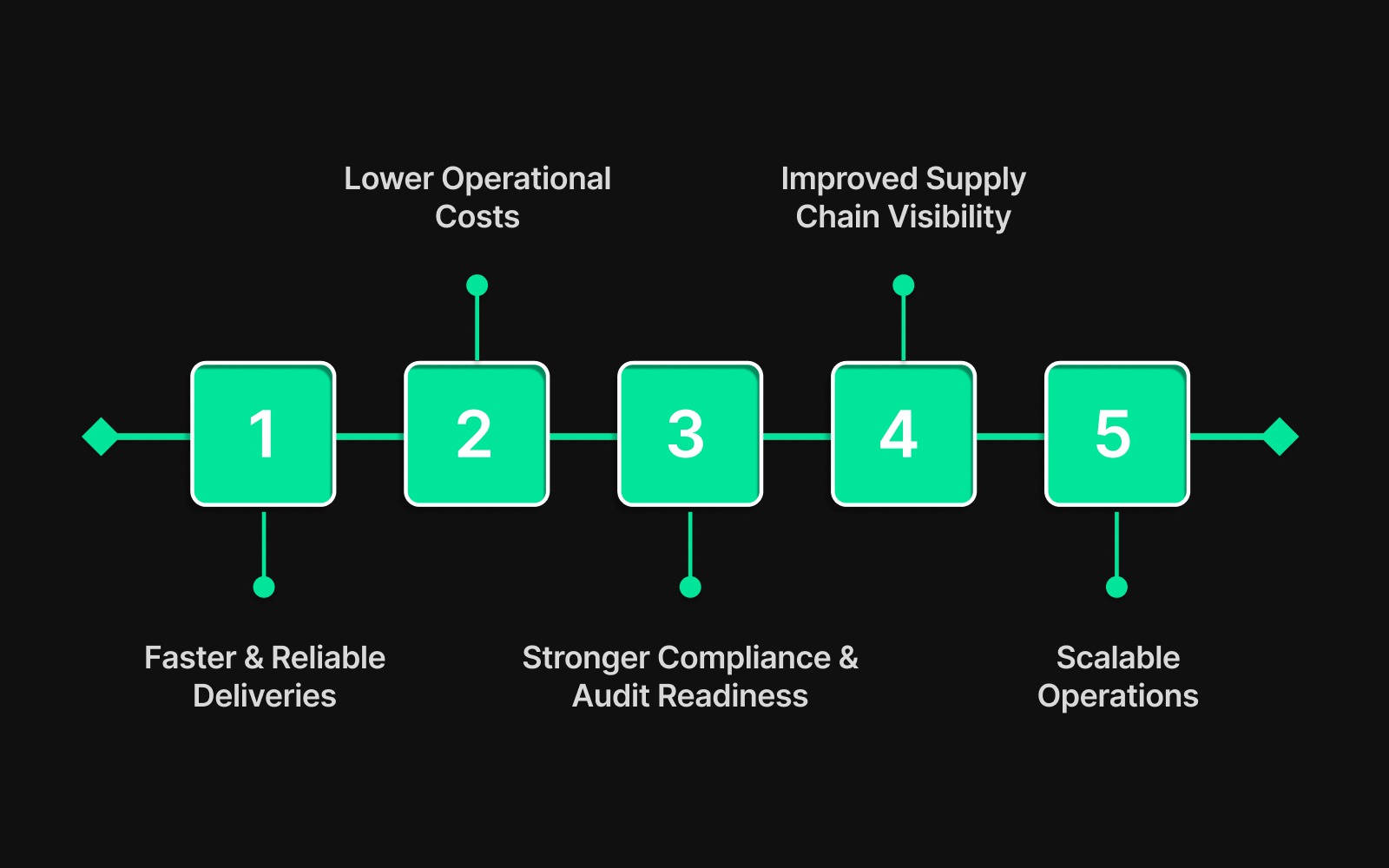
By tackling these challenges strategically, exporters can unlock significant advantages across their operations.
- Faster and Reliable Deliveries: Streamlined processes reduce delays and ensure goods reach buyers on time, enhancing trust and repeat business.
- Lower Operational Costs: Optimised transport routes, inventory levels, and storage practices reduce unnecessary expenditure.
- Stronger Compliance and Audit Readiness: Accurate documentation and centralised data make compliance with international trade regulations easier.
- Improved Supply Chain Visibility: Real-time tracking of shipments, inventory, and orders allows proactive problem-solving.
- Scalable Operations: Efficient logistics enable businesses to handle higher volumes without compromising on accuracy or timelines.
Also read: Containerisation: Definition, Types, Advantages, and Challenges in Shipping
How Pazago Improves Execution Discipline Across Logistics Processes
Logistics terminology only creates value when execution aligns across freight booking, documentation, container movement, and coordination between stakeholders. In practice, exporters struggle when freight rates shift unexpectedly, container space is not secured in time, or shipment updates reach teams too late. These execution gaps weaken even well-defined logistics processes and create avoidable cost and timing pressure.
Pazago addresses these risks by tightening freight planning, securing container availability, and improving shipment-level coordination across export movements.
- Competitive freight rates through long-term shipping line relationships help exporters plan shipments with greater cost predictability instead of reacting to spot rate fluctuations.
- Assured container booking and coordinated loading at factory, CFS, or port reduces rollover risk and aligns shipment execution with cut-off timelines.
- Daily Status Reports (DSRs) provide updates on container movement, ETD and ETA shifts, and transshipment milestones, enabling faster response when delays surface.
- Comprehensive pre-shipment and post-shipment sales support assists exporters in resolving documentation clarifications and coordination issues before they disrupt shipment timelines.
- Equal operational support for exporters of all sizes ensures growing businesses receive consistent execution attention across every shipment cycle.
If you are managing growing logistics volumes across multiple orders and destinations, Pazago helps bring clarity and control to your logistics processes.
Conclusion
Understanding logistics terms is only the first step. Consistent execution across freight planning, container booking, documentation coordination, and shipment monitoring determines whether logistics processes remain reliable under scale.
By focusing on rate stability, confirmed container availability, coordinated loading, and daily shipment visibility, Pazago helps exporters maintain discipline across their logistics processes and reduce avoidable disruption.
FAQs
1. How do logistics processes support daily business operations?
Logistics processes support business operations by managing the planning, storage, movement, and delivery of goods. They connect suppliers, warehouses, transport partners, and customers into a single, coordinated flow that controls costs, time, and compliance.
2. How does a logistics process flow work in practice?
A logistics process flow shows how goods move through each stage of the supply chain. It starts with sourcing and inventory planning, continues through warehousing and transportation, and ends with documentation, customs clearance, and final delivery.
3. Which logistics process steps are involved in moving goods?
Logistics process steps include procurement, inventory management, warehousing, transportation, documentation handling, and order delivery. Each step relies on accurate information to avoid delays and execution errors.
4. Why do import export businesses rely on structured logistics processes?
Import export businesses rely on structured logistics processes to manage shipment timelines, control costs, and meet customs and regulatory requirements. Without clear processes, shipments can face delays, penalties, or clearance issues.
5. How do logistics processes help reduce supply chain disruptions?
Logistics processes improve visibility across shipments, documents, and delivery timelines. This allows businesses to identify risks early, respond to delays, and reduce operational disruptions across the supply chain.