.png)


Process of Preparing for Export Customs Clearance
Optimize your business: use unlimited savings with Pazago fulfilled now!
Get Started ->Exporting goods from India as an SME requires careful attention to paperwork, regulations, and compliance. Missing documents or incorrect HS codes can cause costly delays and affect buyer trust.
India’s exports grew around 5.23% year-on-year, highlighting opportunities for SMEs that follow proper procedures for customs clearance that is prepared by the exporter, and maintain accurate documentation.
This blog offers a step-by-step guide for customs clearance that is prepared by the exporter, covering registrations, required documents, procedural steps, common pitfalls, government incentives, and digital tools to simplify export operations.
Key Takeaways:
- Understand the whole customs clearance process, from registrations to post-shipment tasks, to avoid delays and fines.
- Identify common errors, such as incorrect HS codes, missing documents, or misapplied Incoterms, that frequently disrupt exports.
- Apply practical methods, including staff training, planning shipments in advance, and maintaining organized records, to minimize errors.
- Take advantage of government schemes and incentives to lower costs and gain support for international trade.
- Use digital tools like Pazago to manage logistics, communication, quality checks, documents, and payments in one platform.
Understanding Export Customs Clearance
Export customs clearance is the process by which Indian authorities review and approve goods before shipment, ensuring compliance with regulations and applicable duties. As an SME exporter, your responsibility is to provide accurate documents, complete declarations, and follow all regulatory steps without delay or error.

Proper preparation prevents fines, shipment rejection, or unnecessary delays, while strengthening your credibility and reliability with international buyers and logistics partners.
By understanding your role and requirements, you can simplify customs procedures, reduce errors, and ensure consistently smooth shipments that meet buyer expectations.
Also Read: Understanding the Process of Customs Clearance in Shipment
Step-by-Step Preparation for Customs Clearance
Customs clearance is a critical stage of export operations, ensuring compliance with Indian regulations and smooth international delivery. Careful preparation prevents errors, delays, and penalties while saving time and cost.
To simplify the process, the following steps outline what exporters need to do before and during shipment.
Step 1: Registration & Codes
All exporters must obtain an Import Export Code (IEC) from the Directorate General of Foreign Trade, along with GST registration and PAN compliance. This forms the legal foundation for any shipment.
Step 2: HS Code Classification
Accurate classification under the Harmonized System (HS) code ensures proper duties and compliance with regulations. Incorrect codes often cause inspections or delays at customs.
Step 3: Documents Prepared by Exporter
Ensure all documents are complete and ready before shipment:
- Commercial invoice
- Packing list
- Certificate of origin
- Inspection or quality certificates, if applicable
- Other supporting documents required by the destination country
Maintaining both digital and physical copies can simplify the submission and auditing process.
Step 4: Transport Mode & Incoterms
Choose the shipment method based on cost, delivery time, and product nature:
- Air Freight: Faster, suitable for perishable or high-value goods.
- Sea Freight: Cost-effective for bulk shipments, but slower.
- Road Freight: Ideal for shipments to neighboring countries and land border crossings.
Define Incoterms to clarify responsibilities:
- Who bears shipping, insurance, and customs costs
- Delivery point obligations for buyer and seller
- Risk transfer points during transit
Step 5: Customs House Agent (CHA)
Engage a licensed CHA to manage filings, documentation, and port-specific regulations. A reliable CHA reduces errors, expedites clearance, and ensures compliance.
Step 6: Digital Portals & Online Filing
Use digital platforms like ICEGATE for submitting export documents. Online filing reduces errors, provides real-time tracking, and generates automated acknowledgments.
Step 7: Customs Examination & Let Export Order (LEO)
Customs authorities may conduct physical inspections or document verification. Once approved, the Let Export Order (LEO) authorizes the release of the shipment. Proper preparation minimizes inspection delays.
Step 8: Post-Clearance Tasks
Maintain records of invoices, shipping bills, and LEOs for audits. Post-clearance reconciliation ensures compliance, supports export incentive claims, and enhances credibility.
Step 9: Costs & Time Estimates
Customs clearance includes port fees, CHA charges, duties, and transport costs. Timelines vary by port and shipment type, typically ranging from 24 hours to several days.
Step 10: Port-Specific Differences
Indian ports may have slightly different documentation requirements or procedures. Familiarity with your port’s rules avoids last-minute surprises and prevents delays.
Even with careful preparation, exporters often encounter recurring challenges. Let’s examine the typical pitfalls SMEs face.
Also Read: Essential Documents Required for Smooth Import-Export Customs Clearance
Common Pitfalls Exporters Face
SMEs frequently encounter errors that delay shipments, increase costs, or create compliance issues. Being aware of these pitfalls allows exporters to plan proactively and avoid costly mistakes.
Transition: The following issues are the most common, and understanding them helps exporters effectively reduce risks.
- Incomplete or Incorrect Documentation: Missing or inaccurate invoices, packing lists, and certificates are the leading causes of customs delays. Double-checking each document prevents rejection and fines.
- Wrong HS Code Classification: Misclassifying products triggers penalties or shipment rejection. Consult official HS directories or a CHA to ensure correct classification.
- Misunderstanding Incoterms: Incorrectly applied Incoterms can lead to disputes over shipping, insurance, or duties. Clearly define responsibilities between exporters, importers, and logistics providers.
- Underestimating Time for Customs Processing: Assuming clearance will be immediate can lead to missed deadlines. Always allow extra time for inspections, port verification, and documentation checks.
- Lack of Digital Familiarity: Failing to use online portals correctly can cause errors, delayed approvals, and confusion. Staff should be trained to manage digital submissions efficiently.
- Ignoring Port-Specific Rules: Ports may have unique procedures for inspections or documentation. Failing to account for these differences can lead to unexpected delays and additional costs.
Understanding pitfalls is essential, but practical tips can further reduce errors and improve efficiency for SME exporters.
Also Read: Top HSN codes which India imports and exports
Practical Tips for SMEs
Practical strategies can simplify customs preparation, reduce errors, and save time. SMEs can adopt these methods to improve compliance, enhance efficiency, and maintain strong buyer relationships.
Here are actionable steps that SMEs can implement immediately.
- Maintain Updated and Accurate Documents: Regularly organize and update all export documents. Consistency across invoices, packing lists, and certificates prevents errors during customs clearance.
- Use Digital Tools and Platforms: Use online filing portals and platforms like Pazago to manage logistics, documentation, and communication efficiently. Digital systems improve accuracy and save valuable time.
- Train Staff on Compliance and Processes: Ensure staff understand HS codes, Incoterms, and customs procedures to ensure compliance with relevant regulations. Regular training reduces mistakes and builds confidence in managing documentation.
- Plan Shipments in Advance: Schedule shipments to consider customs timelines, port procedures, and potential inspections. Early planning prevents last-minute delays and ensures timely deliveries.
- Engage Reliable Customs House Agents (CHA): Partner with experienced CHAs for guidance on documentation, filings, and port-specific requirements. A competent CHA helps maintain compliance and reduces administrative burden.
- Review Costs and Budgets: Estimate port fees, CHA charges, duties, and logistics costs before shipment. Proper budgeting prevents surprises and supports profitable export operations.
Government policies and incentives further support SMEs in export compliance and cost management.
Also Read: Customs House Agent or Broker: Guide for Indian Exporters
Government Policies, Updates & Incentives
India offers policies and incentives to help SMEs reduce costs, ensure compliance, and expand their operations globally. Being informed allows exporters to access financial support, training, and guidance effectively.
Here are the key programs available to SME exporters.
- Merchandise Exports from India Scheme (MEIS): MEIS provides duty credit scrips for eligible goods, reducing export costs. SMEs must submit proper documentation to qualify for these benefits.
- Export Promotion Councils (EPCs): EPCs offer guidance on market intelligence, trade facilitation, and sector-specific requirements, enabling SMEs to connect with international buyers.
- Credit and Financial Support: Export credit, working capital loans, and insurance schemes mitigate financial risks for SMEs, allowing smoother operations.
- Policy Updates and Notifications: Regularly monitor DGFT and Ministry of Commerce notifications to stay compliant and capitalize on new opportunities.
Beyond policies, digital tools like Pazago provide operational support that reduces errors and improves visibility for exporters.
Also Read: What Is a Letter Of Credit In Export-Import Business?
Pazago: Simplifying Export Customs & Operations
Managing exports involves multiple steps, including documentation, shipping, and compliance, which can be challenging for SMEs. Pazago offers a digital platform to help exporters handle these tasks with greater accuracy, visibility, and control.
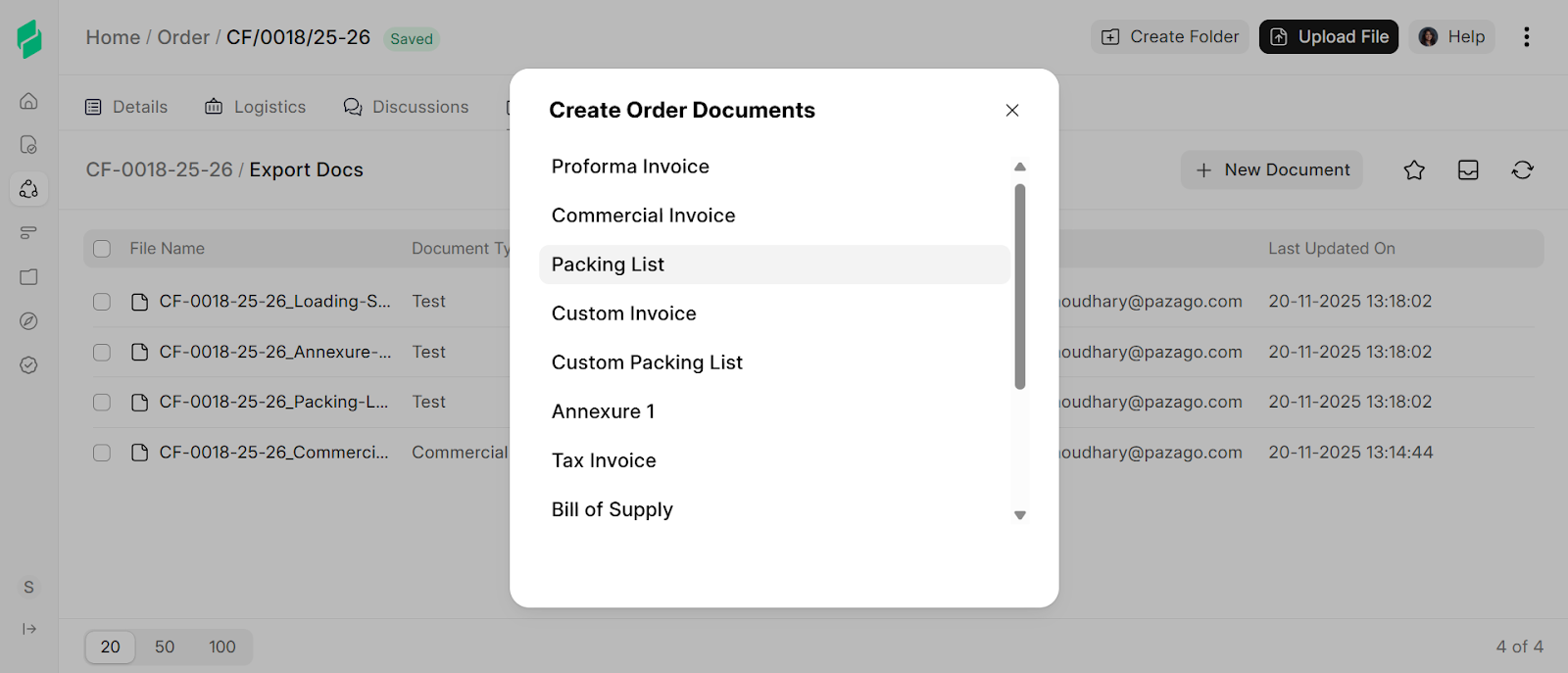
Below are the key functionalities of Pazago that support exporters at every stage of customs preparation and international shipment management.
- Export Documentation: Pazago simplifies the creation of essential export documents, including commercial invoices and packing lists, ensuring accuracy and saving time.
- Real-Time Shipment Tracking: You can monitor shipment status in real time with Pazago, using BL or container numbers, providing both exporters and buyers with visibility and peace of mind.
- Order Management Dashboard: The order dashboard in Pazago centralizes all export orders, allowing you to enter and manage key details like buyer information, HS codes, and quantities, streamlining the preparation process.
- Logistics Management Tracking: Each order includes a Logistics Page where you can easily track important shipment details, such as container rates, forwarder charges, and delivery order numbers.
- Multi-Currency Payment Handling: Pazago supports multi-currency payments, making it easier for you to handle transactions in various currencies when dealing with international buyers.
- Proof for Disputes: Pazago allows you to upload photos of empty and loaded containers, which are stored with the relevant order for documentation and dispute resolution.
- Customizable Reporting & Insights: Pazago’s interactive dashboard lets you filter orders by status or destination country, providing detailed insights into your export operations.
- Internal Communication Tools: With order-level discussions within Pazago, you can efficiently communicate with your team, keeping everyone informed and aligned throughout the export process.
With these features, SMEs can avoid common errors, save time, and maintain smoother export operations.
Conclusion
Customs clearance is a crucial component of export operations, requiring careful planning, accurate documentation, and a thorough understanding of regulations. For SMEs, preparation minimizes delays, fines, and operational stress.
By following step-by-step procedures, avoiding common pitfalls, leveraging government schemes, and using platforms like Pazago, exporters can ensure smooth shipments and maintain strong buyer relationships.
Start improving your export operations today by reviewing documentation, training your staff, and adopting Pazago to manage shipments, visibility, and compliance efficiently. Book a demo with Pazago to experience how it simplifies export customs preparation and supports your business growth.
FAQs
1. What documents are mandatory for customs clearance?
Exporters require an Importer Exporter Code (IEC), a commercial invoice, a packing list, a shipping bill, a certificate of origin, and any product-specific licenses. Ensuring accuracy and completeness in each document prevents delays, inspection issues, and potential fines.
2. How do I determine the correct HS code?
Use official HS directories, check DGFT notifications, or consult a licensed Customs House Agent. Correct classification is essential for accurate duty calculation and avoiding compliance penalties.
3. What are a CHA’s responsibilities?
A Customs House Agent manages document submission, ensures compliance with port-specific regulations, coordinates with customs officials, and helps exporters avoid errors while expediting the clearance process.
4. How long does customs clearance take?
Clearance timelines vary depending on the port, shipment type, and inspection requirements. Air shipments may clear within a day, while sea shipments could take several days depending on the complexity of documentation and inspections.
5. Can SMEs claim government export incentives?
Yes, Clearance timelines vary by port, shipment type, and inspection requirements. Air shipments may clear within a day, while sea shipments could take several days depending on the complexity of documentation and inspections.