.png)


Bill of Lading vs Bill of Entry: Key Differences Every Exporter Must Know

Optimize your business: use unlimited savings with Pazago fulfilled now!
Get Started ->For Indian exporters and importers, moving goods across international borders is complex enough without the added confusion of critical trade documentation. Documents like the Bill of Lading and Bill of Entry are crucial legal requirements, yet their distinct functions are often blurred, leading to costly errors and serious operational headaches.
Getting the paperwork wrong might halt your shipment at the port, resulting in demurrage fees and penalties from Indian Customs. Therefore, gaining clarity on these documents is vital for protecting your bottom line and ensuring smooth trade operations.
This comprehensive guide clarifies the core difference between the Bill of Lading and the Bill of Entry. We'll break down their purposes, who issues them, and their various types, giving you the clarity needed to manage your trade documentation flawlessly.
Key Takeaways
- The Bill of Lading (B/L) is the carrier's document proving cargo receipt and ownership, while the Bill of Entry (BoE) is the importer's declaration for Customs clearance and duty payment.
- Exporters must use an Order Bill of Lading to retain ownership rights and secure payment until the importer meets contractual terms.
- The BoE must be filed electronically with Indian Customs (ICEGATE), where errors in HSN codes or valuation lead directly to costly delays and penalties.
- Incorrect data on the BoE results in assessment queries, stopping the shipment, and incurring significant charges like demurrage.
- Pazago helps exporters streamline logistics with stable freight rates, real-time tracking, and end-to-end support for smoother export operations.
What Is a Bill of Lading (B/L)?
A Bill of Lading is a mandatory, legal document issued by the carrier (the shipping line or their agent) to the shipper (the exporter). Its primary purpose is threefold: establishing the relationship and responsibilities for the cargo while it is transported internationally:
- Contract of Carriage: It proves the agreement between the shipper and the carrier to transport the goods under agreed-upon terms and rates.
- Receipt of Goods: It confirms that the carrier has received the specified goods in apparent good order and condition for shipment.
- Document of Title: Crucially, the holder of the B/L has the ownership right to the goods and is the only party authorised to claim them at the destination port.
Key Details in the Bill of Lading
A typical Bill of Lading will contain the following essential information:

- Name and Address of the Exporter (Shipper): The company sending the goods.
- Name and Address of the Importer (Consignee): The company set to receive the goods at the destination.
- Origin and Destination Ports: The port where the goods are loaded and the final port where they are discharged.
- Vessel and Voyage: The name of the carrying ship and the specific voyage number.
- Shipment Date: The date the goods were loaded onto the vessel, often noted as the "on-board date."
- Type of Goods: A general description of the items being shipped.
- Quantity of Goods: The total number of packages, cartons, or units.
- Weight of Goods: Both the gross weight (including packaging) and often the net weight.
- Value of the Goods: The declared value of the cargo.
- Taxes and Duties: The B/L typically details freight charges (prepaid or collect), but does not detail the final import taxes and duties; those are assessed later by the destination country's Customs against the commercial invoice.
- Marks and Numbers: Unique identifying marks on the packages to ensure correct handling and tracking.
Also Read: Essential Shipping Documents Every Importer and Exporter Should Know
Importance and Functions of the Bill of Lading
The Bill of Lading (B/L) serves several critical operational, commercial, and informational functions for all parties involved in international shipping:
- Proof of Shipment and Acceptance: The B/L is evidence that the carrier has officially received the goods and loaded them onto the vessel. It serves as the carrier's acceptance that the goods are on board for transport.
- Consignment Tracking and Information: It contains detailed information about the consignment and shipment, including the cargo type, quantity, weight, and volume. It essentially acts as a tracking document throughout the sea journey.
- Secures Payment: For the exporter, the B/L is crucial for managing cash flow. Banks often require it as part of the documentation under a Letter of Credit, ensuring the exporter receives payment only when the goods are proven to have been shipped.
- Legal Claim and Title: As the document of title, the B/L gives the holder the legal right to claim the goods at the destination port, allowing for final release and clearance.
Beyond the paperwork, efficient trade depends on smooth cargo movement. Pazago simplifies global logistics by centralising carrier booking and shipment tracking alongside your critical documents.
Types of Bill of Lading
The Bill of Lading (B/L) is classified based on two critical factors: Negotiability (who can claim the goods) and condition (the state of the cargo). Understanding these types is vital for managing risk and securing payment:
- Straight Bill of Lading: This is non-transferable. The cargo is consigned directly to a specific, named importer. Only this named party can legally take possession of the goods at the destination, even without presenting the original document. It's often used when payment is already settled or between trusted business units.
- Order Bill of Lading: This is a negotiable document of title. The cargo is consigned "to the order" of a party (usually the shipper or a bank). To take possession, the importer must present the endorsed, original document. It is crucial for transactions involving Letters of Credit, as it gives the shipper control until payment is confirmed.
- Clean Bill of Lading: This confirms that the goods were loaded onto the vessel without any visible defects, damage, or inadequate packaging. It means the cargo is "in apparent good order." This is the standard, desired B/L, as any issues noted would result in a 'Claused' B/L, complicating payment and insurance.
Also Read: Difference between Sea Waybill and Bill of Lading: Usage and Meaning
How Is a Bill of Lading Issued?
The Bill of Lading is issued by the carrier, not submitted to a government body. The process involves the exporter providing information to receive the document and then transferring it to the importer to claim the goods:
- Instruction Submission: The process starts when the exporter provides detailed shipping instructions (containing cargo, party, and route specifications) to the freight forwarder or shipping carrier, often using a standard form.
- Drafting and Finalisation: Based on these instructions, the carrier drafts the B/L. The exporter reviews and approves this draft to ensure accuracy.
- Issuance: Once the goods are loaded onto the vessel and the cargo is legally accepted, the carrier issues the final Bill of Lading. This document may be delivered electronically or as a physical set of original copies.
- Transfer for Release: The exporter then transfers the B/L (or arranges for its electronic release) to the importer. This final transfer is the critical step that legally allows the importer to take possession of the shipment at the destination port.
Documents Required to Issue a Bill of Lading
The carrier relies on the exporter to provide accurate documents before issuing the B/L:
- Commercial Invoice: Used to determine the value and sale details of the goods.
- Packing List: Confirms the weight, volume, and count of the packages.
- Shipping Instructions: Formal instructions from the exporter to the carrier or freight forwarder detailing the destination, consignee, and required B/L type.
Having secured your cargo's journey with the Bill of Lading, the next critical step once your goods arrive at an Indian port is handling customs clearance using the Bill of Entry.
What Is a Bill of Entry (BoE)?
A Bill of Entry is a legally mandatory document submitted electronically by the importer or their appointed Customs House Agent (CHA) to the Customs Department of India. Here’s the central purpose of the Bill of Entry:
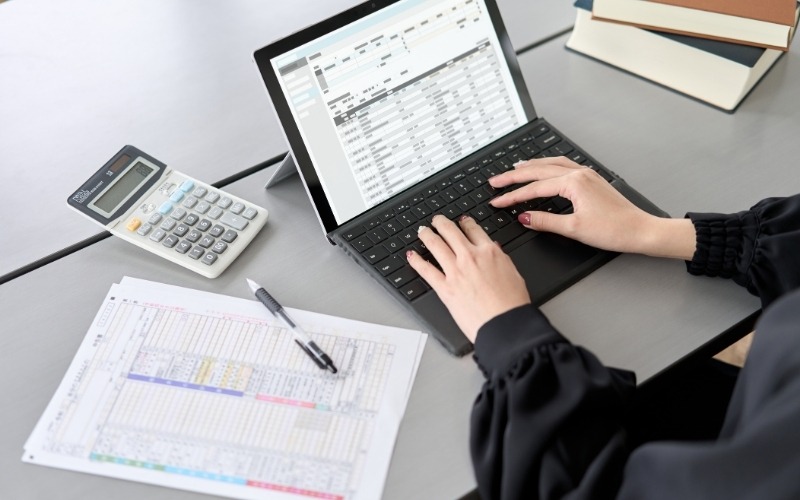
- Declaration for Assessment: To formally declare all relevant details about the imported goods, such as the nature, quantity, value (CIF), country of origin, and Harmonised System (HSN) code, so that Customs can accurately assess the applicable duties and taxes.
- Proof of Compliance: Once processed and endorsed by Customs, the BoE serves as the official proof that the importer has met all legal and fiscal requirements to take possession of the goods.
Key Details in the Bill of Entry
The Bill of Entry (BoE) is a formal declaration to Indian Customs, and its accuracy is paramount for proper duty assessment and timely clearance. The essential details required in a Bill of Entry include the following:
- Name and address of the Importer.
- Importer-Exporter Code (IEC Code) and GST Identification Number (GSTIN).
- Port Code: The specific code for the Indian port or airport where the goods are entering.
- Assessable Value (CIF Value): The total value of the goods (Cost, Insurance, and Freight) used by Customs to calculate duty.
- HSN Code: The Harmonised System of Nomenclature code that classifies the specific product.
- Rate of Duty: The percentage of Customs Duty, IGST, and other levies applicable based on the HSN Code.
- Duty Amount Payable: The total calculated duty that must be paid for the release of the goods.
- Vessel Name, Country of Origin, and Country from which the goods are consigned.
- A reference to the corresponding Bill of Lading number (or Airway Bill number).
Importance and Functions of the Bill of Entry
The Bill of Entry is the pivotal document that controls the clearance process and impacts the final cost of the imported goods:
- Duty Payment: It is the basis upon which the payable Customs Duty, IGST, and other levies are calculated and paid. No goods can be legally released without the duty being processed against the BoE.
- Clearance Authority: The processed BoE acts as the release order. Once Indian Customs permits the "Let Export Order" (LEO) for exports or the "Out of Charge" for imports, the goods can be moved out of the Customs area.
- Documentation Link: It links the shipment (from the B/L and commercial invoice) to the government's tax and trade records, ensuring transparency and compliance under the Customs Act, 1962.
Also Read: Decoding the Customs Act 1962: A Comprehensive Guide
Types of Bill of Entry
The colour-coding of the BoE indicates the final destination or treatment of the imported goods in India, which is critical for duty management:
- Home Consumption (White BoE): Filed when the importer intends to take immediate possession of the goods for sale or use within the Indian domestic market. Duties and taxes must be paid immediately upon filing and assessment.
- Warehousing (Yellow/Into-Bond BoE): Filed when the importer wishes to store the goods in a Customs bonded warehouse, allowing them to defer the payment of duties. It provides cash flow flexibility, as duties are only paid when the goods are finally removed from the warehouse.
- Ex-Bond (Green BoE): Filed when the importer takes the goods out of the bonded warehouse (clears them from bond) for domestic use or sale. This is the moment when the deferred duties and taxes finally become payable.
How Is a Bill of Entry Filed in India?
Unlike the B/L, which is issued by the carrier, the BoE is an application filed electronically by the importer or their Customs House Agent (CHA) to the Indian Customs Department.
- Preparation: The Importer/CHA gathers all supporting documents and prepares the data, ensuring HSN codes and valuation are correct.
- Electronic Submission: The BoE is submitted through the Indian Customs' ICEGATE portal (Indian Customs Electronic Gateway). This system validates the data against various rules and regulations.
- Assessment: Indian Customs scrutinises the filed BoE. They verify the HSN code, value, duty rate, and any applicable import licenses.
- Payment and Clearance: Once the assessment is approved, the importer pays the assessed duty. Customs then grants the 'Out of Charge' order, legally permitting the goods to be moved out of the customs area.
Also Read: Best Practices for Customs Documentation and Labelling for International Shipments
Documents Required to File a Bill of Entry
The BoE is the primary document, but it must be supported by evidence that confirms the details declared. Failure to provide these accurately and promptly will result in significant delays and charges.
Here are the core documents required for filing the BoE:
- Bill of Lading (B/L): To confirm transport details, ownership, and tracking.
- Commercial Invoice: To confirm the transactional value of the goods.
- Packing List: To verify the quantity, weight, and volume of the cargo.
- Certificate of Origin: Required for preferential duty rates under free trade agreements (if applicable).
- Insurance Certificate: Proof of insurance coverage for the consignment.
- Import Licence/Authorisation: If the nature of the goods requires special government permission.
You now understand the distinct roles the Bill of Lading (for movement) and the Bill of Entry (for clearance) play, but seeing their functions side-by-side reveals precisely why mixing them up can be so costly.
Bill of Lading vs. Bill of Entry: Understanding the Differences
While both the Bill of Lading (B/L) and the Bill of Entry (BoE) are critical for international trade, they serve completely separate functions at different stages of the supply chain. Here’s a table to understand the key differences between the bill of lading and the bill of entry:
While understanding the differences between the Bill of Lading and Bill of Entry is crucial, effectively managing the logistics of these documents is where the real challenge lies for exporters.
This is where Pazago's logistics solutions can play a vital role in simplifying the process and ensuring efficiency at every stage of the supply chain.
How Pazago Simplifies Logistics for Exporters?
Managing logistics for international shipments can be complex, with challenges such as fluctuating freight rates, unreliable carriers, and coordination gaps across different stages of the shipment journey.
Pazago offers reliable logistics solutions designed to reduce costs, avoid delays, and streamline operations for exporters.
Key Advantages of Choosing Pazago Logistics:
- Competitive Freight Rates Through Long‑Term Industry Relationships: Pazago uses long-term relationships with major shipping lines to offer predictable freight rates, ensuring better cost planning.
- Shipment Scheduling & Cut-Off Coordination: Pazago aligns container booking, vessel schedules, and port cut-offs to reduce rollover risks and avoid missed sailings.
- Assured Container Booking & Smooth Loading Coordination: Pazago guarantees confirmed container bookings and ensures seamless loading at the factory or CFS, reducing delays and missed vessel connections.
- Daily Status Reports (DSRs) for Complete Shipment Visibility: Pazago provides daily updates on container movements, vessel ETD/ETA, and transshipment milestones, helping exporters stay informed.
- Operational Support Across Shipment Volumes: From single containers to recurring export flows, exporters receive consistent freight execution support.
Conclusion
Understanding the key differences between the Bill of Lading and Bill of Entry is crucial for exporters to avoid delays and compliance issues. Both documents play distinct roles in the trade process, with the B/L managing logistics and the BoE handling customs and duty assessment. Ensuring accuracy in both can streamline global operations and prevent costly errors.
Pazago simplifies the logistics side of international trade by providing stable freight rates, and real-time shipment visibility. With Pazago, exporters can ensure smooth, efficient operations, reducing risks and delays in the shipping process.
Contact Pazago today to learn how our solutions can help optimize your export operations.
FAQs
1. What is the difference between a Bill of Lading and a Shipping Bill?
The Shipping Bill is the primary document filed by the exporter with Customs to obtain permission for the export of goods from India. The Bill of Lading (B/L) is the document issued by the carrier (shipping line) that proves the goods were received and serves as the contract for carriage and title to the goods.
2. Is the Bill of Lading a financial document?
No. The Bill of Lading is primarily a logistical and legal document (a contract and a document of title). While it is crucial for securing payment under a Letter of Credit, it is not a direct financial instrument like a cheque or a promissory note.
3. What is the difference between a Bill of Lading and a Bill of Exchange?
A Bill of Lading is a shipping document that confirms receipt and ownership of goods. A Bill of Exchange is a financial instrument that acts as an unconditional written order from the seller to the buyer to pay a specified sum on a specified date. They are used together but serve completely different functions.
4. What is the deadline for filing the Bill of Entry (BoE) in India?
The Bill of Entry (BoE) must be filed before the end of the next working day following the arrival of the goods at the customs port. Delayed filing can incur interest charges and lead to delays in cargo clearance.
5. Can an importer receive goods without the original Bill of Lading?
Yes, but only if a non-negotiable document was issued (like a Seaway Bill), or if a Telex Release was granted by the carrier. For a standard Order Bill of Lading, the original paper document must be surrendered to the carrier to take legal possession of the cargo.