.png)


Ex Factory Meaning for Exporters: Costs, Responsibilities, and Risks

Optimize your business: use unlimited savings with Pazago fulfilled now!
Get Started ->If you are an exporter, you may have heard buyers use terms like Ex Factory during price discussions or contract negotiations. The term sounds similar to standard Incoterms, yet it often means different things in real export operations. Misunderstanding Ex Factory can lead to confusion around pickup responsibility, export clearance, cost ownership, and risk transfer.
This article explains how Ex Factory works in actual export operations, how responsibility and cost shift at the factory gate, how it compares with EXW, and when exporters should or should not agree to Ex Factory terms.
Key Takeaways
- Ex Factory means the exporter’s responsibility ends once goods are ready at the factory, and the buyer takes full control of pickup, transportation, export clearance, freight, insurance, and risk from that point onward.
- Ex Factory and Ex Works (EXW) describe the same operational reality, where the buyer handles all logistics and costs after factory readiness, with EXW being the formal ICC-recognized Incoterm and Ex Factory used as a commercial pricing term.
- Under Ex Factory, sellers cover only production and basic readiness costs, while buyers absorb all downstream expenses, including loading, inland transport, customs clearance, international freight, insurance, and destination charges.
- Ex Factory prices appear lower because they exclude logistics and compliance costs, but disputes arise when buyers underestimate landed costs or expect exporters to step in operationally after pickup.
- Ex Factory shipments require strong order, payment, and document tracking, since buyers control logistics and exporters risk losing visibility once goods leave the factory unless information stays centralized.
What Does Ex Factory Mean In Export Shipping
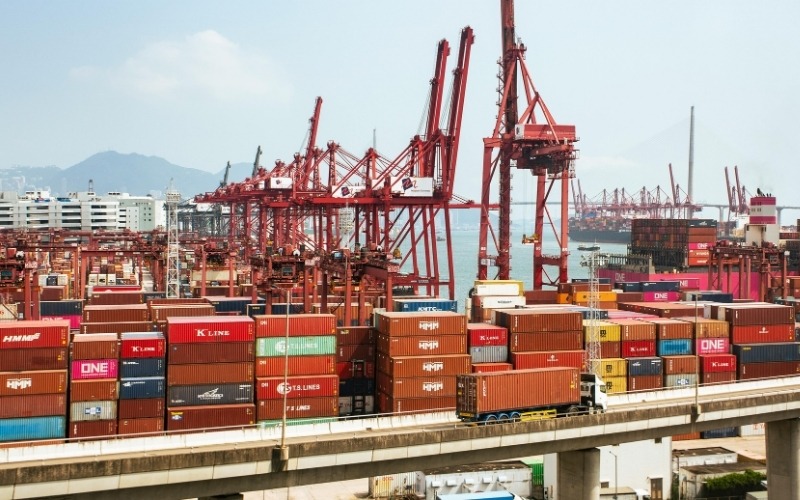
Ex-factory, often referred to as ex-works, is a commonly used export trade term in agreements between sellers and buyers. Under this arrangement, the seller’s role is limited to making the goods available at their place of business.
All activities after pickup, including transportation, export handling, and risk during transit, are managed by the buyer. This structure reduces operational responsibility for the seller while placing full logistics and cost ownership on the buyer.
For example, an Indian engineering exporter agrees to supply machinery parts on Ex Factory terms. Once the goods are packed and ready at the factory, the buyer arranges a local truck, appoints a freight forwarder, completes export customs clearance, and books ocean freight. Any delays or costs after factory pickup remain the buyer’s responsibility.
Ex Factory Vs Ex Works (EXW): Are They The Same?
Ex Factory and Ex Works (EXW) refer to the same practical arrangement: the seller makes the goods available at their premises, and the buyer assumes all costs, risks, and execution from that point onward. The key difference is that EXW is the official ICC-recognized Incoterm, while Ex Factory is an informal commercial term used in pricing and negotiations.
Under both terms, the buyer arranges pickup, loading, transportation, export and import clearance, and bears all duties, taxes, and transit risks. The quoted price covers only the cost of goods at the seller’s location and does not include logistics.
Responsibilities Under Ex Factory
Ex Factory clearly splits responsibilities at the factory gate. The seller’s role is limited to production and readiness, while the buyer controls and executes the entire export movement from pickup onward.
Seller Responsibilities
Under Ex Factory, the seller’s responsibility ends once the goods are ready for collection at their premises.
- Manufacture the goods as per the agreed specifications.
- Keep the goods available at the factory or warehouse on the agreed date.
- Provide basic commercial packaging unless otherwise agreed.
- Share invoice and product details required for buyer-arranged export processes.
Buyer Responsibilities
From the factory gate onward, all operational, financial, and risk ownership shifts to the buyer.
- Arrange pickup from the seller’s factory.
- Handle the loading of goods onto the transport vehicle.
- Manage inland transportation to the port or ICD.
- Complete export customs clearance and documentation.
- Book international freight and insurance.
- Bear all risks of loss or damage until the final destination.
This structure gives buyers full control over logistics while limiting the exporter’s involvement once production readiness is achieved.
Cost Breakdown Under Ex Factory

Ex Factory pricing separates product cost from logistics cost. While the structure looks simple on paper, misunderstandings around cost ownership often create disputes during execution.
Costs Borne By The Exporter
Under Ex Factory, the exporter’s costs are limited to making the goods ready at the factory.
These typically include:
- Manufacturing and raw material costs.
- Labor and factory overheads.
- Standard packaging is required for pickup readiness.
- Internal quality checks before dispatch.
Costs Borne By The Buyer
Once the goods are available at the factory gate, the buyer assumes all downstream costs.
These usually include:
- Pickup from the factory.
- Loading charges at the origin.
- Inland transportation to the port or ICD.
- Export customs clearance and related charges.
- International freight (air or ocean).
- Cargo insurance.
- Destination handling, duties, and final delivery.
Hidden Costs Exporters Often Absorb Unintentionally
Despite clear Ex Factory terms, exporters often absorb operational costs due to execution gaps.
These commonly arise from:
- Delayed pickup leading to additional storage.
- Multiple inspections are requested after the goods are ready.
- Repacking or pallet changes driven by buyer instructions.
- Internal time spent coordinating with buyer-appointed forwarders.
Ex Factory quotes appear lower because they exclude logistics and compliance costs. Friction emerges when buyers underestimate these costs or expect exporters to step in operationally, creating misalignment on responsibility, timelines, and payments.
Ex Factory Cost Vs FOB Cost Vs Landed Cost

Exporters often misunderstand what costs are actually covered in a price quote. Terms like Ex Factory, FOB, and Landed Cost define how far responsibility and cost extend in an export transaction, and confusion between them frequently leads to pricing gaps, margin erosion, and execution disputes.
Here is a quick comparison to show what each cost includes and where responsibility shifts.
Also read: Differences Between FOB and FCA in Shipping Terms.
When Ex Factory Works Well For Exporters
Ex Factory fits exporters when the buyer has the capability and systems to manage logistics independently, without relying on the seller for execution support.
This arrangement works well when:
- The buyer has an established local logistics setup or appointed forwarders in the exporter’s country
- The shipment involves standard, non-fragile goods with low handling sensitivity
- The exporter and buyer have an ongoing commercial relationship with clear operational expectations
- The buyer prefers direct control over freight rates, routing, and carrier selection
- Export incentives or compliance exposure for the seller are limited or already addressed contractually
In these cases, Ex Factory allows exporters to focus on production while avoiding downstream coordination overhead.
When Ex Factory Creates Operational Risk For Exporters

Ex Factory becomes risky when the exporter loses visibility but still faces indirect consequences from delays, documentation gaps, or payment dependency.
This structure creates friction when:
- The buyer lacks experience in handling export customs or local pickup coordination
- The cargo is time-sensitive, fragile, high-value, or compliance-heavy
- Payments are linked to dispatch or shipment milestones without clear tracking
- Export benefits, GST refunds, or compliance proof depend on shipment execution
- Buyer-arranged logistics information is shared late or inconsistently
In such scenarios, exporters often absorb hidden costs, face delayed payments, or struggle to maintain documentation accuracy despite having no logistics control.
Common Costing Mistakes Under Ex Factory And How To Avoid Them
Misunderstanding Ex Factory, FOB, and Landed Cost is one of the most frequent pricing errors exporters make. These mistakes usually surface after the order is confirmed, when logistics execution begins, and unexpected costs appear.
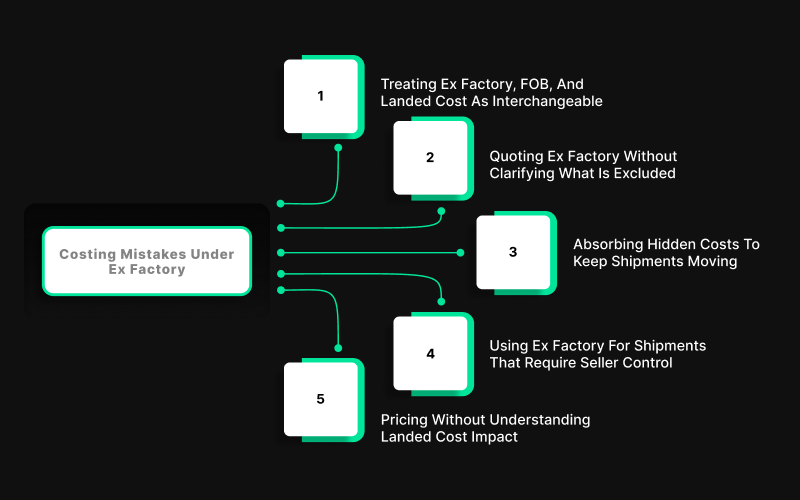
1. Treating Ex Factory, FOB, And Landed Cost As Interchangeable
Many exporters assume these terms differ only in pricing, not in responsibility. This results in quotes that exclude critical costs the buyer expects the seller to cover.
How to avoid it: Clearly state where responsibility ends in the quotation and contract, and align the price strictly with that cutoff point.
2. Quoting Ex Factory Without Clarifying What Is Excluded
Ex Factory prices often exclude loading, inland transport, and export clearance, yet buyers may assume some of these are included.
How to avoid it: List excluded activities alongside the price so there is no ambiguity during pickup and customs handling.
3. Absorbing Hidden Costs To Keep Shipments Moving
Exporters frequently cover storage, handling, or coordination costs when buyer pickup is delayed, even though the terms place responsibility on the buyer.
How to avoid it: Fix pickup timelines contractually and record readiness dates to protect against unplanned cost absorption.
4. Using Ex Factory For Shipments That Require Seller Control
Ex Factory is not well-suited for time-sensitive, fragile, or compliance-heavy cargo that requires exporter oversight.
How to avoid it: Use FOB or FCA when the shipment needs seller-managed export clearance or better control over logistics execution.
5. Pricing Without Understanding Landed Cost Impact
When buyers calculate landed cost later, large gaps between Ex Factory and final cost often trigger renegotiation or disputes.
How to avoid it: Discuss landed cost visibility early, even when quoting Ex Factory, to align expectations on the total spend.
How Pazago Simplifies Logistics for Ex Factory Shipments
Pazago strengthens the logistics execution layer by helping exporters align factory readiness with pickup plans, container movement, and shipment status updates, so the handover doesn’t become a blind spot.
Here’s how Pazago supports exporters managing Ex Factory shipments:
- Competitive Freight Rates: Pazago’s long-term relationships with major shipping lines provide exporters with competitive freight rates, reducing the impact of spot rate fluctuations and helping with cost planning.
- Assured Container Booking & Coordinated Loading: Pazago ensures timely container bookings and coordinates loading at the factory, CFS, or port, helping exporters align with cut-off timelines and avoid delays.
- Real-Time Daily Status Reports (DSRs): Exporters receive daily updates on container movement, ETD/ETA changes, and transshipment milestones, allowing them to take proactive steps before delays escalate.
- Operational Support for Exporters of All Sizes: Whether handling a single shipment or ongoing export cycles, Pazago provides consistent support, ensuring efficient execution across all shipments.
Conclusion
Ex Factory terms place responsibility for logistics on the buyer, but exporters can still face issues such as delayed pickups, missed deadlines, and unexpected costs. With Pazago, exporters can maintain better control over shipment execution, container coordination, and delivery timelines.
Pazago supports exporters with readiness alignment, structured coordination, and clear shipment visibility so Ex Factory handovers stay controlled and predictable.
Contact Pazago to discuss how this can fit your export workflows.
FAQs About Ex Factory
1. What Is The Meaning Of Ex-Factory Date?
The Ex-Factory date is the day the exporter confirms that goods are fully manufactured, packed, and ready for pickup at the factory. From this date onward, the buyer is expected to arrange collection and take responsibility for logistics, costs, and risk as per Ex Factory terms.
2. Is Ex Factory suitable for first-time exporters?
Ex Factory increases buyer responsibility and reduces seller control. First-time exporters often struggle with visibility and compliance unless processes are tightly documented.
3. Can exporters track shipments under Ex Factory terms?
Yes, but only if buyers share logistics details. Without a central system, tracking usually remains fragmented.
4. Why do Ex Factory shipments face more payment follow-ups?
Payments are often split between the advance and post-pickup stages, and poor milestone tracking delays collections.
5. When should exporters choose FOB instead of Ex Factory?
FOB is more suitable when exporters want control over export clearance, vessel cutoffs, and origin port execution.