.png)


A Practical Guide to Smooth Exim Documentation

Optimize your business: use unlimited savings with Pazago fulfilled now!
Get Started ->Every export begins on paper long before it reaches a port. Those papers decide whether your goods sail smoothly or sit stuck in customs. With India’s exports increasing by around 6% year-on-year, every document now carries more weight than ever.
Exim documentation covers the official records that prove what you’re shipping, where it’s going, and who’s responsible. These documents let customs verify your shipment, clear duties, and allow payments to move without dispute.
A single missing or incorrect document can bring shipments to a halt, and penalties can quickly accumulate. Even a single missing certificate or wrong invoice detail can freeze clearance or delay payment from overseas buyers.
In this article, we’ll explore the key export documents every business needs, why each one matters.
Key Takeaways:
- Export documentation ensures compliance, smooth customs clearance, and faster payments in global trade.
- Key documents include Commercial Invoice, Packing List, Bill of Lading, Certificate of Origin, and Insurance Certificate.
- Errors or missing documents can delay shipments or cause financial losses.
- Digital solutions like Pazago simplify Exim documentation by centralising, tracking, and securing records.
- With structured workflows and real-time updates, businesses reduce export errors and keep trade operations on track.
Understanding Exim Documentation Basics
Your export papers do more than fill a file. They guide every checkpoint your shipment passes through. Each record links to a specific step, helping authorities, carriers, and buyers confirm that everything matches the plan.

To keep this organised, exporters usually sort their paperwork into four clear groups:
- Commercial documents: These outline the transaction: what you sold, to whom, and under which trade terms.
- Transport documents: These record how goods travel and serve as proof of handover between you and the carrier.
- Regulatory documents: These are the filings required by Indian trade bodies like DGFT or Customs that show your export follows official procedures.
- Compliance documents: These certify that your products meet quality or origin standards demanded by the buyer or destination country.
Every authority along your trade route checks its part. The Directorate General of Foreign Trade (DGFT) issues licenses and manages export incentives. Customs validates goods before they leave India.
The Chamber of Commerce certifies origin when needed, while shipping lines require verified records before releasing cargo.
Also Read: Creating a Commercial Invoice and Packing List for International Export
Now that we've covered the key documentation groups, let's explore the core export documents every business must prepare.
Core Export Documents Every Business Must Prepare
India exported goods and services worth USD 778.2 billion in FY 2023-24, highlighting the importance of accurate paperwork in trade. Here’s a closer look at what Exim documentation includes and why getting it right is essential for smooth global shipping.

1. Proforma Invoice
This is the first document you send before a sale is confirmed. It lays out your offer, including price, quantity, delivery, and payment terms, so the buyer knows exactly what they’re agreeing to.
It’s not a bill, but a commitment outline that helps both sides prepare. Buyers use it to arrange bank approvals or import permits in their country.
Here’s what it usually includes:
- Buyer and seller details
- Description of goods with unit price and total value
- Delivery and payment terms as agreed during negotiation
Once you finalise these terms, every detail here must match your final commercial invoice to avoid payment rejection later.
2. Commercial Invoice
You create this once the goods are ready to ship. It’s the official bill that confirms what you sold, to whom, and at what price. Customs officers use it to calculate duties, while banks verify it before releasing payments under a letter of credit.
Key things to include:
- Exact product details matching your export licence
- Currency and payment mode as agreed with the buyer
- Invoice number, date, and total value consistent with other documents
Any mismatch between this and your packing list or LC can delay clearance or block payment, so double-check everything before submission.
3. Packing List
A packing list gives a clear picture of what’s inside each box or carton. It helps customs and shipping agents match your declared contents with the actual goods shipped. It’s created along with your commercial invoice and shared with logistics partners.
Include these details:
- Number of cartons and packages
- Weight (gross and net) for each item
- Dimensions, contents, and markings for identification
If a container inspection shows differences from your list, customs may hold your shipment until you explain.
4. Bill of Lading / Air Waybill
Once your cargo is loaded, the carrier issues a Bill of Lading for sea freight or an Air Waybill for air shipments. It’s both a receipt and a title to your goods, proving they’ve been shipped as agreed. The buyer needs it to claim the goods at the destination port.
You’ll want to check:
- Consignee name matches your sales contract
- Freight terms (prepaid or collect) are correct
- Original copies are safe, since lost ones need indemnity letters to replace
For Indian exporters, keeping digital copies backed up through a trade platform can save huge trouble if the originals get misplaced.
5. Shipping Bill or Bill of Export
This is your official export declaration to Indian Customs. Without it, goods cannot leave the country. It’s filed electronically through Indian Customs and Central Excise Electronic Commerce/Electronic Data Interchange Gateway (ICEGATE), usually before cargo reaches the port.
Customs checks the data and issues the Let Export Order once everything is verified. Always ensure it includes:
- IEC number and HS code
- FOB value and destination port
- Accurate duty drawback details if you’re claiming incentives
Incorrect entries can block your shipment or cost you refund eligibility, so verify every field before filing.
6. Certificate of Origin
Some countries charge lower tariffs if your goods come from India. This certificate proves that origin. Your local Chamber of Commerce or an Export Promotion Council issues it after reviewing your production records.
What you should mention clearly:
- Origin criteria (wholly obtained or substantially transformed)
- Product details and HS codes
- Exporter and importer details verified by the chamber
If you send it late or backdate it, foreign customs may reject your cargo or deny tariff benefits.
7. Letter of Credit (LC) or Payment Agreement
This is the buyer’s promise to pay, handled through their bank. It gives you security that you’ll be paid once you meet the agreed terms. But it’s strict; one missed detail, and the bank can hold payment.
Always review:
- Expiry and shipment dates
- Documents required to release payment
- Exact wording (even small differences like “Invoice” vs “Commercial Invoice” matter)
Your bank can help you verify compliance before you ship, reducing the risk of rejection later.
8. Inspection Certificate
An Inspection Certificate ensures your goods meet the buyer's quality and quantity requirements, with inspections often carried out by authorised third-party agencies before export.
The report typically includes:
- Product quality and condition
- Packaging verification
- Inspector’s signature and date
If the destination customs finds no inspection record when it’s required, your cargo could sit in port storage, adding days or weeks to your delivery time.
9. Insurance Certificate
It confirms that your shipment is protected against loss, theft, or damage during transit. You or your freight forwarder gets it from an insurer once you declare the cargo value and route. Buyers often ask for an Insurance Certificate before releasing payment, especially for high-value goods.
Here’s what to check:
- Coverage value (invoice value plus 10%)
- Correct shipment route and policy number
- Consignee details as per the invoice
If you ship under CIF (Cost, Insurance, and Freight) or CIP (Carriage and Insurance Paid to) terms, you are responsible for arranging insurance. Under FOB (Free on Board), the buyer does. Always confirm this in your contract.
10. Export Order or Purchase Order
Everything starts here: the buyer’s formal confirmation to buy your goods. It’s your go-ahead to start production, arrange shipment, and open export files.
Before accepting, review:
- Quantity, price, and delivery timeline
- Payment method and inspection terms
- Special instructions or quality conditions
Once you acknowledge this order, every document you create, from the proforma invoice to the shipping bill, should reflect the same details to keep the process seamless.
Also Read: Best Practices for Customs Documentation and Labelling for International Shipments
Next, let’s explore some of the most common errors to watch out for when managing Exim documentation.
Common Documentation Errors in Export-Import
Over 60% of export shipment delays are caused by incomplete or incorrect paperwork. It often happens not because you don’t know the rules but because the process moves fast and involves multiple hands.

Here’s where exporters usually go wrong and how these mistakes affect clearance and payment.
1. Name Inconsistencies
If your buyer or seller name appears differently across documents. For example, “Global Textiles Pvt Ltd” on one and “Global Textile” on another, customs may flag it for verification. The hold stays until you provide proof, which can easily push your shipment to the next vessel.
2. Unsigned or Unstamped Papers
Documents without signatures or chamber stamps get rejected outright. Once your cargo leaves, there’s no way to correct that error. Always check authentication before submission.
3. Currency mismatches
A mismatch between your invoice and letter of credit, say one shows USD and the other EUR, can make the bank refuse payment. Banks don’t fix the numbers; they only process exact matches.
4. Late submissions
Submitting forms after the cut-off time means missing the sailing schedule and incurring demurrage charges (fees for a container left inside a terminal while goods sit at the port). A simple reminder system or digital tracker can help avoid these delays.
Also Read: Differences Between Original and Express Bill of Lading
These common documentation errors can turn a smooth process into a series of headaches. The good news is that with the right tools, you can minimise these risks and keep your export operations running smoothly.
How Pazago Supports You with Export Documentation
Handling export paperwork through emails and scattered folders often leads to small errors: a missing signature, late filing, or outdated details. These gaps can delay your shipment. You need one reliable system that keeps it all organised. That’s exactly where Pazago helps.
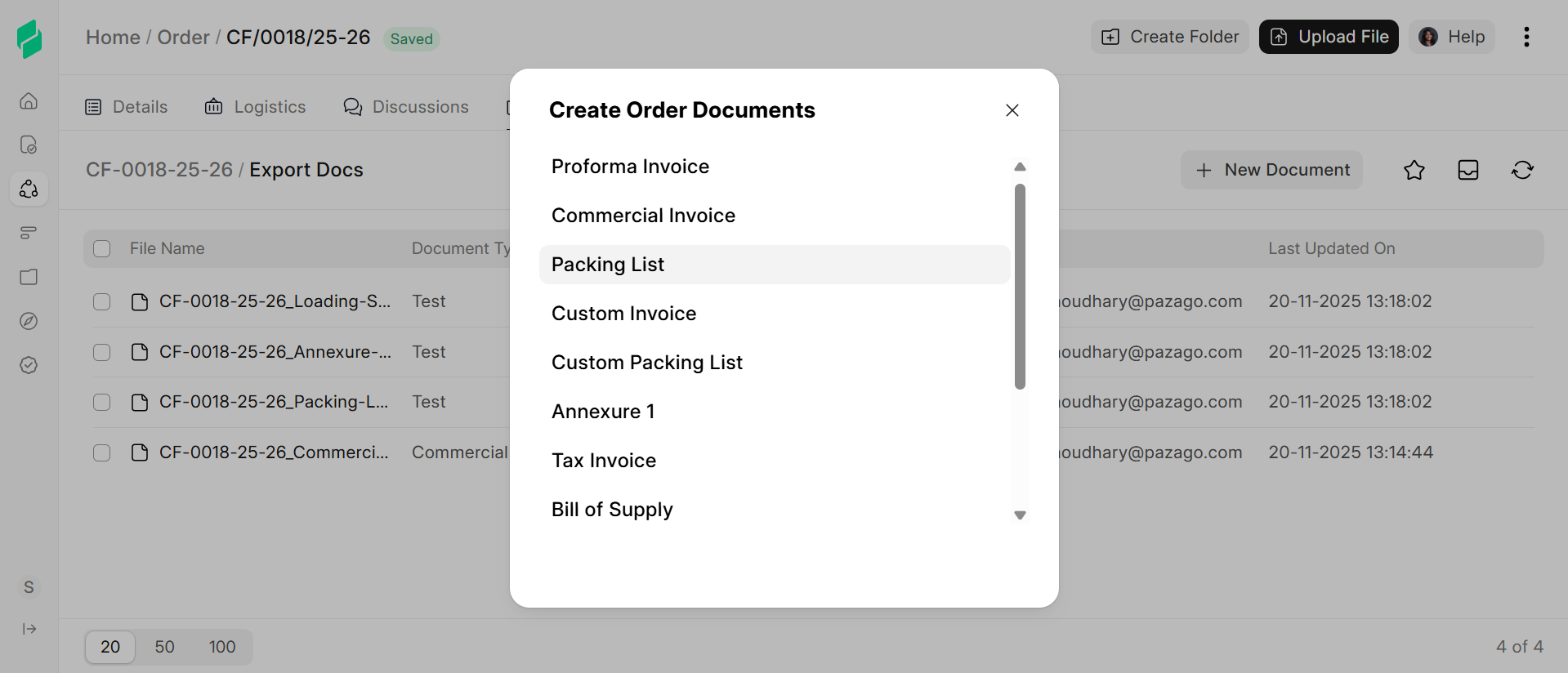
Pazago pulls all your export documents into one secure workspace. You can create invoices, share certificates, and submit customs papers without switching tools.
Here’s how it keeps your documentation smooth and stress-free:
- Central storage: Keep every form, invoice, and certificate in one place. No more searching through long email threads or old drives.
- Team coordination: Work with your suppliers, agents, and partners in the same dashboard. Everyone sees updates instantly, so no one gets left behind.
- Smart reminders: Get alerts when something’s incomplete or expiring soon. It helps you fix issues before they turn into delays.
- Connected services: Logistics, insurance, and finance all link to your workflow. You can plan, ship, and close payments without juggling platforms.
- Full visibility: Track your shipment documents in real time. You’ll always know what’s pending, verified, or ready for clearance.
Each feature closes a gap that usually slows your export cycle. With Pazago, you stay in charge; every step, from planning to payment, remains clear, on time, and well-documented.
Conclusion
Export documentation might look like paperwork, but it’s the thread that ties your trade together. Each form carries a purpose that keeps your shipment moving and your payments safe.
When even one file slips, the cost isn’t just delay; it’s credibility. That’s why exporters who stay meticulous win time, confidence, and repeat business.
Pazago helps you keep that consistency. It turns scattered paperwork into a traceable record that’s always audit-ready and compliant, so you can focus on growth, not gaps.
Book a demo with Pazago to simplify your Exim documentation and stay export-ready!
FAQs
1. What is the difference between pre-shipment and post-shipment export documents?
Pre-shipment documents are prepared before goods leave India, such as export orders, inspection reports, and shipping bills. Post-shipment documents, like the Bill of Lading and Bank Realisation Certificate (BRC), come after dispatch and help confirm payment receipt and export completion.
2. How long should exporters keep their documentation records?
Under Indian customs and DGFT regulations, exporters must retain all shipping, invoice, and compliance documents for at least five years from the date of export. These records may be needed during audits, tax assessments, or duty drawback claims.
3. What happens if an exporter needs to amend a submitted export document?
If you discover an error after submission, you can request an amendment through your customs broker or the ICEGATE portal. The correction must be supported by valid proof, and in some cases, approval from the assessing officer is required before reprocessing.
5. Are there export documents specific to restricted or licensed goods?
Yes. Items under restricted, SION, or advance authorisation categories need additional paperwork, such as export licences, quota certificates, or declarations under specific notifications. These must be approved by the DGFT before the shipment proceeds.