.png)


Over Dimensional Cargo (ODC): Meaning and Export Planning
%20Meaning%20and%20Export%20Planning.jpg)
Optimize your business: use unlimited savings with Pazago fulfilled now!
Get Started ->When you ship or import over dimensional cargo, complexity starts immediately. The cargo cannot move on standard routes or equipment. Roads, bridges, city turns, and port access must be checked before transport is even planned.
ODC shipments require route surveys, bridge and load assessments, and specialized trailers or cranes. Permits, police escorts, and movement approvals add another layer of dependency. For exporters, delays here can mean missed vessel cut-offs. For importers, cargo can get stuck after discharge with no clear exit plan.
Without early planning and coordination, ODC moves turn into last-minute problem-solving. This guide explains what exporters and importers need to know before moving over dimensional cargo, and how to manage the process without cost overruns or delivery delays.
Key Takeaways
- Over dimensional cargo refers to shipments that exceed standard height, width, or length limits and therefore cannot move on regular containers, vehicles, or routes.
- ODC shipments require early decisions around routing, permits, equipment, and handling, often starting at the quotation or order confirmation stage.
- Compared to standard freight, ODC involves longer timelines, more approvals, and coordination across logistics, compliance, finance, and operations teams.
- Most delays and cost changes in ODC shipments surface during execution but originate from gaps in early routing, permit planning, or documentation.
- When ODC shipments are planned and tracked as a single order across logistics, payments, documents, and communication, execution remains controlled even over long shipment cycles.
What Is Over Dimensional Cargo (ODC)?
.jpg)
Over Dimensional Cargo (ODC) refers to export or import cargo that exceeds the standard size limits allowed for normal transportation. This can be due to excess height, width, or length, and in some cases, weight. Such cargo cannot be moved using regular containers, trucks, or standard routes and therefore requires special handling, vehicles, and approvals.
Common ODC shipments include large machinery, industrial equipment, construction components, or oversized crates that do not fit into standard containers.
How ODC Differs From Standard Freight in Structure and Planning

ODC shipments follow a different execution model from regular freight. Once cargo exceeds standard transport limits, planning shifts from routine booking to coordinated execution involving approvals, specialized equipment, and longer lead times.
The table below highlights how ODC changes structure and planning compared to standard export shipments.
Common Types of Over Dimensional Cargo in Global Trade

ODC shipments in exports usually include multiple oversized items within the same order, each with different handling and routing requirements. A single export contract may combine large equipment, long components, and oversized crates, all of which must be planned together during transport and documentation.
Typical ODC Cargo Exporters Ship
- Industrial Machinery: Large manufacturing machines, presses, and plant equipment that cannot fit into standard containers and often require flatbed transport or partial dismantling.
- Power Generation Equipment: Generators, turbines, transformers, and energy modules with strict handling and securing requirements due to size and sensitivity.
- Engineering Assemblies: Pre-assembled industrial units, plant modules, or fabricated systems that are shipped as single oversized pieces to avoid on-site assembly.
- Long Steel Structures and Fabricated Components: Beams, girders, columns, and structural sections that exceed length limits and drive route and turning radius constraints.
- Large Crates Exceeding Container Door Limits: Crated cargo that may fit weight limits but exceeds container opening or height restrictions, forcing open or special transport methods.
Major Challenges in Handling Over Dimensional Cargo and Practical Solutions
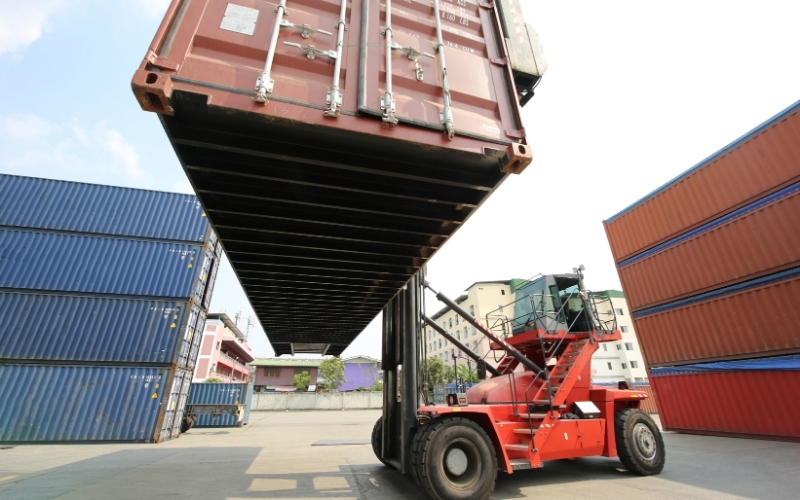
ODC shipments break down at predictable points during execution, most often around routing, permits, handling, costs, and coordination. Each failure point introduces delays, unplanned charges, or delivery risk.
1. Route and Infrastructure Constraints
Bridge clearances, road widths, turning radii, and city movement restrictions often determine whether ODC cargo can move at all. Port limitations around crane capacity, yard space, or berth access add further constraints. Inland movement from factory to port is frequently more restrictive than the ocean leg.
Solution
- Conduct route feasibility and clearance checks before transport booking
- Validate bridge load capacity and turning points using actual cargo dimensions
- Finalize transport equipment based on approved routes, not assumptions
2. Permits and Regulatory Approvals
ODC movements depend on permits issued by multiple authorities across states or countries. Any delay affects truck dispatch, port gate-in, and vessel ETDs. When permits are handled informally, shipment timelines become unpredictable.
Solution
- Identify permit requirements during planning, not after cargo readiness
- Align movement schedules with permit validity windows
- Track permit status alongside shipment dates and milestones
3. Loading, Securing, and Cargo Stability
ODC cargo cannot rely on standard loading or securing methods. Stability depends on cargo-specific lifting and lashing plans and experienced handling teams. Damage often becomes visible only at the destination, complicating claims and disputes.
Solution
- Use cargo-specific lashing and lifting plans approved before execution
- Assign experienced handlers for loading and unloading
- Maintain photo records of cargo condition before and after loading
4. Cost Changes During Execution
ODC costs frequently change after route surveys or during execution due to additional equipment, escorts, or re-routing. Without documentation, explaining cost increases to buyers becomes difficult.
Solution
- Record all cost components against the export order
- Document rate revisions triggered by surveys or approvals
- Maintain historical visibility of charges through the shipment cycle
5. Coordination Across Multiple Parties
ODC shipments involve exporters, forwarders, transporters, ports, insurers, and surveyors. Information spread across emails and messaging apps increases the risk of outdated instructions being followed.
Solution
- Centralize all shipment-related discussions at the order level
- Keep instructions and changes linked to the correct shipment
- Preserve communication history for long-running ODC movements
ODC shipments progress through these constraints in sequence, and gaps at any stage tend to surface later as delays, cost changes, or delivery issues rather than at the point where they originate.
Also read: Containerization: Definition, Types, Advantages, and Challenges in Shipping.
Manage ODC Shipments Without Fragmentation Using Pazago
Over Dimensional Cargo shipments introduce execution risk when freight availability, equipment readiness, loading coordination, and shipment visibility are handled in isolation. As timelines stretch and dependencies increase, gaps in coordination often surface as missed vessel cut-offs, cost escalations, or buyer escalations.
Pazago supports exporters handling ODC by strengthening logistics execution across these pressure points:
- Competitive freight rates across key trade lanes, helping exporters plan oversized shipments without last-minute pricing disruptions
- Assured container booking and coordinated factory or CFS loading to align with route clearances and gate close timelines
- Daily Status Reports (DSRs) covering container movement, ETD/ETA changes, transshipment updates, and BL status
- Hands-on pre-shipment and post-shipment support to resolve execution issues during complex ODC movements
- Consistent operational support for exporters of all sizes, including one-off ODC shipments and recurring project cargo
By focusing on execution reliability at the logistics layer, Pazago helps exporters manage ODC shipments with fewer surprises across long and complex transport cycles.
Conclusion
Over Dimensional Cargo is a regular requirement for exporters in engineering, infrastructure, energy, and heavy manufacturing sectors. While the technical challenges of ODC are well understood, most delays and cost overruns arise during execution rather than planning.
ODC shipments depend on freight availability, confirmed equipment, coordinated loading, permit-aligned movement, and clear shipment visibility. Gaps at any of these stages directly affect delivery commitments and buyer confidence.
Pazago supports exporters managing ODC by strengthening logistics execution through stable freight rates, assured container booking, coordinated loading, daily shipment status reporting, and hands-on operational support. This helps exporters maintain control over oversized shipments even across long, approval-heavy transport timelines.
FAQs on Over Dimensional Cargo (ODC)
1. How do I know if my export or import qualifies as ODC?
Cargo is treated as ODC when its height, width, or length exceeds standard container or road movement limits, even if the weight is within normal range.
2. Does ODC always require special permits?
Most ODC movements require permits due to route, clearance, or axle load constraints. The type and number of permits depend on cargo dimensions and movement geography.
3. Is ODC planning required only after the cargo is ready?
No. ODC planning usually starts at the quotation or order confirmation stage, as routing, permits, and equipment selection influence timelines and costs.
4. Are ODC shipments always more expensive than regular freight?
ODC shipments involve additional costs related to equipment, surveys, and approvals, but early planning helps keep costs controlled and predictable.
5. Can SMEs handle ODC shipments without dedicated logistics teams?
Yes. SMEs handle ODC regularly by relying on structured planning, clear documentation, and centralized tracking rather than ad hoc coordination across tools and messages.