.png)


ISO Tank Containers: Uses, Safety Standards & Loading Guidelines
Optimize your business: use unlimited savings with Pazago fulfilled now!
Get Started ->Exporting speciality chemicals to Europe leaves little room for error. Buyers expect absolute purity, zero contamination, and strict compliance with EU safety standards. Drums can leak. Flexitanks can fail. And managing multiple handoffs only increases risk and paperwork.
That’s where ISO tank containers stand apart. A single sealed steel tank carries your liquid cargo from factory to destination across road, rail, and sea, without repacking, transfers, or exposure. Fewer touchpoints mean better safety, cleaner compliance, and lower costs.
Yet many exporters make costly mistakes by treating ISO tanks like regular containers. Skipped inspections, poor cargo compatibility checks, wrong valve choices, or incorrect fill levels can compromise an entire shipment. One oversight is enough to delay delivery or lose buyer trust.
This guide clears the noise. You’ll learn how ISO tank containers really work, the international standards that matter, and the exact loading practises that protect your cargo from origin to delivery. We’ll also cover how to choose the right tank, avoid common compatibility errors, and use ISO tanks to run safer, more efficient bulk liquid exports.
Key Takeaways
- An ISO tank container is a standardised stainless steel tank housed in a protective frame, designed for safely transporting liquids across multiple transport modes.
- ISO tanks handle a wide range of cargo types, from hazardous chemicals to food-grade liquids, with capacities ranging from 14,000 to 26,000 litres.
- They must comply with strict international standards, including ISO 1496/3, CSC, IMDG, ADR, and RID regulations.
- Regular inspections every 2.5 and 5 years, proper loading procedures, and cargo compatibility checks are critical for safe operations.
- For Indian exporters, ISO tanks offer cost savings, reduced contamination risks, and simplified documentation compared to traditional packaging.
What Is an ISO Tank Container?
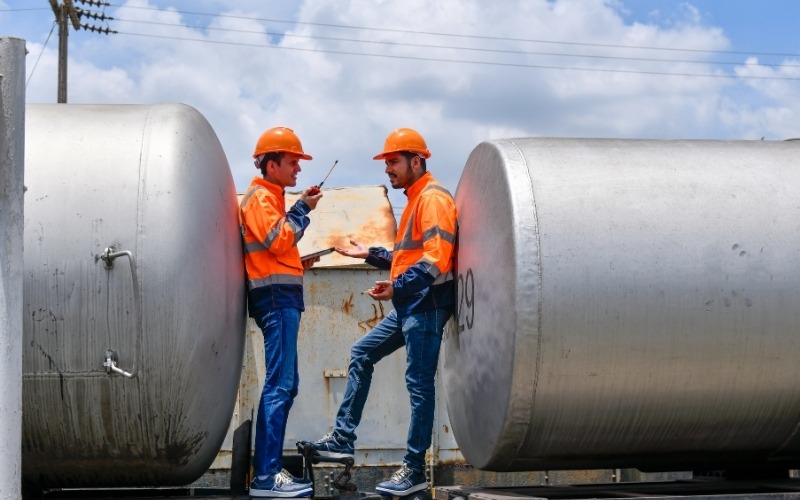
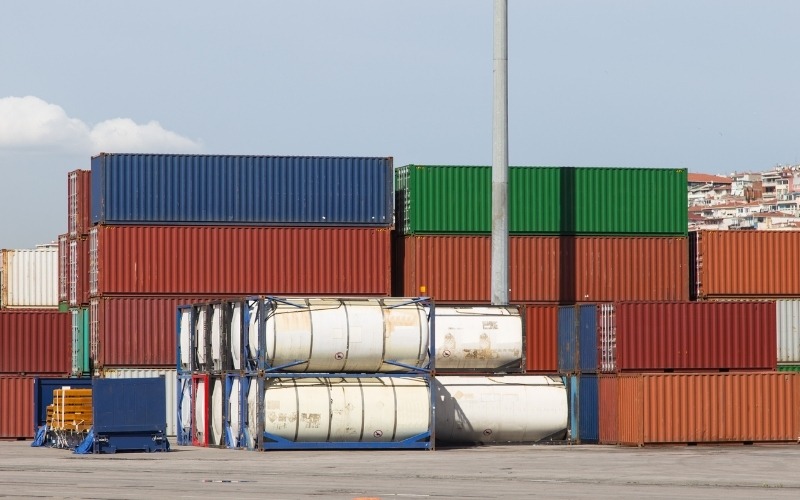
An ISO tank container is a specialised, reusable vessel designed to safely transport bulk liquids, gases, and powders across international borders. Think of it as a cylindrical stainless steel tank wrapped in a protective framework that meets international standards set by the International Organisation for Standardisation.
The beauty of an iso tank container lies in its intermodal capability. Whether you're shipping by road, rail, or sea, the same container moves seamlessly between modes without requiring you to unload and reload your cargo. This standardisation eliminates handling risks and dramatically reduces contamination concerns.
Key Specifications of ISO Tank Containers
For Indian exporters planning shipments, understanding the technical specifications helps you select the right container for your cargo needs.
Standard Dimensions:
- Length: 20 feet (6.06 metres)
- Width: 8 feet (2.44 metres)
- Height: 8.6 feet (2.59 metres)
Capacity Range:
- Standard tanks: 21,000 to 26,000 litres
- Swap body tanks: up to 35,000 litres
Construction Materials:
- Inner vessel: Austenitic stainless steel (316L or 304 grade) for corrosion resistance
- Outer frame: Carbon steel meeting ISO 1496/3 standards
- Insulation: Polyurethane foam with aluminium cladding (for temperature-sensitive cargo)
Service Life:
- Typically 20–35 years with proper maintenance and regular inspections
The standardised corner castings on each iso tank container allow them to be handled like regular shipping containers, making them compatible with existing port infrastructure, container vessels, and handling equipment worldwide.
Now that you understand what an iso tank container is, let's explore the diverse range of cargo types you can transport using these versatile containers.
Also Read: ISO Container Full Form in Shipping: Types and Benefits
Common Uses of ISO Tank Containers in Export Trade
The versatility of an iso tank container makes it indispensable across multiple industries. For Indian exporters, these containers open doors to international markets by providing a reliable, cost-effective solution for bulk liquid transportation.
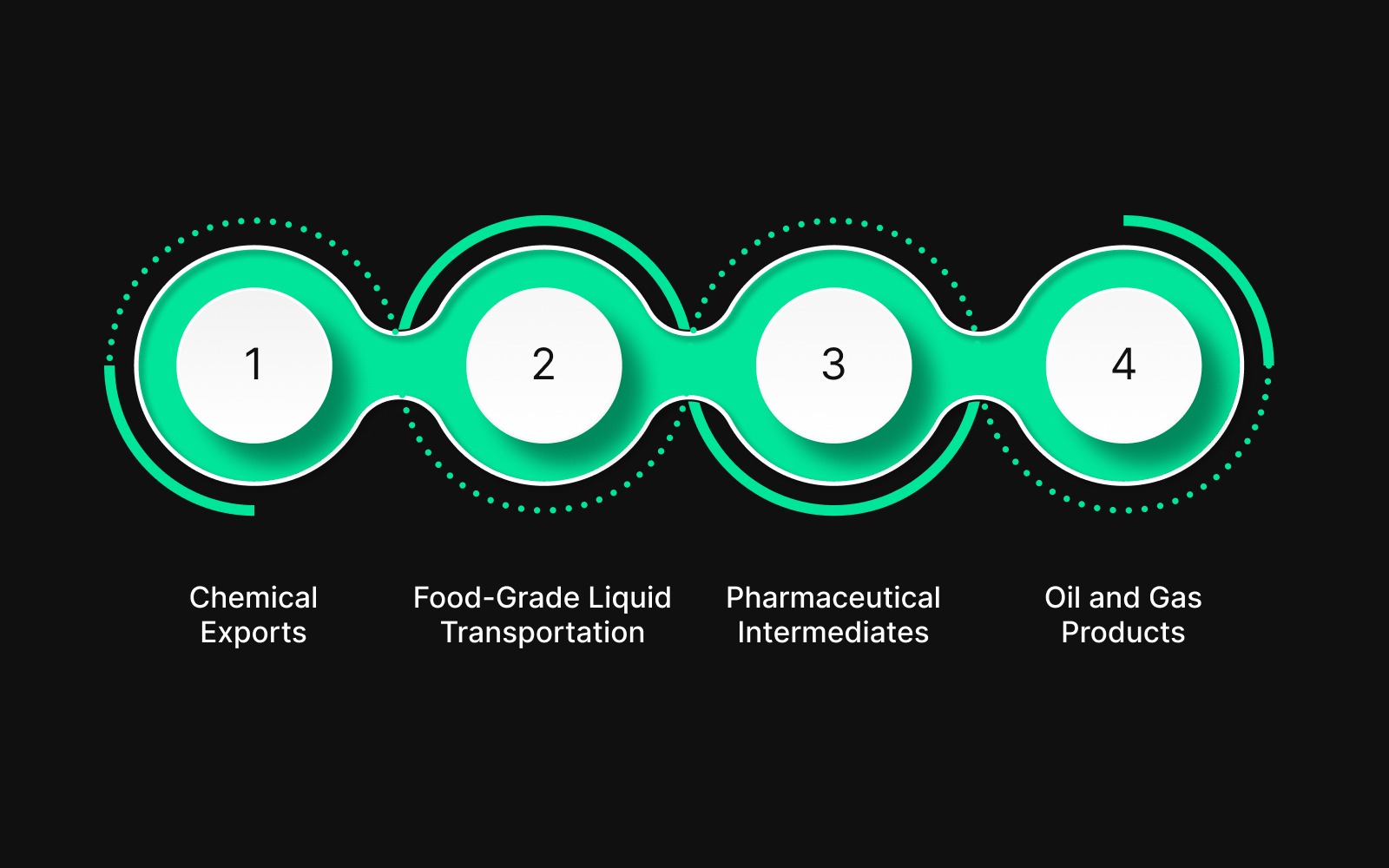
Chemical Exports
India's chemical industry is among the world's largest, and ISO tank containers play a crucial role in safely transporting both hazardous and non-hazardous chemicals.
Hazardous Chemicals:
- Sulphuric acid
- Hydrochloric acid
- Hydrogen peroxide
- Caustic soda
- Industrial solvents
- Ammonia
Non-Hazardous Chemicals:
- Latex emulsions
- Glycerine
- Industrial resins
- Water treatment chemicals
- Lubricants
Each iso tank container used for chemical transport features specialised linings or coatings to prevent corrosion and maintain product integrity. Rubber linings, PTFE coatings, or PE linings protect against aggressive chemicals, extending the tank's lifespan whilst ensuring cargo purity.
Food-Grade Liquid Transportation
Food safety is non-negotiable in international trade. ISO tank containers designed for food-grade products meet stringent hygiene standards and often carry certifications from bodies like the FDA and EU food safety authorities.
Common Food-Grade Cargo:
- Edible oils (palm oil, sunflower oil, coconut oil)
- Fruit juices and concentrates
- Wine and alcoholic beverages
- Liquid glucose and corn syrup
- Milk and dairy products
- Drinking water
These specialised iso tank containers use food-grade stainless steel with mirror-polished interiors that prevent bacterial growth and make cleaning easier between loads.
Pharmaceutical Intermediates
India's pharmaceutical export sector relies heavily on iso tank containers to transport high-value intermediates and active pharmaceutical ingredients (APIs) that require contamination-free environments.
The controlled-temperature capability of insulated ISO tank containers ensures that pharmaceutical products maintain their efficacy during long-haul shipments to regulated markets such as the EU and the USA.
Oil and Gas Products
The petroleum sector uses ISO tank containers to transport base oils, lubricants, LPG, and specialised fuels. The pressure-resistant designs handle volatile products safely whilst meeting international maritime dangerous goods regulations.

Understanding these diverse applications helps you recognise where an iso tank container fits into your export strategy. But selecting the right container is only half the battle—you must also ensure it meets rigorous international safety standards.
Also Read: Guide to Exporting Chemicals from India
International Safety Standards for ISO Tank Containers
Safety isn't optional when you're transporting bulk liquids across borders. An ISO tank container must comply with multiple overlapping international standards governing design, construction, testing, and maintenance.
ISO 1496/3 Standard
This is the foundational standard for iso tank containers. It specifies detailed requirements for tank design and structural integrity, materials used in construction, pressure testing procedures, safety features and equipment, and frame strength and durability.
Before any iso tank container enters service, it must undergo rigorous prototype testing to ensure compliance with ISO 1496/3. Each new tank undergoes a hydrostatic test during construction, in which it's filled with water and pressurised to verify its leakproofness and structural integrity.
Container Safety Convention (CSC)
Every iso tank container carries a Container Safety Certificate (CSC) plate issued by the manufacturer. This plate includes critical information about the container's approved uses, maximum gross weight, and inspection history.
Mandatory Inspection Schedule:
- First inspection: Before the container enters service
- Second inspection: Within 5 years of manufacture (if used for at least 2 years)
- Subsequent inspections: Every 2.5 years thereafter
Missing these inspection deadlines can result in your iso tank container being decertified for hazardous cargo transport, potentially stranding your shipment at customs.
IMDG Code (International Maritime Dangerous Goods)
For sea freight, the International Maritime Organisation sets strict guidelines through the IMDG Code. This governs tank construction standards for different cargo classes, emergency equipment requirements, labelling and placarding specifications, documentation requirements, and segregation rules for mixed cargo shipments.
Your ISO tank container must display the proper IMDG labels indicating the cargo's hazard class. These labels alert port workers and customs officials to potential dangers and proper handling procedures.
ADR and RID Regulations
For exporters planning multimodal transport within Europe, compliance with ADR (road transport) and RID (rail transport) regulations is mandatory. ADR requires regular pressure testing, emergency valve inspections, vehicle-compatibility certificates, and driver-training documentation. RID demands rail-specific securing mechanisms, weight distribution calculations, and rolling stock compatibility.
UN Certification for Hazardous Materials
Tanks carrying dangerous goods must hold UN certification, which involves leak-proofness testing, pressure resistance verification, structural integrity assessment, and safety valve functionality checks. The UN number and proper shipping name must be clearly displayed on your iso tank container's documentation and exterior markings.
Bureau of Indian Standards (BIS) Compliance
For Indian exporters, the Bureau of Indian Standards mandates specific quality benchmarks for iso tank containers manufactured or operated within India. These align with international standards but add India-specific requirements for domestic operations.
Meeting these diverse standards might seem daunting, but they exist to protect your cargo, your business reputation, and the environment. Next, let's look at the practical aspects of loading and unloading procedures that keep your shipments safe and compliant.
Also Read: Logistics Challenges and Solutions in the Chemical Industry
Loading and Unloading Guidelines for ISO Tank Containers

Proper loading and unloading procedures are critical for maintaining the integrity of your cargo and the safety of personnel. Mistakes during these operations can lead to contamination, spills, equipment damage, or serious safety incidents.
Pre-Loading Inspection Checklist
Before loading any cargo into an ISO tank container, conduct a thorough inspection. Check the tank framework for dents, cracks, or corrosion. Inspect all valves and fittings for damage or wear. Verify that pressure relief valves move freely. Examine gaskets and seals for deterioration. Confirm the tank is properly cleaned of previous cargo.
Review the tank's current inspection certificate, confirm the CSC plate indicates the tank is approved for your cargo type, verify the cleaning certificate meets your cargo requirements, and review the tank's maintenance history.
Loading Methods for Different Cargo Types
- Gravity Loading works for non-viscous liquids that flow freely. Connect the storage tank to the iso tank container using appropriate hoses, open the valve on the storage tank, allow gravity to transfer the liquid, monitor the fill level using the tank's gauge, and stop loading at the prescribed fill level (typically 80-95% to allow for thermal expansion).
- Pump Loading is necessary for faster loading or high-viscosity products. Connect the pump to both the storage facility and the ISO tank container. Begin pumping at a controlled flow rate to prevent pressure buildup. Monitor pressure gauges throughout. Use flow metres to track the volume loaded, and stop pumping when the target volume is reached.
- Closed-Loop System Loading is essential for hazardous or volatile cargo that produces dangerous vapours. Connect the loading line to the tank's bottom or top outlet, and connect a vapour return line from the tank's airline connection to the storage facility. Begin the transfer process whilst vapours displaced during loading return to the storage tank, preventing environmental release and reducing fire risks.
Critical Safety Measures:
- Always ground the iso tank container before connecting hoses
- Secure all hoses to prevent whiplash
- Never fill beyond the maximum fill level
- Use only compatible materials for hoses and gaskets
- Maintain proper ventilation in the loading area
Unloading Procedures
Review the cargo's Material Safety Data Sheet (MSDS) for specific handling requirements. Ensure the receiving facility is prepared with appropriate equipment. Check that all personnel wear the required personal protective equipment (PPE). Verify the unloading area has proper ventilation. Confirm emergency response equipment is readily available.
For most liquids, connect the unloading hose to the tank's bottom outlet valve, slowly open valves to relieve internal pressure, begin the transfer using gravity or pumping, monitor the flow rate to prevent surges, and once nearly empty, use compressed air or nitrogen to push out residual product.
Cargo Compatibility and Cross-Contamination Prevention
Verify the tank's material construction is suitable for your chemical. Confirm previous cargo won't react with your current product. Review the tank's cleaning certificate to ensure proper decontamination.
- For food-grade-to-food-grade transitions, steam cleaning and a hot water wash with food-safe detergents are required.
- For chemical-to-chemical, multiple rinse cycles and detailed cleaning reports are required.
- For hazardous-to-food-grade applications, complete chemical decontamination, steam sterilisation, and laboratory testing are mandatory.
Also Read: Understanding Essential Import & Export Delivery Documents
Advantages of Using ISO Tank Containers for Indian Exporters
Choosing an ISO tank container over traditional packaging methods such as drums, IBCs, or flexitanks offers several compelling advantages that directly impact your bottom line and operational efficiency.
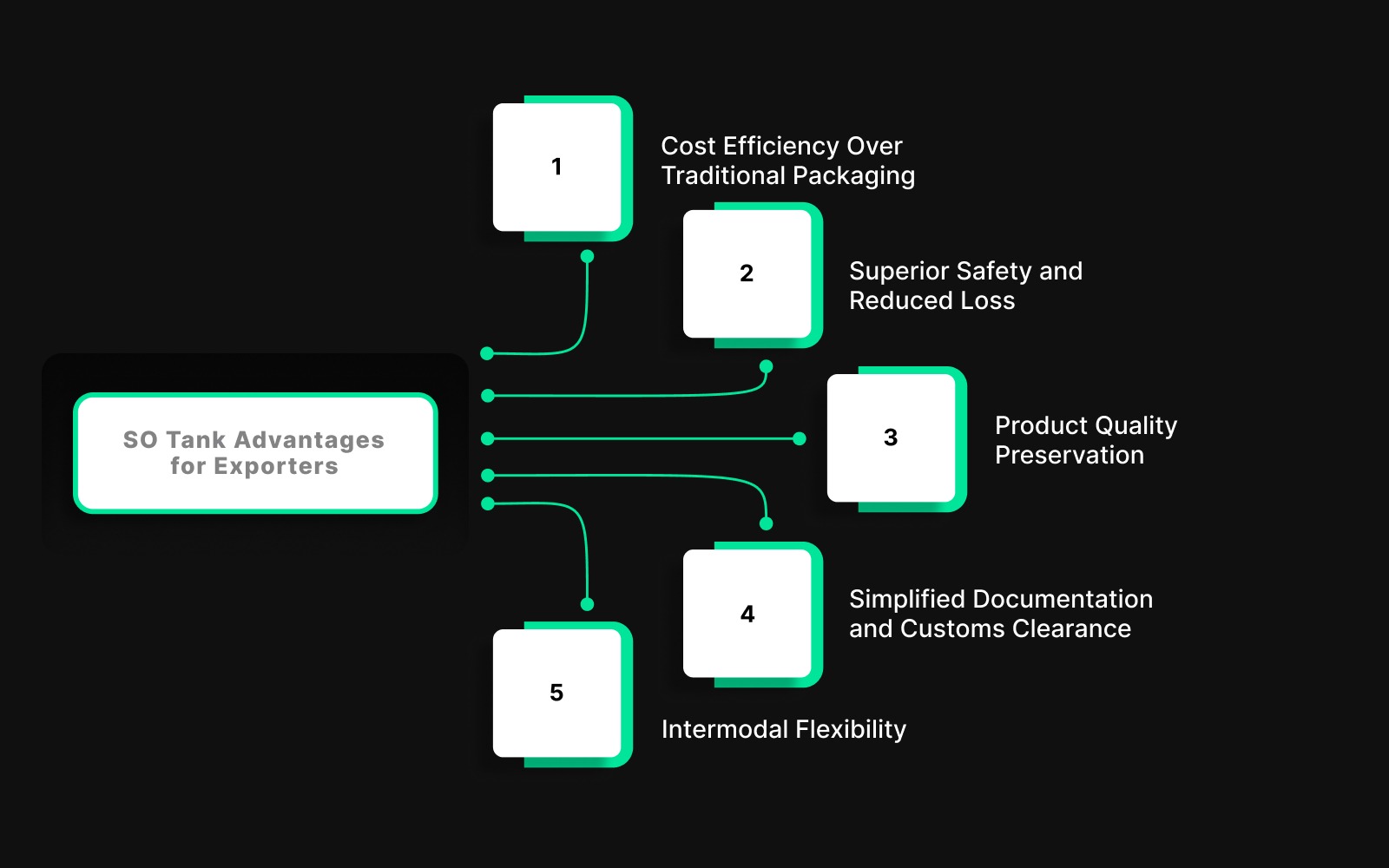
Cost Efficiency Over Traditional Packaging
A single iso tank container replaces hundreds of drums, eliminating the need to purchase, store, or dispose of individual containers. This reduces per-litre transportation costs by improving payload efficiency and lowering warehouse space requirements. Shipping 21,000 litres of chemicals in 200-litre drums requires 105 drums, each needing individual handling, labelling, and disposal. One iso tank container eliminates all this complexity whilst reducing freight costs per litre.
Superior Safety and Reduced Loss
Single-unit handling reduces the risk of spillage or damage. No transfer between vessels eliminates contamination points. Built-in safety features, such as pressure relief valves and emergency shutoff systems, provide additional protection. The robust framework protects the tank from impact damage. The leak-proof design prevents environmental contamination, and the reusable design reduces waste generation.
According to the International Tank Container Organisation, intermodal tank containers leave a carbon footprint that is almost 50% less than an equivalent drummed shipment on certain long-haul routes.
Product Quality Preservation
An iso tank container maintains your cargo's quality better than most alternatives. The sealed environment prevents contamination from external sources. Temperature control options maintain product specifications. Stainless steel construction doesn't react with most chemicals. There's no oxygen exposure for products sensitive to oxidation.
Simplified Documentation and Customs Clearance
A single container means a single set of documents. Standardised internationally, these reduce customs complications. Clear labelling requirements that customs officials worldwide recognise. Integrated tracking systems provide real-time visibility. Compared to managing documentation for hundreds of drums, the administrative burden drops dramatically.
Intermodal Flexibility
The standardised design allows seamless transfer between transport modes without cargo handling. Ship-to-rail-to-truck transitions happen smoothly. If delays occur, the tank can stay in storage without affecting cargo quality. Route flexibility lets you choose the most cost-effective or time-efficient transport combination. It's compatible with global port and terminal infrastructure.
Also Read: Common Documents Required for Import and Export Procedures
Common Challenges When Using ISO Tank Containers (And How to Solve Them)
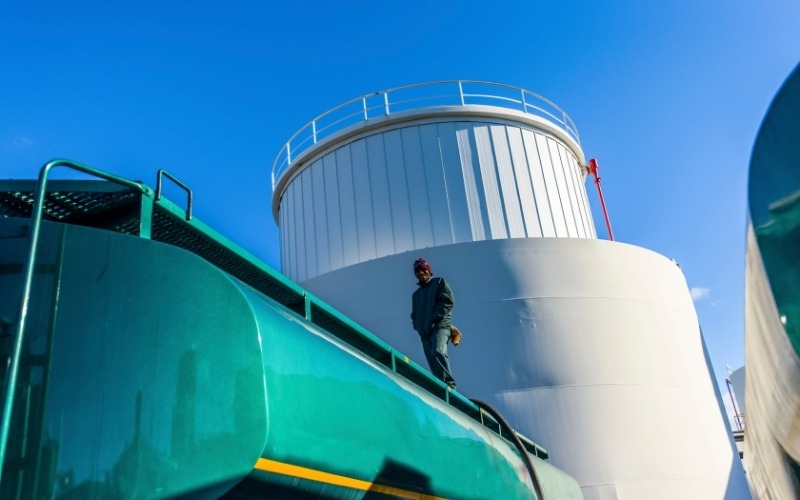
ISO tank containers offer efficiency and safety, but they are not a plug-and-play solution. Exporters often run into issues that increase costs, delay shipments, or create compliance risks. Understanding these challenges early and knowing how to address them makes the difference between a smooth movement and a failed shipment.
Tank Availability and Positioning Challenges
ISO tanks are capital-intensive assets, and availability can be tight during peak shipping seasons. Additionally, empty tanks need to be repositioned to loading locations, which incurs costs.
Solutions: Plan shipments well in advance and book tanks early during high-demand periods. Establish relationships with multiple tank operators to access larger fleets. Consider long-term lease arrangements if you have regular export volumes. For Indian exporters of chemicals or oils, aligning with logistics partners that maintain tank fleets at Mumbai, Gujarat, or Chennai ports significantly reduces positioning costs.
Cargo Compatibility Issues
Loading incompatible cargo into a tank can result in contamination, product degradation, or dangerous chemical reactions.
Solutions: Always consult cargo compatibility charts before accepting a tank. Request detailed information about the previous three cargoes carried in the tank. When in doubt, specify a freshly cleaned tank approved for your specific product. Never compromise on compatibility; the cost of contaminated cargo far exceeds the expense of ensuring proper tank selection.
Regulatory Compliance Complexity
ISO tank shipments must comply with multiple overlapping regulations from different authorities, and requirements vary by destination country.
Solutions: Work with experienced customs house agents who understand hazardous cargo regulations. Maintain a compliance checklist specific to your cargo type and key destination markets. Use digital platforms that embed compliance requirements into workflows. For chemical exporters, partnering with specialised freight forwarders who understand IMO classifications and ADR requirements can prevent costly compliance violations.
Documentation and Labelling Errors
Incorrect or incomplete documentation is one of the leading causes of customs delays for iso tank shipments.
Solutions: Use standardised document templates that include all required fields. Double-check HS codes, UN numbers, and proper shipping names before filing. Ensure all labels and placards are visible, legible, and correctly placed. Digital export management systems reduce human error by automating document generation and including validation checks.
Also Read: International Freight Shipping: Definition and Key Stages
How Pazago Simplifies ISO Tank Container Exports
ISO tank container exports demand precision at every stage. A missed container booking, unclear freight charges, or delayed documentation can stall an entire shipment and strain buyer relationships. For exporters handling bulk liquids, logistics execution matters just as much as compliance and loading accuracy.
This is where Pazago steps in as a logistics-focused partner, helping exporters manage ISO tank movements with control, predictability, and visibility across long export cycles.
Stable Freight Rates and Assured Tank Bookings
Pazago works with long-standing carrier and forwarder relationships to offer stable freight rates and confirmed container bookings across key trade routes. Exporters benefit from predictable costs, reduced rollovers, and better shipment planning, especially for time-sensitive chemical and food-grade cargo.
For example, a chemical exporter shipping to Europe can lock in quarterly tank freight rates and secure equipment in advance, avoiding sudden hikes during high-demand periods.
End-to-End Shipment Coordination
Pazago supports exporters before and after shipment execution. The logistics team coordinates container positioning, loading schedules, and handoffs with forwarders, ensuring the tank reaches the factory or terminal on time and moves as planned. Exporters always have a single point of contact instead of chasing multiple vendors.
Daily Status Reports for Complete Shipment Visibility
Pazago provides Daily Status Reports (DSRs) covering container movement, vessel ETD and ETA, transshipment updates, and Bill of Lading progress. Exporters stay informed throughout the 1.5–2 month export cycle and can proactively update buyers without scrambling for answers.
Logistics Support for Exporters of All Sizes
Pazago supports exporters at every scale, from first-time ISO tank users shipping a single consignment to enterprises moving multiple tanks each month. Service quality, attention, and pricing transparency remain consistent, regardless of shipment size.
A growing specialty chemicals exporter receives the same level of coordination and support as a high-volume oil exporter, ensuring reliable execution without being sidelined.
Also Read: Best practises for Customs Documentation and Labelling for International Shipments
Conclusion
ISO tank containers represent a sophisticated, reliable solution for Indian exporters shipping bulk liquids, chemicals, and food-grade products to international markets. Their standardised design, safety features, and intermodal flexibility make them superior to traditional packaging for medium- to large-volume shipments.
Understanding the technical specifications, safety standards, and proper loading procedures ensures your ISO tank container shipments arrive safely and in compliance. The advantages, cost efficiency, reduced contamination risk, simplified documentation, and environmental benefits make these containers increasingly popular across India's growing chemical and food export sectors.
ISO tank containers solve the transport challenge. Strong logistics execution keeps the shipment intact. Pazago works with exporters to manage freight rates, container availability, and shipment progress, ensuring ISO tank consignments move smoothly across long export cycles.
Get in touch with Pazago to see how structured logistics support can simplify your bulk liquid exports.

Frequently Asked Questions
1. What is the typical capacity of an ISO tank container?
Most standard iso tank containers hold between 21,000 and 26,000 litres. Swap body tanks, which extend beyond the standard frame, can carry up to 35,000 litres. The exact capacity depends on the tank type, design pressure rating, and the specific gravity of the cargo being transported.
2. How often must ISO tank containers be inspected?
ISO tank containers are subject to mandatory inspections under the Container Safety Convention (CSC). The first inspection occurs before the tank enters service, followed by an inspection within 5 years of manufacture (if the tank has been used for at least 2 years). After that, inspections must occur every 2.5 years to maintain certification for hazardous cargo transport.
3. Can I use the same ISO tank for food-grade products and chemicals?
While technically possible with proper cleaning, this practise requires extreme caution. Moving from chemicals to food-grade products demands the most stringent cleaning protocols, including chemical decontamination, steam sterilisation, and laboratory testing. Most food-grade shippers prefer dedicated food tanks that have never carried chemicals, thereby eliminating the risk of contamination.
4. Are ISO tank containers more expensive than drum shipments?
For large volumes (typically above 10,000 litres), ISO tank containers are usually more cost-effective than drums per litre. Initial positioning costs might be higher, but you save on packaging materials, handling labour, reduced freight costs per litre, and the elimination of drum disposal expenses. Most exporters find tanks economical for regular bulk shipments.
5. What documentation is required for ISO tank container exports from India?
Essential documents include the Commercial Invoice, Packing List, Bill of Lading, Export licence (for restricted products), Tank Inspection Certificate, Cleaning Certificate, Material Safety Data Sheet, Certificate of Origin, Dangerous Goods Declaration (for hazardous cargo), and Customs documentation. The specific requirements vary depending on your cargo type and the destination country's regulations.