.png)


SOFTEX Form Filing: Who Must File, Who Is Exempt, And How To Apply

Optimize your business: use unlimited savings with Pazago fulfilled now!
Get Started ->India is among the world’s largest exporters of IT and BPM services and accounts for about 56% of the global outsourcing market. This scale brings volume, recurring foreign currency inflows, and strict reporting expectations for service exporters.
If you export software or IT-enabled services, you have likely come across a regulatory document called the SOFTEX Form. For many exporters, this is where uncertainty begins. Service exports do not follow the same compliance structure as physical goods. GST filings operate under one framework, RBI foreign exchange reporting follows another, and shipping bills apply to an entirely different category of exports.
SOFTEX sits between these systems, which is why it is often misunderstood, delayed, or misfiled.
This guide explains SOFTEX filing from start to finish. It covers what the SOFTEX form is, who needs to file it, how the filing and certification process works, how it differs from GST returns and shipping bills, which authorities are involved, the consequences of non-compliance, and the practical steps exporters can take to avoid errors and delays.
Key Takeaways
- SOFTEX filing is required whenever software or IT-enabled services are exported, and foreign currency is earned, regardless of exporter size, business structure, or STPI registration status.
- SOFTEX does not apply to physical goods exports, domestic-only services, remittances tagged under Purpose Code P0802, or service invoices up to $25,000 where declaration is waived.
- SOFTEX filing must start after invoice generation and is expected within 30 days of the invoice date, usually consolidated monthly.
- The filing flow is fixed: generate SOFTEX number first, file through the correct STPI or SEZ portal, obtain certification, and then submit the certified form to the authorized dealer bank.
- Delays or mistakes in SOFTEX filing most often lead to bank holds on inward remittances, BRC issuance issues, and compliance follow-ups rather than direct monetary penalties.
What Is A SOFTEX Form?

A SOFTEX form is a mandatory compliance filing for Indian companies that export software or IT-enabled services to overseas clients. It is used to declare service export invoices and to report the value of software or digital services delivered outside India, whether delivered online or via electronic transfer.
The form exists to help the Reserve Bank of India track foreign exchange earned from service exports. Since software exports do not pass through customs and do not generate shipping bills, SOFTEX serves as the primary record linking export invoices to inward remittances received through banks.
Who Is Required To File A SOFTEX Form

Any exporter earning foreign currency from software or IT-enabled service exports is required to file a SOFTEX form. This applies regardless of company size or business structure.
- Software, IT services, and IT-enabled service exporters, including developers, SaaS companies, agencies, BPOs, consultants, and design firms, when the client is located outside India, and payment is received in foreign currency
- Exporters operating as companies, partnerships, sole proprietors, or individual freelancers
- Units registered under Software Technology Parks of India (STPI) or operating from a Special Economic Zone (SEZ), where SOFTEX filing is mandatory
- Non-STPI and non-SEZ exporters who must register with their local STPI office for SOFTEX processing and certification
- Freelancers and small service exporters receiving inward remittances in foreign currency for software or IT-enabled services
Who Does Not Need To File A SOFTEX Form

SOFTEX filing is mandatory for most software and service exports, but there are specific cases where it is not required.
- Service exporters receiving inward remittances under Purpose Code P0802, which covers software implementation or consultancy services excluded from SOFTEX reporting. When banks tag the remittance with P0802, a separate SOFTEX filing is not required.
- Software or service exports with an invoice value of up to $25,000 for which RBI regulations waive the requirement to submit SOFTEX declarations. Foreign exchange must still be realized and repatriated to India.
- Physical goods exporters who export tangible products and file shipping bills with customs.
- Domestic-only service providers who do not export services and do not receive foreign currency.
These exemptions reduce filing overhead in limited scenarios, but exporters must ensure that invoice values, purpose codes, and bank reporting remain accurate to avoid compliance issues later.
Step-By-Step SOFTEX Filing Process
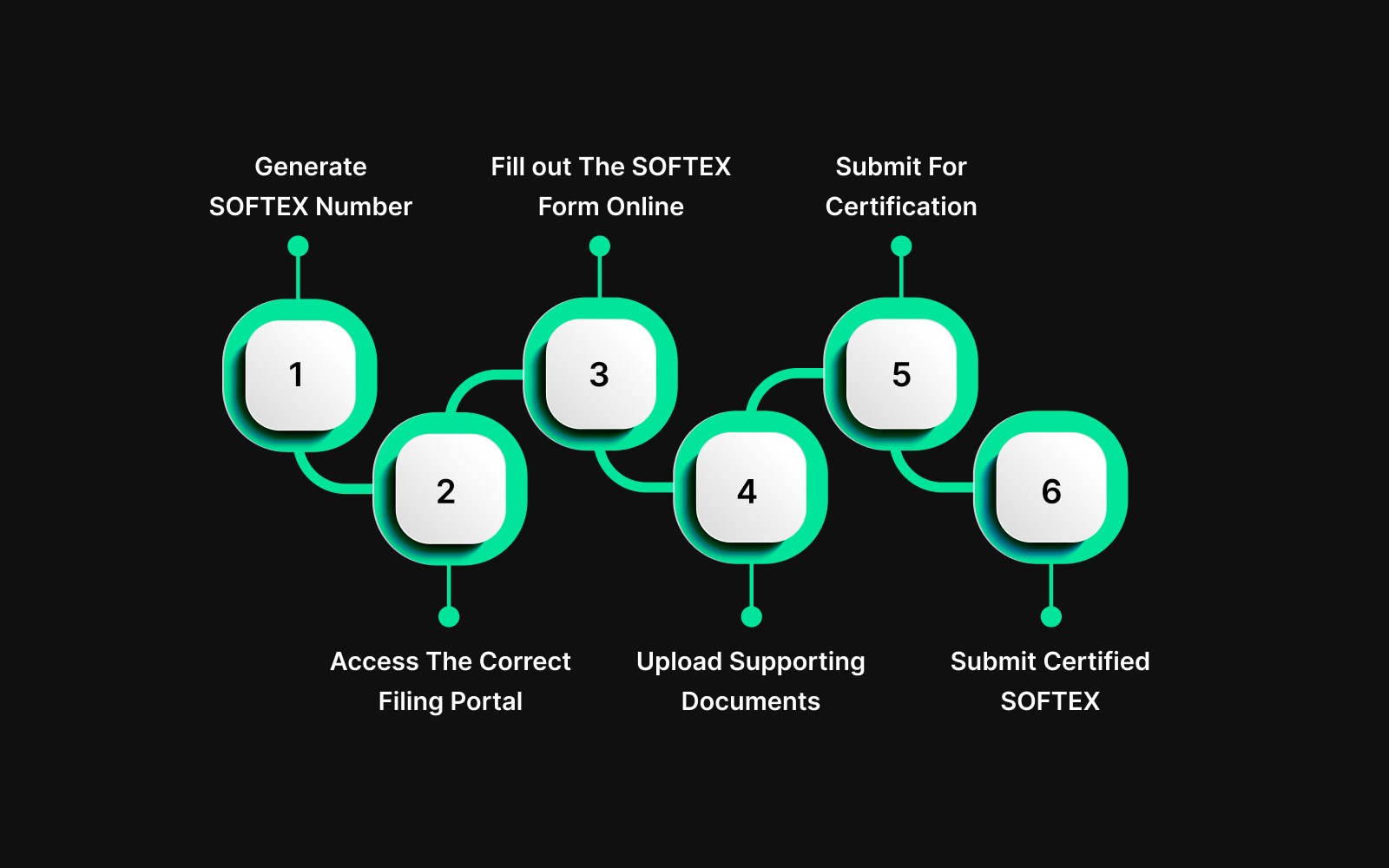
SOFTEX filing follows a defined sequence, and each step must be completed in order for the declaration to be accepted and linked to foreign exchange realization. The process begins with SOFTEX number generation, moves through online filing and certification, and is completed only after submission to the authorized dealer bank. The steps involved are outlined below.
Step 1: Generate SOFTEX Number
The process starts with generating a SOFTEX number. This is done through the Reserve Bank of India portal under FEMA forms. The number can be generated for a single invoice or as a bulk series when multiple invoices are filed together. Without this number, SOFTEX filing cannot move forward.
Step 2: Access The Correct Filing Portal
You file SOFTEX through different portals based on your registration.
- If you are an STPI or non-STPI unit, you file through the Software Technology Parks of India portal.
- If you operate from an SEZ, you file through the Special Economic Zone Online portal.
- Some banks also provide an e-SOFTEX option inside their corporate banking platforms, like Axis Bank.
Step 3: Fill out The SOFTEX Form Online
The generated SOFTEX number is entered first, followed by invoice-level details. This includes buyer information, nature of service, contract value, invoice amount, currency, and export classification.
Step 4: Upload Supporting Documents
After completing the form, upload the supporting documents. These usually include export invoices, service agreements, or contracts where applicable, and any additional documents requested by the certifying authority.
Step 5: Submit For Certification
The completed form is digitally signed and submitted to the STPI or SEZ authority for certification. The authority verifies the data and documents and certifies the SOFTEX if everything aligns.
Step 6: Submit Certified SOFTEX To The Authorized Dealer Bank
Once certified, the SOFTEX details are submitted to the authorized dealer bank. This final step links the certified export declaration with inward foreign exchange realization and completes the SOFTEX compliance process.

Penalty And Consequences For Not Filing SOFTEX

Failure to file SOFTEX creates a foreign exchange reporting gap and is treated as a compliance lapse under Reserve Bank of India regulations. While SOFTEX does not carry a fixed, invoice-level penalty amount, the consequences surface through banking and regulatory actions.
Non-filing or delayed filing often leads to inward remittances being flagged by authorized dealer banks. Banks may hold, question, or delay crediting export proceeds until the corresponding SOFTEX certification is submitted. Repeated gaps can trigger follow-ups, additional documentation requests, and escalation during audits or inspections.
Over time, inconsistent SOFTEX compliance weakens an exporter’s regulatory track record. This can affect future remittance processing, increase scrutiny during FEMA reviews, and create complications when reconciling export turnover with bank records and statutory filings.
Importance Of SOFTEX Filing For Businesses
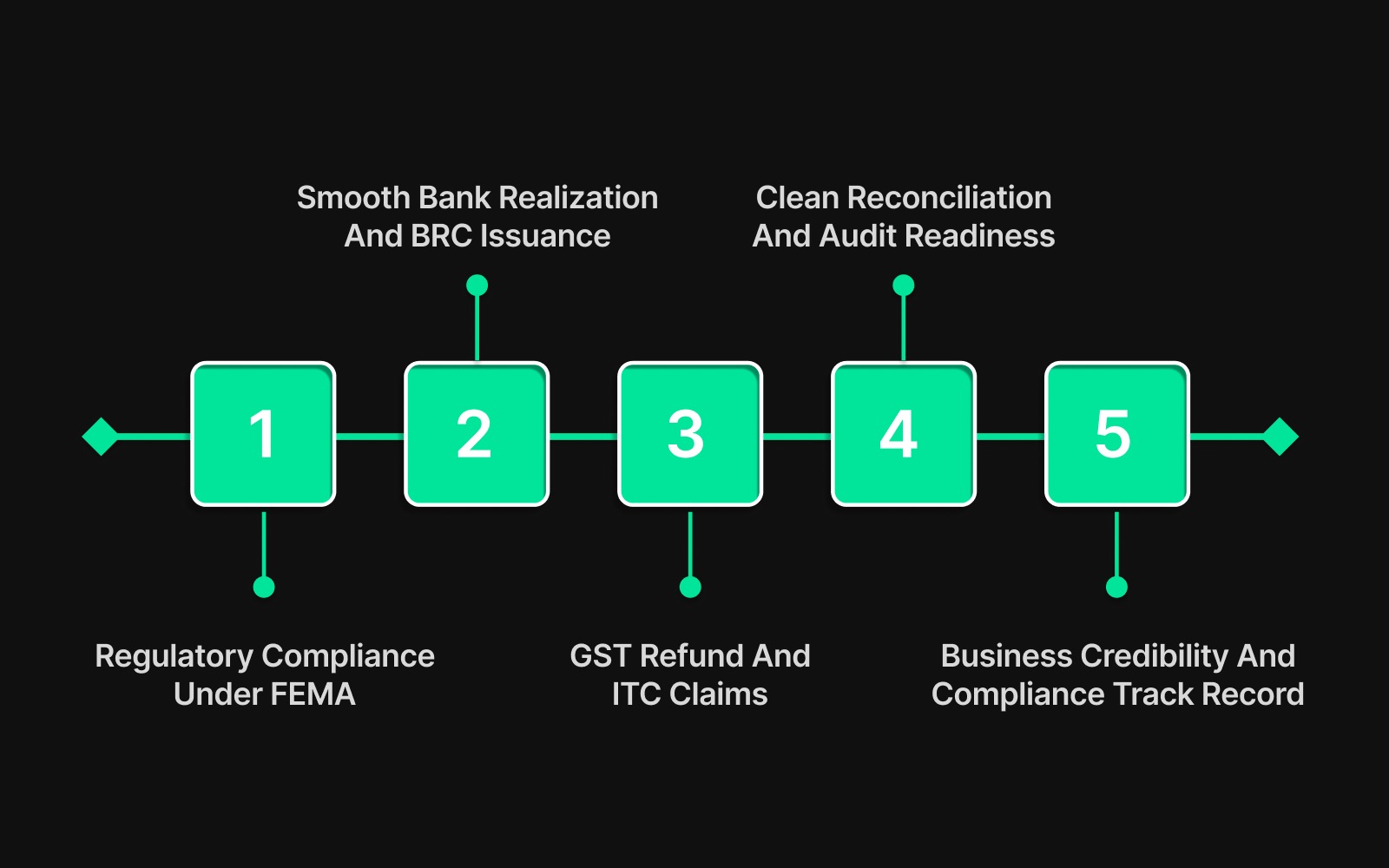
SOFTEX filing plays a central role in how software and IT service exports are tracked, validated, and reconciled in India. Beyond being a procedural requirement, it directly affects foreign exchange reporting, banking processes, tax positions, and long-term compliance standing.
Below are the key reasons why SOFTEX filing matters for software and service exporters.
1. Regulatory Compliance Under FEMA
SOFTEX filing is a statutory requirement under the Foreign Exchange Management Act. It enables the Reserve Bank of India to monitor foreign exchange earned from software and IT-enabled service exports. Certified SOFTEX forms create the official record that links export invoices with inward remittances.
2. Smooth Bank Realization And BRC Issuance
Authorized dealer banks rely on certified SOFTEX filings to validate export-related inward remittances. Without SOFTEX, banks face difficulty issuing Bank Realization Certificates, which are required to confirm confirmation and repatriation of foreign exchange into India.
3. GST Refund And ITC Claims
Software and service exports are treated as zero-rated supplies under GST. Certified SOFTEX forms are used as supporting documentation during refund claims for input tax credit. Delays or gaps in SOFTEX filing often slow down or complicate GST refund processing.
4. Clean Reconciliation And Audit Readiness
Timely SOFTEX filing helps maintain consistency between invoices, bank credits, and statutory filings. This simplifies reconciliations during audits, FEMA reviews, and internal financial checks, especially for exporters handling recurring or high-volume service invoices.
5. Business Credibility And Compliance Track Record
Consistent SOFTEX compliance strengthens an exporter’s standing with banks, regulators, and external stakeholders. A clean filing history reduces scrutiny during remittance processing, audits, and future compliance reviews, particularly as export volumes scale.
Common SOFTEX Filing Challenges And How To Solve Them

SOFTEX compliance issues usually do not come from complex rules but from operational gaps across invoicing, filing, and bank coordination. Most delays and escalations fall into a few recurring patterns. Each challenge below explains where things break and how to address them in practice.
1. Incorrect Invoice Values Or Currency Details
Incorrect invoice amounts or currency entries are one of the most common reasons SOFTEX filings get held up. These errors usually come from manual entry or inconsistent exchange rates between invoices, SOFTEX declarations, and accounting records.
Solution: Use invoice data as the single source of truth and apply a consistent exchange rate policy across invoicing, SOFTEX filing, and bank reporting.
2. Mismatch Between Invoice And Bank Realization
Mismatches occur when remittances are received in parts, adjusted for bank charges, or tagged under incorrect purpose codes. When bank credits cannot be clearly linked to declared invoices, certification and bank submission are delayed.
Solution: Maintain clear invoice-to-remittance mapping so every inward credit can be traced back to a specific SOFTEX number and export invoice.
3. Missed SOFTEX Filing Timelines
SOFTEX filings are often delayed when exporters wait for payment receipt before filing. Late submission leads to bank queries and compliance escalations once inward remittances arrive.
Solution: Follow a fixed monthly filing cycle based on invoice dates and track SOFTEX status per invoice instead of filing reactively.
4. Manual Tracking Across Invoices, Certification, And Banks
Managing SOFTEX through spreadsheets increases the risk of missed filings, incomplete certification, and poor audit visibility as export volume grows.
Solution: Keep SOFTEX data audit-ready by centralizing invoices, certification status, and bank submissions in one system and aligning finance, compliance, and operations teams on the same data.
SOFTEX Form Vs Shipping Bill Vs GST Returns
Service exports, goods exports, and tax filings follow different compliance tracks in India. SOFTEX, shipping bills, and GST returns serve separate purposes, and treating them as interchangeable often leads to reporting gaps and bank-level issues.
The table below shows how these filings differ and where each one applies.
How Pazago Supports Exporters Managing Parallel Service And Goods Exports
SOFTEX filing applies to service exports and ensures foreign exchange reporting compliance. However, many exporters operate hybrid models where service contracts run alongside physical goods shipments under the same client relationships or commercial agreements.
In these cases, compliance reporting for services and shipment execution for goods operate as separate tracks. While SOFTEX governs regulatory reporting, freight planning, container availability, loading coordination, and shipment visibility determine whether physical delivery commitments are met.
Pazago strengthens logistics reliability for exporters managing goods movement alongside service exports through:
- Competitive Freight Rates Across Key Trade Lanes: Stable freight pricing supports predictable cost planning for exporters handling recurring or contract-based shipments.
- Assured Container Booking And Coordinated Loading: Container space is secured and loading is aligned at factory, CFS, or port to reduce rollover exposure and dispatch uncertainty.
- Daily Status Reports (DSRs) With Shipment-Level Updates: Regular updates covering container movement, ETD and ETA changes, transshipment milestones, and BL status provide structured shipment visibility.
- Pre-Shipment And Post-Shipment Sales Support: Active coordination with carriers and forwarders helps resolve booking, loading, and movement issues during the shipment lifecycle.
- Equal Operational Support Across Export Volumes: Consistent execution support is maintained whether exporters manage limited consignments or expanding shipment volumes.
By maintaining structured freight coordination independent of compliance reporting processes like SOFTEX, Pazago helps exporters protect delivery timelines and buyer commitments across physical export operations.
Conclusion
SOFTEX compliance plays a critical role in foreign exchange reporting for software and IT-enabled service exporters. Accurate filing helps prevent bank holds, remittance delays, and regulatory follow-ups, but it does not eliminate execution risks linked to export shipments.
As export activity grows, freight availability, booking confirmation, loading coordination, and shipment visibility continue to affect delivery outcomes. Delays at this stage can impact buyer relationships even when compliance requirements are met.
Pazago supports exporters beyond SOFTEX by focusing on logistics execution. Through stable freight rates, assured container booking, coordinated loading, daily shipment status reporting, and hands-on operational support, Pazago helps exporters manage shipment reliability alongside ongoing compliance obligations.
FAQs On SOFTEX Filing
1. How to file a SOFTEX form online?
SOFTEX filing starts with generating a SOFTEX number on the Reserve Bank of India portal. The form is then filed online through the Software Technology Parks of India portal for STPI and non-STPI units, or through the SEZ Online system for SEZ units. After filling invoice details and uploading documents, the form is submitted digitally for certification.
2. Which authorities are involved in SOFTEX filing and certification?
SOFTEX certification is handled by STPI authorities for STPI-registered and non-STPI exporters, and by SEZ authorities for units operating within SEZs. Authorized dealer banks play a key role after certification by linking the SOFTEX declaration with inward foreign exchange realization and reporting it under RBI guidelines.
3. What is the periodicity and time limit for filing a SOFTEX form?
SOFTEX filing is invoice-driven. Earlier, a filing was required for each export transaction, and this principle still applies in practice. The form is expected to be filed within 30 days of the invoice date. Most exporters follow a monthly filing cycle, consolidating all eligible service export invoices raised during the month.
4. Are there any fees for filing a SOFTEX form?
The RBI does not charge a fee for SOFTEX filing. However, STPI or SEZ authorities may levy nominal certification or processing charges depending on the unit type and filing volume.
5. Does GST filing replace SOFTEX filing for service exports?
No. GST returns serve a tax reporting purpose, while SOFTEX is used for foreign exchange reporting. Filing GST returns does not remove the requirement to file SOFTEX for software or IT-enabled service exports receiving foreign currency.