.png)


Tax Invoice vs Export Invoice: Key Differences Explained
Optimize your business: use unlimited savings with Pazago fulfilled now!
Get Started ->Landing your first international order feels incredible, until invoicing brings everything to a halt. Do you raise the same tax invoice you use for Bangalore clients, or does exporting need something else? One incorrect format can lead to customs delays, GST penalties, or payments stuck for months.
Most Indian exporters face this. Domestic billing is familiar, but export invoicing follows different rules, zero-rated supplies, shipping bills, foreign exchange details, and LUTs. It’s a different world.
An export invoice isn’t just for payment. It’s your customs clearance, GST refund proof, bank compliance document, and your buyer’s import record rolled into one. Get it wrong, and problems linger long after the shipment.
This guide breaks it down clearly, what makes export invoices different, when to use each format, and how to stay GST-compliant.
Key Takeaways
- Tax invoices apply to domestic Indian transactions (intrastate or interstate), while export invoices are required when the buyer is outside India, and goods cross international borders.
- Domestic tax invoices charge applicable GST (CGST+SGST or IGST), whereas export invoices follow zero-rated supply rules; you either export under LUT without IGST or pay IGST and claim a full refund.
- Export invoices carry more details than domestic ones, including foreign currency values, exchange rates, IEC numbers, port details, shipping bill references, and export-specific declarations.
- Tax invoices are issued in Indian Rupees and comply only with GST laws, while export invoices usually use foreign currency with INR equivalents and must comply with GST, the Customs Act, the Foreign Trade Policy, and FEMA.
- Domestic tax invoices allow buyers to claim Input Tax Credit, but with export invoices, exporters claim refunds of unutilised ITC on zero-rated supplies rather than passing the credit to foreign buyers.
What Is a Tax Invoice?

A tax invoice is the standard document you issue when selling goods or services within India. It's your legal proof of transaction and enables your buyer to claim Input Tax Credit (ITC) under GST.
When you sell products to a customer in Mumbai, Delhi, or any other Indian city, you create a tax invoice. It's your everyday billing document for domestic sales.
Key Components of a Domestic Tax Invoice
Your regular tax invoice must include:
- Supplier Details: Your business name, address, and GSTIN number help identify you as the registered seller.
- Customer Details: Buyer's name, shipping address, and GSTIN (for B2B transactions) are required for proper documentation.
- Invoice Particulars: A unique invoice number, date of issue, and place of supply are mandatory for tracking.
- Product Description: Clear details about what you're selling, including HSN/SAC codes for proper classification.
- Tax Breakdown: Separate CGST and SGST for intrastate supplies, or IGST for interstate supplies, with applicable rates.
- Total Value: The final amount, including all taxes that your customer needs to pay.
When Do You Issue a Tax Invoice?
You must issue a tax invoice when:
- Selling goods within India: Before or at the time goods are removed for delivery.
- Providing services domestically: Within 30 days from the date of service completion.
- Receiving advance payment: When you receive advance payment before completing the supply.
The timing matters because it determines when GST becomes payable and when your customer can claim their ITC.
What Is an Export Invoice?
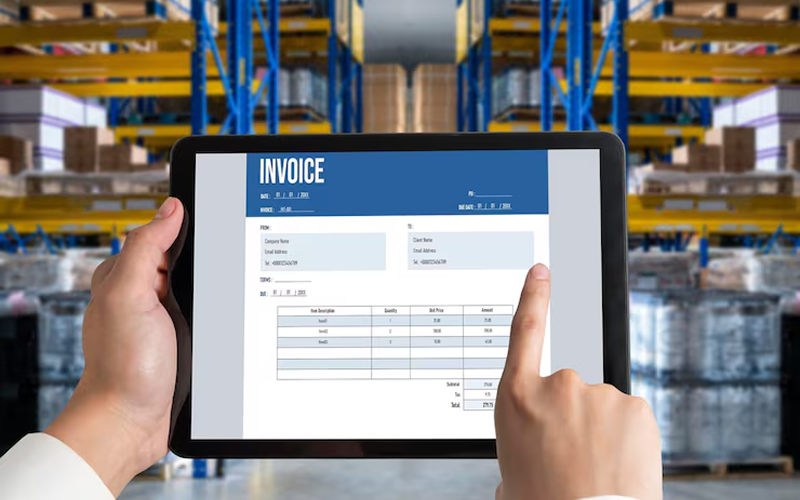
An export invoice is a specialised document you create when selling goods or services to buyers outside India. Under GST, an export invoice is a tax invoice issued for zero-rated supplies but includes additional international trade details required for customs and foreign exchange compliance.
This invoice serves multiple purposes: it satisfies GST requirements, supports customs clearance, enables foreign exchange compliance, and serves as proof of your transaction to international buyers.
Key Components of an Export Invoice
Your export invoice needs all the standard tax invoice details plus:
- IEC Number: Your Import Export Code from DGFT that legally authorises you to export.
- Country of Destination: Where your goods are heading, clearly mentioned for customs authorities.
- Port of Loading and Discharge: Specific ports where goods will be loaded and unloaded.
- Shipping Bill Details: Reference number and date (can be added later if not available at the time of invoice creation).
- Foreign Currency Details: The invoice amount in foreign currency (USD, EUR, etc.) and its INR equivalent.
- Exchange Rate: The conversion rate used, typically as per RBI or CBIC reference rates.
- Export Declaration: A clear statement about whether you're exporting under LUT/Bond or with IGST payment.
- Buyer's Complete Address: The full foreign address, including the country, is essential for international shipping.
- Payment Terms: Incoterms (FOB, CIF, etc.) that define responsibilities between you and your buyer.
Must Read: 10 Required Pre-Shipment Documents for Export Procedure and Shipping Process
Types of Export Under GST
You can export goods or services in three ways:
- Export Under LUT/Bond (Without IGST): You don't pay IGST upfront. Instead, you file an annual Letter of Undertaking, promising to comply with export conditions. Your invoice must state: "Supply Meant for Export Under Bond or Letter of Undertaking Without Payment of IGST."
- Export With IGST Payment: You pay IGST on the supply and claim a refund later. Your invoice declares: "Supply Meant for Export on Payment of Integrated Tax." This ties up working capital but doesn't require LUT filing.
- Supply to SEZ: Treated as a zero-rated supply. Exporters may supply with IGST payment (and claim a refund) or under LUT without IGST.
Also Read: Export Procedures and Documents under GST
Tax Invoice vs Export Invoice: The Core Differences
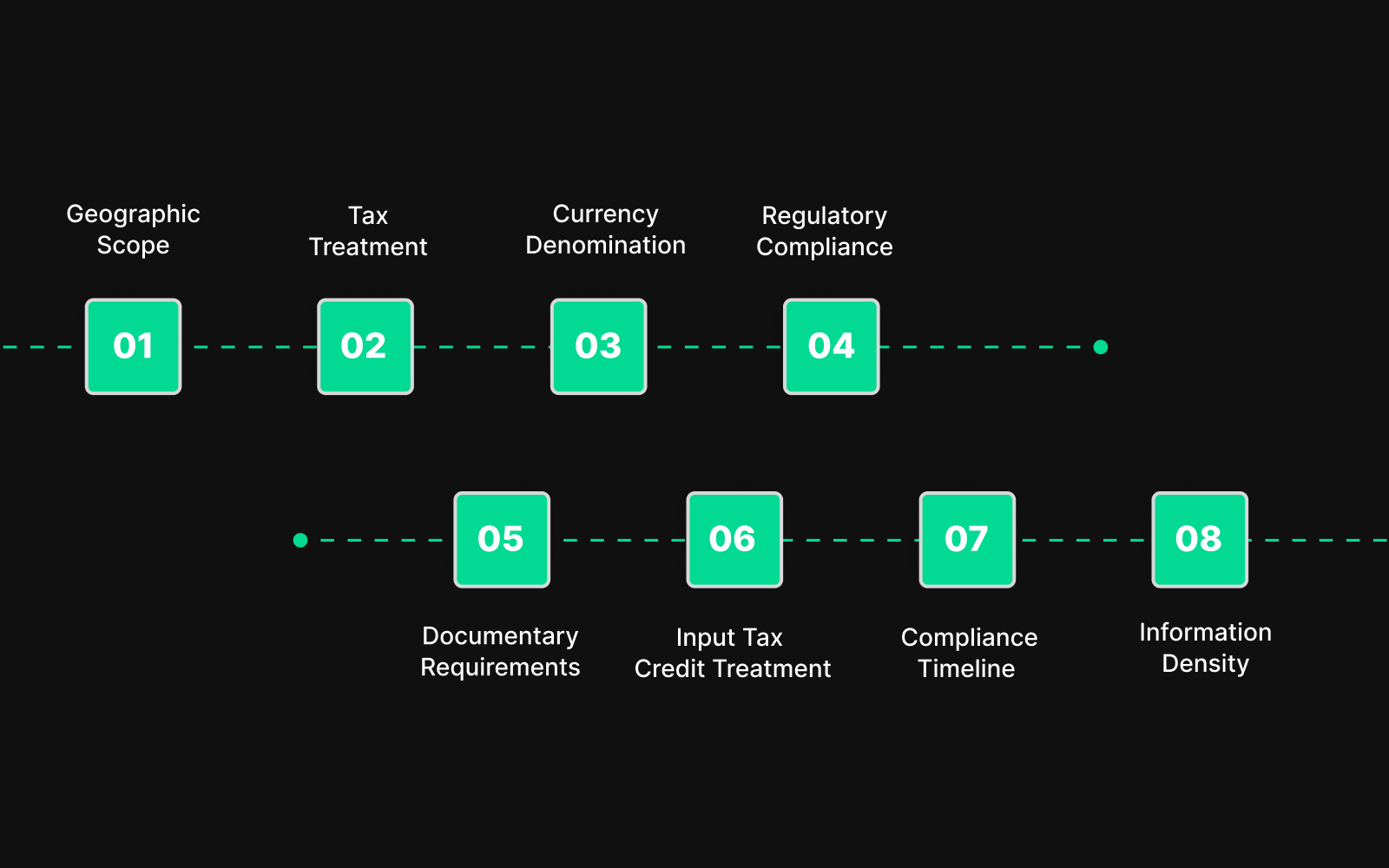
Now let's get to the heart of the matter: what actually separates these two documents?
1. Geographic Scope
Tax Invoice: Used exclusively for domestic transactions within India, whether intrastate or interstate.
Export Invoice: Required when your buyer is located outside India, and goods/services cross international borders.
The place of supply determines which invoice you need. If it's within India, use a tax invoice. If it's outside India, you need an export invoice.
2. Tax Treatment
Tax Invoice: You charge applicable GST, either CGST plus SGST for same-state transactions, or IGST for different states.
Export Invoice: Exports are zero-rated supplies. You either don't charge IGST (under LUT) or charge it and claim a full refund.
This is a crucial difference. In export scenarios, you're dealing with zero-rated treatment rather than standard tax collection.
3. Currency Denomination
Tax Invoice: Always in Indian Rupees (INR) since both parties operate within India's currency system.
Export Invoice: Typically in a foreign currency (USD, EUR, GBP), with the INR equivalent shown at the applicable exchange rate.
You can technically issue export invoices in INR, but most international buyers prefer to pay in their local currency for convenience.
4. Regulatory Compliance
Tax Invoice: Needs to comply with GST laws, primarily the CGST Act 2017 and state GST acts.
Export Invoice: Must satisfy multiple frameworks, GST laws, Customs Act, Foreign Trade Policy, and FEMA regulations for foreign exchange.
An export invoice carries heavier compliance requirements because it bridges domestic tax laws with international trade regulations.
Must Read: Guide to Export Documentation Procedure
5. Documentary Requirements
Tax Invoice: The invoice itself usually suffices for domestic transactions, along with e-way bills for goods movement.
Export Invoice: Requires additional supporting documents, such as the shipping bill, bill of lading, packing list, certificate of origin, and insurance certificates.
Your export tax invoice is part of a larger documentation ecosystem rather than a standalone document.
6. Input Tax Credit Treatment
Tax Invoice: Enables your buyer to claim ITC directly based on the tax amount shown on your invoice.
Export Invoice: You, as the exporter, claim a refund of unutilized ITC on inputs used for zero-rated supplies, rather than your buyer claiming credit.
The ITC flow reverses; instead of passing credit to your customer, you're reclaiming it from the government.
7. Validity Period and Compliance Timeline
Tax Invoice: Generally, no expiration, but it affects your monthly/quarterly GST returns filing.
Export Invoice: Must be issued before goods are removed, and you must receive payment within 9 months per FEMA to maintain export benefits.
Time-bound compliance makes export invoices more deadline-sensitive than domestic tax invoices.
8. Information Density
Tax Invoice: Contains essential transaction details suitable for domestic verification.
Export Invoice: Packs significantly more information, including international shipping details, foreign exchange data, customs codes, and export-specific declarations.
An export invoice is information-dense because it serves customs officials, banks, freight forwarders, and foreign buyers simultaneously.
Also Read: Important Documents Required for Export
Creating a GST-Compliant Tax Invoice for Export
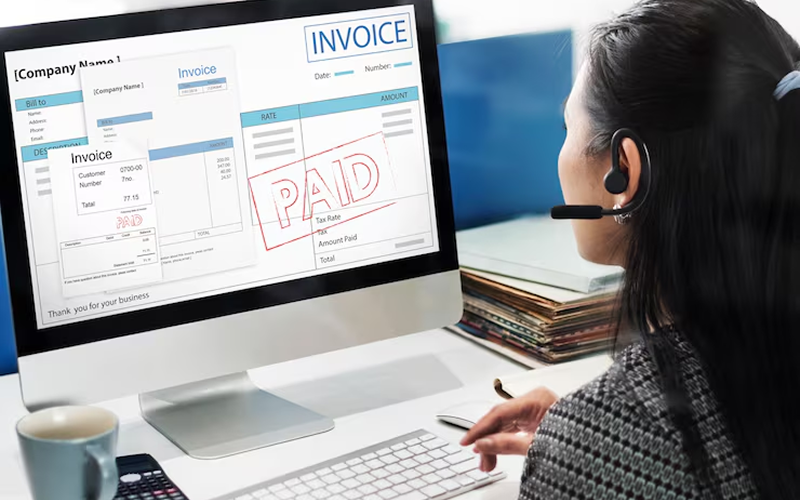
When you're creating your tax invoice for export purposes, follow these steps to ensure compliance:
Step 1: Gather Essential Information
Before you start, collect your buyer's complete foreign address, agreed payment terms, product HSN codes, shipping details, and your LUT reference or IGST payment decision.
Step 2: Use Proper Invoice Format
Your export invoice should clearly display your GSTIN, IEC number, unique invoice serial number (continuous series), invoice date, and buyer's details with the country explicitly mentioned.
Step 3: Add Product Details with Codes
List each item with an accurate description, HSN/SAC code (mandatory for exports), quantity, unit price in foreign currency, and total value.
Step 4: Show Currency Conversion
Display the amount in foreign currency (say, 10,000 USD), the RBI reference exchange rate (say, 1 USD = ₹83.50), and the INR equivalent (₹8,35,000).
Step 5: Include Export Declaration
Add the mandatory statement based on your export type. For LUT exports, write: "Supply Meant for Export Under Bond or Letter of Undertaking Without Payment of IGST" along with your LUT number and validity dates.
Step 6: Add Shipping References
Include shipping bill number (can be added later if not available), port of loading, port of discharge, and expected shipment date.
Step 7: Include Bank Details
Add your bank account details formatted for international payments, SWIFT code, IBAN (if applicable), and correspondent bank information.
Step 8: Sign and Certify
Conclude with authorised signature and declaration: "We declare that this invoice shows the actual price of goods described and that all particulars are true and correct."
Must Read: Export Invoice: Format, Types and Uses
How Tax Invoice for Export Fits into Your Documentation Flow

Understanding where your export invoice sits in the broader export process helps you manage timing and dependencies:
- Order Confirmation: You receive a purchase order from a foreign buyer.
- Proforma Invoice: You send a preliminary invoice to help the buyer plan their import and arrange funding.
- Production/Procurement: You manufacture or source the goods for export.
- Commercial Invoice/Export Invoice: You issue the final invoice once the goods are ready for dispatch. This is your export tax invoice.
- Customs Documentation: You file the shipping bill electronically on ICEGATE, referencing your export invoice.
- Shipment: Goods are loaded after customs clearance, and you receive the shipping bill number to update your invoice records.
- Banking: You submit export documents, including an invoice, to your bank for payment collection.
- GST Returns: You report export invoice details in GSTR-1 Table 6A and claim refunds if applicable.
Your export invoice is the central document that ties together customs, banking, shipping, and tax compliance.

Also Read: Understanding the Format and Importance of a Commercial Invoice
GST Return Filing for Export Invoices
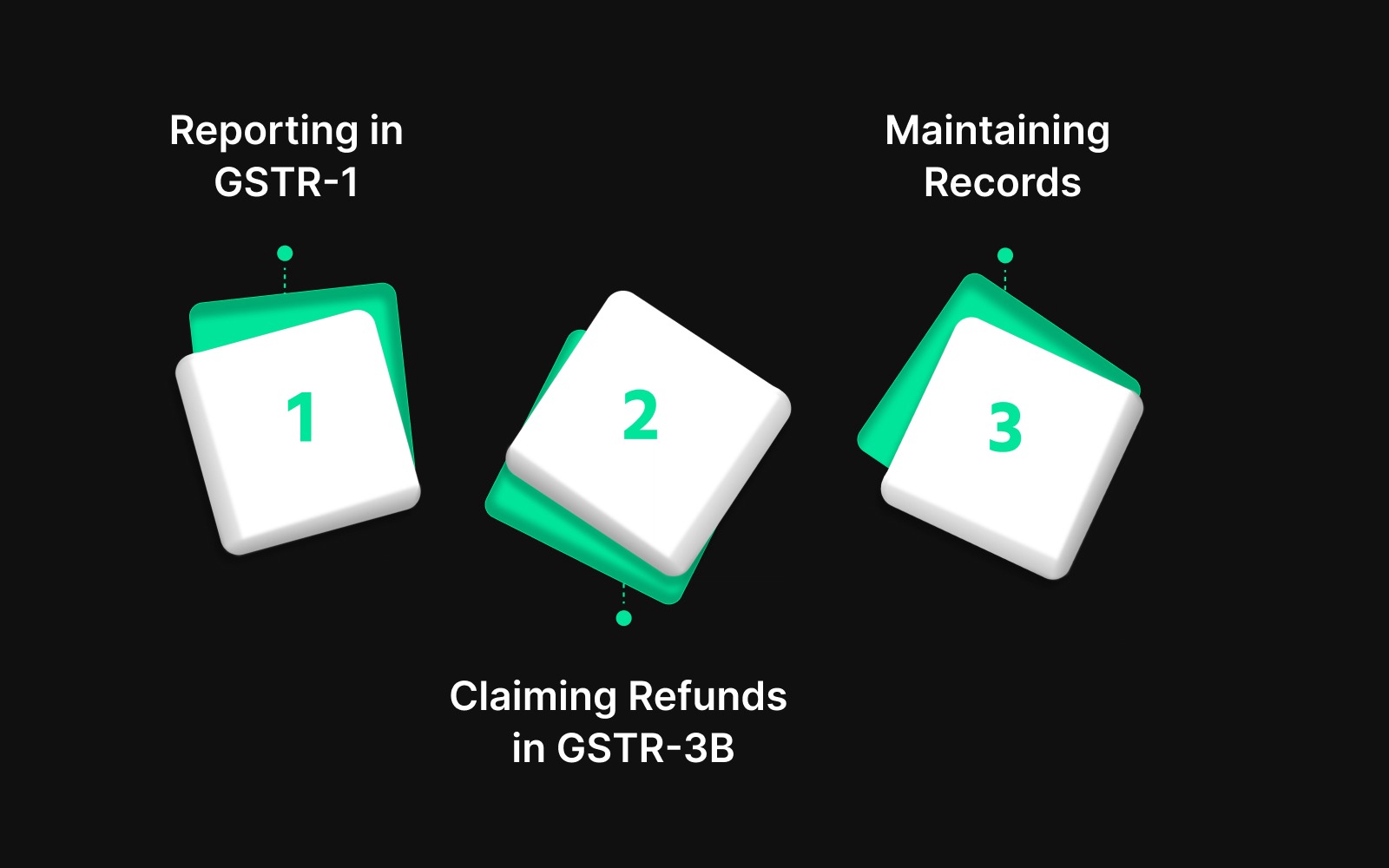
Your export tax invoice must be properly reported in your GST returns to maintain compliance and claim benefits.
Reporting in GSTR-1
Export invoices go in Table 6A (exports with IGST payment) or Table 6B (exports under LUT/bond). You need to provide the invoice number, invoice date, invoice value, port code, shipping bill number, and shipping bill date.
Claiming Refunds in GSTR-3B
If you paid IGST on exports, report it in GSTR-3B under applicable sections. For LUT exports, you claim a refund of unutilized ITC through Form RFD-01 within two years of the export date.
Maintaining Records
Keep copies of export invoices, shipping bills, bill of lading, bank realisation certificates, and LUT declarations for at least 72 months for potential audits.
Proper record-keeping isn't just compliance, it's your proof when claiming export incentives under schemes like RoDTEP.
Must Read: Shipping Bill Meaning: Simplified with Pazago
While accurate tax filing ensures your business stays compliant with the government, true operational success depends on a logistics partner who ensures your physical shipment data perfectly matches your digital documentation.
How Pazago Strengthens Export Logistics and Execution
Pazago supports Indian exporters with structured freight planning, container coordination, and consistent shipment visibility across international routes. This helps exporters maintain operational clarity and reduce execution gaps during cargo movement.
What Pazago offers:
- Competitive Freight Rates: Access stable, competitive rates through deep shipping line relationships. This helps protect margins and allows for predictable buyer pricing even during market fluctuations.
- Assured Container Bookings: Confirmed bookings and seamless loading coordination at the factory or port minimize the risk of rollovers and scheduling hassles.
- Daily DSRs for Total Visibility: Daily Status Reports (DSRs) provide updates on vessel ETD/ETA and transit movements, ensuring buyers stay informed and operations remain transparent.
- Execution Support Across Shipments: Coordination from factory dispatch through port movement and transit updates.
- Support for All Exporter Sizes: From first-time LCL shipments to large-scale enterprise logistics, every exporter receives transparent pricing and focused service.
Partnering with a logistics expert ensures that your export operations are always backed by precise real-world execution.
Conclusion
Understanding the difference between a tax invoice for export and a domestic tax invoice is critical for Indian exporters. Export invoices follow zero-rated GST treatment and include additional international trade details that affect payment, customs clearance, and refund timelines.
Pazago supports exporters by strengthening freight coordination, container movement, and shipment visibility across global routes. Structured logistics execution helps reduce operational gaps during international shipping.
Want tighter control over how your cargo moves across borders? Contact Pazago to strengthen your export logistics execution.
Frequently Asked Questions
1. Can I use the same invoice number series for both tax invoices and export invoices?
Yes, you can maintain a single continuous invoice series for the financial year, but many exporters prefer separate series (like DOM-001 for domestic and EXP-001 for exports) for easier tracking and reconciliation.
2. Do I need to charge GST if my buyer asks for an Indian rupee invoice?
No. Even if invoiced in INR, exports remain zero-rated supplies. You either export under LUT without IGST or pay IGST and claim a refund; the currency doesn't change the tax treatment.
3. What happens if I accidentally issue a regular tax invoice for an export transaction?
You'll face GST filing complications since you've charged domestic tax on a zero-rated supply. Cancel the incorrect invoice within 24 hours (if e-invoiced), issue a credit note, and then create a proper export invoice.
4. Is e-invoicing mandatory for export invoices?
E-invoicing is mandatory for exporters with a turnover exceeding ₹5 crore. However, SEZ units and exports to Nepal and Bhutan by land are exempt from e-invoicing requirements.
5. What if my shipping bill number isn't available when creating the invoice?
You can create the export invoice without the shipping bill number initially. Once you file the shipping bill and receive the customs number, update your invoice records and include it in your GST returns.