.png)


What Is EDPMS? Meaning, Process, and Compliance Explained

Optimize your business: use unlimited savings with Pazago fulfilled now!
Get Started ->Struggling with delayed export payments or shipping bills not closing on time? If you export from India, EDPMS often sits quietly behind these issues until something goes wrong.
EDPMS plays a key role in tracking export shipments and ensuring payments reach India within prescribed timelines. Yet many exporters face mismatched documents, delayed updates, or unclear bank communication, even when shipments move smoothly.
This blog breaks down EDPMS in a simple, practical way. You will understand how it works, why it matters, common challenges exporters face, and how to resolve them without adding compliance stress.
Key Highlights:
- EDPMS tracks export shipments and payments, ensuring compliance with RBI and FEMA regulations for Indian exporters.
- Exporters must ensure shipping bills, documents, and payments match accurately to avoid delays or compliance issues.
- The system involves registration, shipping bill submission, bank acknowledgement, reconciliation, and transaction closure.
- Delayed realisation or mismatched data can lead to EDPMS caution listing and increased bank scrutiny.
- Centralised order, document, and payment management helps exporters reduce EDPMS friction and stay prepared.
What Is EDPMS and How Does It Work For Exporters?

If you export goods or software from India, EDPMS quietly runs in the background of every transaction. EDPMS, or the Export Data Processing and Monitoring System, is an online platform introduced by the RBI to track export transactions end-to-end.
At its core, EDPMS connects exporters, banks, and customs on one central system. It records export transactions digitally, replacing older paper-based reporting that often caused delays and mismatches.
Here’s what EDPMS does in simple terms:
- Records shipping bills for physical exports and SOFTEX forms for software exports
- Connects customs data with authorised dealer banks
- Tracks inward remittances against specific export shipments
- Flags delays, mismatches, or missing payments automatically
The system follows your export journey from shipment filing to final payment receipt. This continuous tracking ensures export earnings enter India within timelines defined under foreign exchange regulations.
As you understand what EDPMS does, you might wonder why it matters so much to your daily export operations. Let’s see.
Also Read: Import and Export Procedure: A Complete Guide
Why Is EDPMS Important For Indian Exporters?

EDPMS is not only a reporting system; it directly affects your cash flow, compliance health, and access to export benefits. Centralising export data reduces manual follow-ups between you, your bank, and multiple government departments.
- Faster Payment Reconciliation: Banks receive shipment data early through EDPMS, allowing quicker matching of inward remittances with shipping documents. This reduces waiting time for export proceeds to reflect correctly in your account.
- Stronger Regulatory Compliance: EDPMS supports compliance under FEMA by ensuring foreign exchange earnings are tracked and reported accurately. You avoid penalties that often arise from delayed reporting or documentation gaps.
- Reduced Paperwork and Manual Errors: Earlier processes required repeated physical submissions across departments. EDPMS replaces this with a digital trail, reducing duplication and common clerical mistakes.
- Clear Visibility Across Export Stages: You can check whether shipments are pending, payments are awaited, or transactions are closed through your bank. This visibility helps you plan cash flows and follow up with overseas buyers on time.
- Access to Export Incentives and Refunds: Once transactions close in EDPMS, banks issue eBRC or FIRA automatically. These documents are essential for claiming GST refunds and export incentive schemes.
With benefits this critical, it becomes important to know exactly who must comply with EDPMS requirements.
Who Is Required To Comply With EDPMS?

EDPMS compliance depends on the nature of your exports, not just your business size. If you ship goods or export software from India, EDPMS usually applies to you.
EDPMS typically covers the following exporter categories:
- Exporters of physical goods filing shipping bills with Customs authorities.
- Software exporters submitting SOFTEX forms through SEZs or STPIs.
- Ecommerce exporters and MSMEs shipping internationally from India.
- Businesses exporting through global marketplaces and direct overseas clients.
Authorised Dealer banks also play a key role in EDPMS operations:
- Banks upload, verify, and reconcile shipment data with inward remittances.
- They monitor timelines and flag delays in payment realisation.
However, freelancers offering services without shipping bills or SOFTEX forms generally fall outside EDPMS. If your work does not involve declared exports, EDPMS registration is usually not required.
Once applicability is clear, understanding the step-by-step flow makes the system far less intimidating.
Also Read: Understanding Steps and Objectives in Export Procedure
Step-by-Step EDPMS Process For Export Transactions
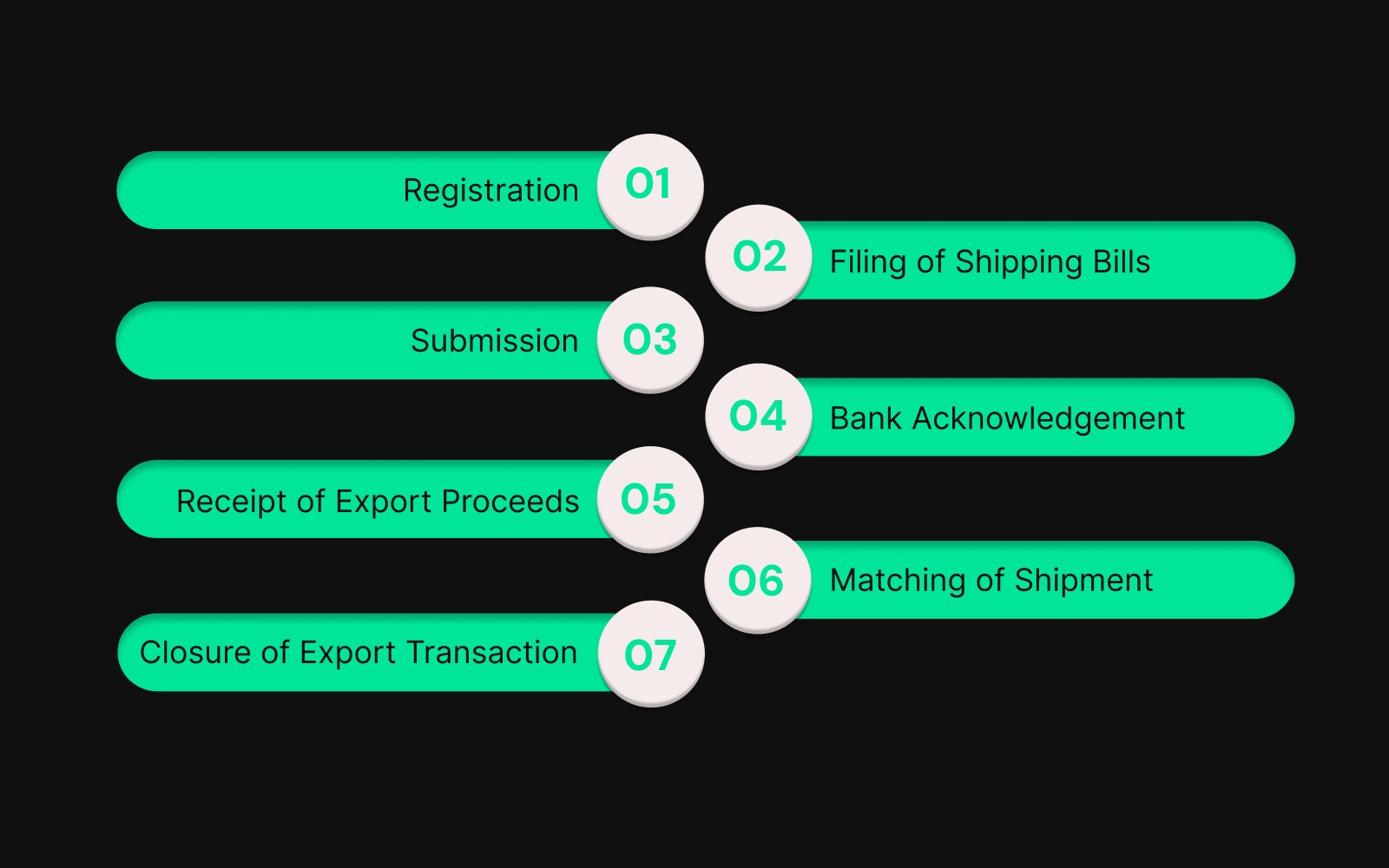
EDPMS follows a logical flow where export data moves steadily between exporters, banks, and regulatory systems. Each step builds on the previous one, ensuring shipments and payments stay linked until final closure.
Step 1: Registration With Your Authorised Dealer Bank
- You register your Importer Exporter Code with your authorised dealer bank.
- The bank links your exporter profile to the EDPMS portal.
- This enables tracking of all future export transactions under your IEC.
Step 2: Filing of Shipping Bills or SOFTEX Forms
- For goods exports, you file shipping bills with Customs after dispatch.
- For software exports, you submit SOFTEX forms through SEZs or STPIs.
- These records automatically move into the EDPMS database.
Step 3: Submission of Export Documents to the Bank
- You submit invoices, transport documents, and related papers to your bank.
- Banks usually expect these documents within defined timelines after shipment.
- Accurate documentation helps avoid mismatches later.
Step 4: Bank Acknowledgement and Data Entry
- The bank acknowledges your documents within the EDPMS system.
- Key export details are recorded against the shipping bill or SOFTEX entry.
- This step confirms that shipment data is ready for payment tracking.
Step 5: Receipt of Export Proceeds From Overseas Buyers
- Your buyer sends payment through approved banking channels.
- The amount reaches your account as a foreign inward remittance.
- The bank flags this payment for reconciliation.
Step 6: Matching of Shipment and Payment Details
- The bank matches the inward remittance with the export record in EDPMS.
- This process confirms values, currency, and timelines.
- Any mismatch may require clarification or additional documents.
Step 7: Closure of Export Transaction and Certificate Issuance
- Once reconciliation is complete, the bank closes the transaction in EDPMS.
- An electronic Bank Realisation Certificate is generated automatically.
- You can then use this certificate for refunds and incentive claims.
EDPMS handles export transactions, but it is not the only RBI monitoring system. To avoid confusion during reporting, it helps to understand how EDPMS differs from IDPMS.
EDPMS vs IDPMS: What’s The Difference?
Once exporters understand EDPMS, confusion often arises around another RBI system called IDPMS. Both systems sound similar, but they serve very different purposes within cross-border trade reporting.
For exporters, EDPMS is the system that directly affects payments, incentives, and compliance standing. IDPMS becomes relevant only if your business also handles imports.
Understanding this difference helps set the stage for a critical compliance concept. That brings us to the EDPMS caution list.
What Is The EDPMS Caution List?

The EDPMS caution list is RBI’s way of identifying exporters with unresolved export transactions. It acts as an early warning system for delayed payments or reporting gaps.
An exporter may be flagged if export proceeds are not realised or closed within the prescribed timelines. Under FEMA guidelines, most export shipments must be closed within nine months of shipment.
Exporters may land on the caution list due to:
- Pending inward remittances beyond the allowed timelines
- Unresolved mismatches between shipping bills and payments
- Repeated delays in document submission to banks
- Poor compliance track record across multiple shipments
Being on this list does not stop exports completely. However, it increases scrutiny and slows down routine transactions.
Once you know what triggers caution listing, the next step is identifying everyday problems that usually cause it. Most problems are operational and avoidable with timely action.
Also Read: Process of Preparing for Export Customs Clearance
Common Problems Faced In EDPMS

Even with a digital system, export reporting is not always smooth. Most EDPMS issues arise from small gaps that grow over time if ignored.
Data Mismatches Between Documents
Shipping bills, invoices, and remittance values must align perfectly. Even small differences in currency or invoice numbers can block reconciliation.
- Payments remain unmatched against shipping bills
- Export transactions stay open beyond expected timelines
Delays in Document Submission
Banks usually expect export documents within fixed timelines after shipment. Late submission creates backlogs and increases follow-ups.
- Repeated reminders from banks
- Delayed closure of export transactions
Errors in Invoice or Shipping Details
Incorrect values, dates, or buyer details can cause system rejections. These errors often occur during manual data entry stages.
- Requests for revised documents
- Longer processing time at the bank
Ignored Alerts From Banks
Banks regularly send alerts about pending entries or mismatches. Ignoring these alerts allows small issues to compound into compliance risks.
- Increased follow-ups from banks
- Risk of caution listing due to delayed action
Technical or Data Transfer Issues
Sometimes data from Customs or SEZ systems does not sync correctly. These issues are not always exporter-controlled but still require follow-up.
- Temporary data gaps in the system
- Additional verification requests from banks
Most EDPMS issues stem from mismatches between shipment details, invoices, and remittance records. While banks and exporters must resolve compliance directly, disciplined freight execution and accurate shipment coordination reduce the risk of inconsistencies at the source.
Pazago supports exporters through stable freight planning, confirmed container bookings, and structured shipment updates, helping ensure that shipment details remain clear and aligned from dispatch onward.
How Can Exporters Resolve EDPMS Issues?

EDPMS issues can look complex, but most of them have defined remedies. The key is to act early, stay organised, and coordinate closely with your bank.
Correcting Reporting or Entry Errors
Small errors in shipping bills or invoice details are common in export documentation. Banks can correct these entries when exporters provide clear supporting records.
- Actionable tip: Compare invoice, shipping bill, and remittance values before submission and flag inconsistencies to your bank immediately.
Apply for Extension of the Realisation Period
Sometimes payments get delayed due to buyer disputes, logistics issues, or external restrictions. RBI allows banks to extend the realisation period when delays are genuine and documented.
- Actionable tip: Inform your bank early about expected delays and submit supporting communication from the buyer to avoid compliance escalation.
Applying for Invoice Value Adjustments
Post-shipment changes, such as discounts or claims, can affect invoice values. Banks can approve reductions when exporters provide valid reasons and supporting documents.
- Actionable tip: Share revised invoices and written justification with your bank as soon as the change is confirmed.
Initiate Write-Off for Unrealised Export Bills
Some export payments become impossible to recover despite repeated efforts. Write-off provisions allow exporters to clear these entries from EDPMS.
- Actionable tip: Maintain documented recovery attempts to support your write-off request during bank review.
Use the Self Write-Off Option for Smaller Amounts
For smaller unrecovered amounts, exporters may use the self-write-off route. This option requires certification from a Chartered Accountant.
- Actionable tip: Keep CA certificates ready with complete export and benefit details to speed up self-write-off approval.
Strengthening Internal Export Tracking
Many EDPMS issues arise from missed deadlines rather than system failures. Centralised tracking improves coordination across export, finance, and logistics teams.
- Actionable tip: Maintain structured shipment coordination and clear freight records to reduce inconsistencies that later create banking or reconciliation queries.
How Pazago Supports Exporters Around EDPMS-Related Delays
EDPMS issues often surface at the banking stage, but many mismatches originate earlier, during shipment execution. Inconsistent freight details, delayed dispatch updates, or unclear handovers can later trigger reconciliation queries.
While banks manage EDPMS directly, disciplined logistics coordination reduces the risk of discrepancies forming in the first place. Pazago supports exporters by strengthening freight planning, container coordination, and shipment visibility at the operational level.
- Stable freight planning across key routes: Long-term relationships with major shipping lines help exporters secure predictable rates and confirmed space, reducing last-minute rebookings that can affect shipment records.
- Confirmed container bookings and coordinated loading: Equipment is secured in advance and aligned with factory or CFS schedules, helping prevent rollovers and dispatch inconsistencies that later create reconciliation questions.
- Pre- and post-shipment coordination support: Clear communication around booking timelines, BL processes, and shipment milestones ensures freight details remain consistent from dispatch onward.
- Structured daily shipment visibility: Regular updates covering container movement, ETD and ETA changes, and transhipments provide clarity if banks or stakeholders require shipment confirmation months later.
- Consistent support regardless of shipment volume: Whether handling a single consignment or multiple containers, exporters receive transparent coordination that strengthens record accuracy.
Pazago supports exporters with stable freight planning, assured container coordination, and clear shipment visibility across global routes.
Final Thoughts
EDPMS plays a central role in monitoring export shipments and payments in India. From filing shipping bills to closing transactions against realised proceeds, accuracy and timely reporting are essential. When exporters understand the process, EDPMS becomes more manageable and less reactive.
While banks manage compliance directly, disciplined logistics execution reduces the risk of avoidable discrepancies.
Pazago supports exporters with stable freight planning, confirmed container bookings, coordinated loading schedules, and structured daily shipment updates. Clear freight execution and shipment visibility help maintain consistency from dispatch onward, reducing downstream confusion.
Looking to strengthen freight coordination and reduce operational inconsistencies? Contact us to learn how Pazago supports exporters with reliable logistics execution across global routes.
FAQs
1. How do you know if your export entry in RBI EDPMS is closed properly?
Your export entry is considered closed when your authorised dealer bank marks the shipping bill as settled after matching export proceeds with shipment details in EDPMS.
2. What happens if my export payment isn’t matched in EDPMS within nine months?
If payment is not matched within nine months, the export entry may be flagged as overdue, leading to bank follow-ups and possible restrictions until the issue is resolved.
3. How do I check my EDPMS status?
You can check your EDPMS status through your authorised dealer bank, which accesses the RBI portal using the shipping bill and export transaction details.
4. What are EDPMS charges?
Authorised dealer banks levy EDPMS charges for processing and reconciliation, typically ₹500-₹2,000 per transaction or 0.1%-0.25% of the export value.