.png)


Eco-Friendly Packaging Materials: Best Practises for Sustainable Logistics

Optimize your business: use unlimited savings with Pazago fulfilled now!
Get Started ->Sustainability is a business imperative in global trade. By 2035, the global sustainable packaging market is estimated to reach around $530.4 billion as brands, regulators, and consumers demand greener solutions.
Buyers and regulators alike are increasingly expecting exporters to reduce environmental impact across the supply chain, starting with packaging.
For Indian exporters, packaging decisions directly affect shipping costs, container efficiency, customs clearance, and buyer perception. Excessive plastic use, non-compliant materials, or poorly designed packaging can lead to rejected shipments, penalties, or loss of repeat business.
At the same time, switching to sustainable packaging without a clear strategy can increase costs or compromise product safety.
This is where best practises for eco-friendly packaging materials matter. By choosing the right materials, optimising packaging design, and aligning packaging decisions with logistics planning, exporters can achieve sustainability goals without disrupting operations.
In this guide, you’ll learn how eco-friendly packaging fits into sustainable logistics and how exporters can implement it practically and profitably.
Summary at a Glance:
- Eco-friendly packaging is essential for exporters to reduce logistics costs, meet regulations, improve buyer trust, and support sustainability goals globally.
- Exporters can use recyclable, biodegradable, and reusable packaging materials based on product type, shipment distance, and destination-country compliance requirements.
- Best practises include right-sized packaging, early planning, regulation-aligned material selection, and balancing sustainability with product protection during international transit.
- Export packaging compliance involves EPR rules, plastic restrictions, ISPM-15 standards, accurate labelling, and consistent documentation to avoid penalties or delays.
Why Sustainable Packaging Matters for Exporters?

Here’s why eco-friendly packaging is especially important for exporters involved in international logistics:
- Lower logistics and shipping costs: Optimised, lightweight packaging reduces overall shipment weight and improves container utilisation. This helps lower freight costs, especially for long-haul exports.
- Improved buyer trust and competitiveness: Many international buyers prefer suppliers who follow sustainable practises. Eco-friendly packaging strengthens your brand image and supports long-term buyer relationships.
- Compliance with international regulations: Several countries have strict rules on plastic usage, recyclability, and packaging waste. Non-compliant packaging can lead to shipment delays or rejections.
- Reduced risk of penalties and rework: Improper or excessive packaging can attract customs scrutiny or require repackaging at ports, increasing costs and turnaround time.
- Alignment with ESG and sustainability goals: Sustainable packaging helps exporters meet Environmental, Social, and Governance (ESG) expectations demanded by global partners and investors.
When sustainable packaging is integrated early into logistics planning, it delivers both environmental and commercial benefits for exporters.

Also Read: Advantages and Importance of International Trade
Common Eco-Friendly Packaging Materials Used in Export Logistics
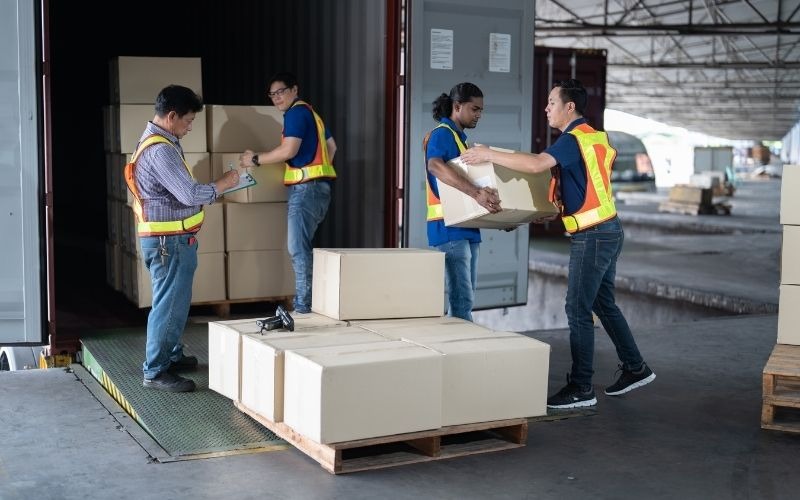
The right eco-friendly packaging material must protect goods, comply with destination-country regulations, and support sustainable logistics goals. Indian exporters typically use a mix of recyclable, biodegradable, and reusable materials depending on product type and shipping distance.
Recyclable Packaging Materials
Recyclable materials are widely accepted in global trade and are easier to integrate into existing export operations. They help reduce waste without compromising packaging strength.
- Corrugated cardboard: Commonly used for outer cartons, corrugated boxes are lightweight, strong, and easily recyclable across most countries.
- Paper-based cushioning: Paper fillers, honeycomb paper, and kraft paper replace plastic bubble wrap while offering adequate protection.
- Metal and glass packaging: Used in specific industries, these materials are fully recyclable and suitable for products requiring rigid protection.
Biodegradable and Compostable Materials
These materials break down naturally and are gaining popularity among exporters supplying sustainability-conscious buyers.
- Bioplastics: Made from renewable sources, bioplastics reduce dependency on fossil fuels and are used for wraps and pouches.
- Moulded pulp packaging: Created from recycled paper, moulded pulp is commonly used for fragile items and electronics.
- Starch-based packing materials: These materials dissolve in water and are often used as void fillers in export cartons.
Reusable and Returnable Packaging
Reusable packaging is ideal for exporters with repeat shipments or long-term buyer relationships.
- Pallets, crates, and bins: Designed for multiple shipment cycles, reusable containers reduce waste and long-term packaging costs.
- Best-use scenarios: Reusable packaging works well for high-volume exports or closed-loop supply chains where returns are feasible.
Selecting the right packaging material depends on shipment duration, handling requirements, and destination regulations. A structured approach helps exporters balance sustainability with product safety and logistics efficiency.
Best Practises for Using Eco-Friendly Packaging in Sustainable Logistics
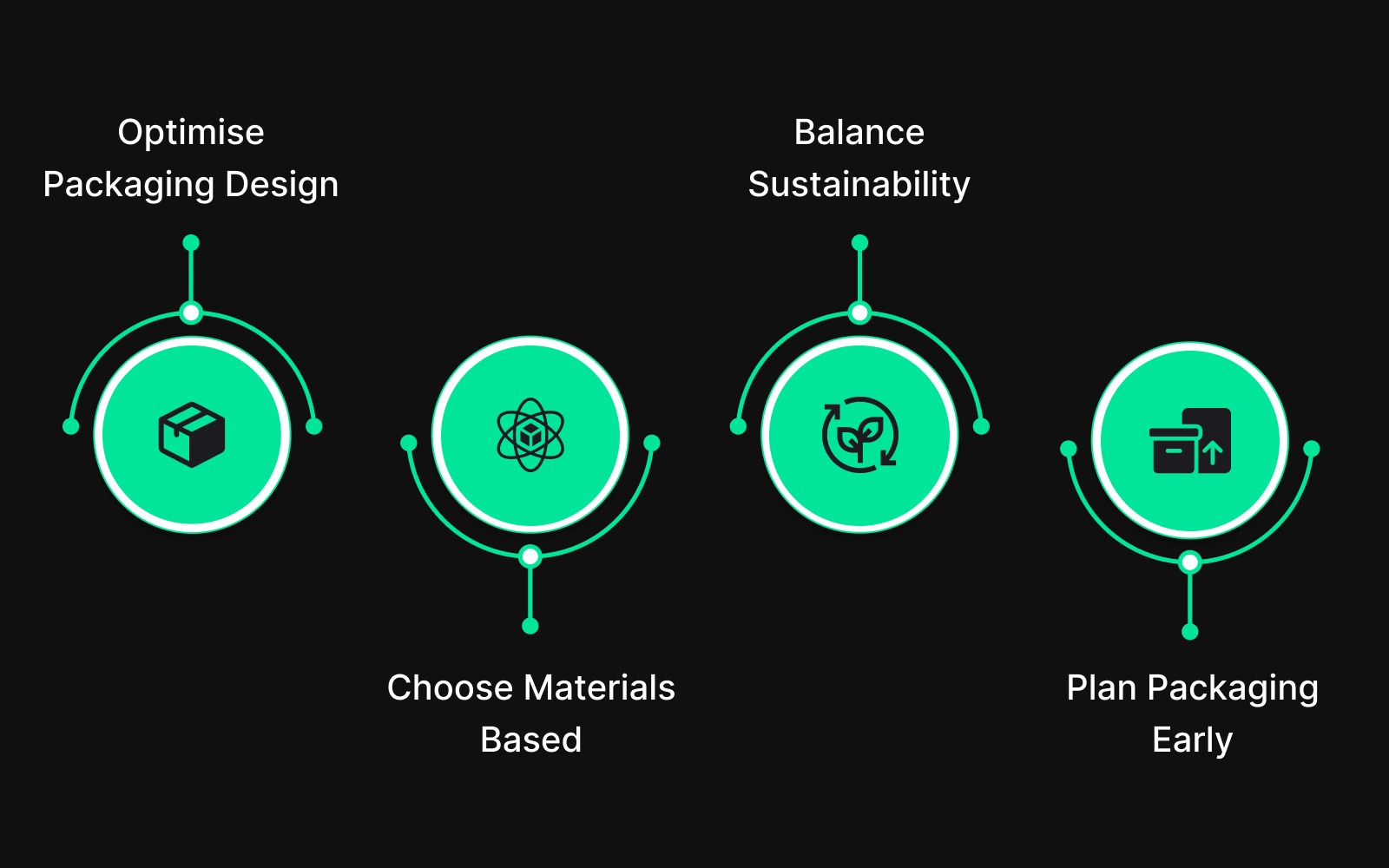
For exporters, sustainable packaging should reduce waste and costs without affecting shipment safety or timelines. The following best practises help maintain this balance.
Optimise Packaging Design
Efficient packaging design reduces material usage and improves container utilisation. Over-packaging increases costs, while under-packaging raises the risk of damage.
- Use right-sized cartons to avoid empty space
- Minimise unnecessary layers of packaging
- Design packaging that supports stackability in containers
Choose Materials Based on Destination Regulations
Packaging compliance varies across countries, and exporters must align materials with import-country requirements. Ignoring these rules can lead to delays or rejected shipments.
- Review the packaging and plastic regulations of destination countries
- Avoid restricted or non-recyclable materials where bans apply
- Maintain documentation related to sustainable packaging materials
Balance Sustainability with Product Protection
Sustainable packaging must still protect goods during long transit periods and multiple handling stages. Damage-related disputes often cost more than sustainable material upgrades.
- Select materials based on product fragility and weight
- Test packaging strength for international transport conditions
- Avoid cost-cutting that compromises shipment safety
Plan Packaging Early in the Export Order Cycle
Packaging decisions should be made at the order or quotation stage, not after shipment planning begins. Early planning avoids last-minute changes and cost overruns.
- Align packaging with production and logistics timelines
- Coordinate with freight forwarders on container requirements
- Factor packaging costs into export pricing
By following these best practises, exporters can integrate a structured, data-driven approach that ensures consistency across export orders.
Also Read: CFR vs. CIF: Compare and Choose the Best Shipping Term
Regulatory and Compliance Considerations for Export Packaging

Customs authorities and environmental regulators closely monitor export packaging across countries. Non-compliant packaging can result in shipment delays, penalties, or rejections at destination ports.
Key compliance aspects exporters must consider include:
- Extended Producer Responsibility (EPR): Many countries require exporters to take responsibility for packaging waste generated in the importing country. This includes proper labelling and material disclosure.
- Plastic packaging restrictions: Single-use plastics are banned or restricted in several markets. Exporters must avoid prohibited materials to prevent customs issues.
- Wood packaging regulations: Wooden pallets and crates must comply with ISPM-15 standards to prevent pest transmission during international trade.
- Environmental labelling requirements: Some destinations require clear labelling that indicates recyclability or the material composition of packaging.
In addition to material selection, exporters must maintain accurate documentation to prove compliance. Packaging details often appear in commercial invoices, packing lists, and customs declarations. Any mismatch between documents and actual packaging can trigger inspections or fines.
Challenges Exporters Face with Sustainable Packaging

While eco-friendly packaging offers long-term benefits, exporters often face practical challenges during adoption. These issues become more complex in international logistics, where timelines are longer, and compliance requirements vary across countries.
Key challenges exporters encounter include:
- Limited supplier availability: Reliable suppliers for eco-friendly packaging materials may not be available for all product categories or export volumes.
- Inconsistent material performance: Some sustainable materials may not offer the same durability as traditional packaging, increasing the risk of damage during transit.
- Regulatory complexity across destinations: Packaging rules differ by country, making standardisation difficult for exporters shipping to multiple regions.
- Longer decision and approval cycles: Sustainable packaging often requires internal testing, buyer approvals, and coordination with logistics partners.
- Lack of centralised data: Packaging details, costs, and compliance information are frequently scattered across emails and spreadsheets, leading to errors.
These challenges highlight the need for structured planning and better visibility across export orders. Without proper systems in place, sustainable packaging initiatives can become reactive rather than strategic, increasing both costs and operational risk.
Also Read: Differences in EXW and FOB: A Simple Guide
How Pazago Supports Sustainable Logistics Execution
Sustainable packaging delivers real value only when it integrates smoothly into logistics execution. Changes in packaging affect freight cost, container utilisation, loading methods, and in-transit handling. Without reliable logistics support, even well-intentioned packaging decisions can lead to delays or cost overruns.
Pazago supports exporters by ensuring that eco-friendly packaging choices align with freight planning, container execution, and shipment visibility, helping sustainable logistics run predictably at scale.
- Competitive freight rates through long-term industry relationships: Stable freight pricing helps exporters adopt lighter or alternative packaging materials without exposure to sudden cost increases linked to weight or volume changes.
- Comprehensive pre-shipment and post-shipment support: Hands-on coordination around schedules, cargo readiness, and documentation handovers helps exporters manage packaging changes without disrupting shipment execution.
- Assured container booking and smooth loading coordination: Confirmed container availability and coordinated loading reduce the need for last-minute repacking, supporting consistent use of optimised, eco-friendly packaging.
- Daily Status Reports (DSRs) for complete shipment visibility: Regular updates on container movement, ETD and ETA, transhipments, and alerts help exporters monitor redesigned packaging during transit and respond quickly to exceptions.
- Support for exporters of all sizes: Whether testing sustainable packaging on a single LCL shipment or rolling it out across high-volume routes, exporters receive consistent logistics support aligned to their scale.
By aligning sustainable packaging choices with reliable freight planning, assured container execution, and clear shipment visibility, Pazago helps exporters make eco-friendly logistics work in real-world international shipping.
Actionable Tips for Exporters Adopting Eco-Friendly Packaging
Transitioning to eco-friendly packaging does not require a complete overhaul of export operations. Exporters can start small and scale sustainable practises gradually while maintaining logistics efficiency and compliance.
The following practical tips help exporters adopt sustainable packaging without disrupting daily operations:
- Start with high-volume export products: Focus on products shipped frequently, as small packaging improvements here deliver the highest impact.
- Audit current packaging practises: Review existing materials, packaging layers, and costs to identify quick sustainability wins.
- Engage logistics partners early: Freight forwarders can provide input on container optimisation and packaging suitability for long transit periods.
- Test materials before full-scale adoption: Conduct trial shipments to ensure eco-friendly materials perform well under international handling conditions.
- Align packaging decisions with pricing strategy: Factor sustainable packaging costs into export pricing to protect margins.
- Document packaging specifications clearly: Maintain consistent records to avoid confusion during customs checks or buyer audits.
By taking a phased and data-driven approach, exporters can integrate eco-friendly packaging into sustainable logistics smoothly. Early planning and coordination are key to minimising risks and maximising long-term benefits.
Conclusion
Eco-friendly packaging plays a practical role in sustainable logistics when it supports safe handling, efficient loading, and predictable movement across international supply chains. By choosing the right materials and planning packaging with transport conditions in mind, exporters can reduce environmental impact while protecting cargo integrity during transit.
Sustainable packaging becomes scalable when it is supported by reliable freight planning, assured container availability, and clear shipment visibility. With consistent logistics execution and coordination, exporters can adopt eco-friendly packaging without introducing delays or operational friction.
Looking to support sustainable logistics without disrupting shipment execution? See how Pazago helps exporters reduce delays through stable freight rates, assured container bookings, and clear shipment visibility across international routes. Get in touch to learn more.
FAQs
1. Is eco-friendly packaging mandatory for exports from India?
Eco-friendly packaging is not universally mandatory, but many importing countries enforce strict rules on plastics, recyclability, and packaging waste. Indian exporters must comply with destination-country regulations to avoid shipment delays or penalties.
2. Does sustainable packaging increase export shipping costs?
Sustainable packaging may have higher upfront material costs, but optimised packaging often reduces shipment weight and container space usage. Over time, this can lower logistics costs and improve overall efficiency.
3. How can exporters ensure packaging compliance across multiple countries?
Exporters should review destination-specific packaging regulations and maintain accurate documentation. Using centralised export management systems helps track packaging details and ensures consistency across orders and documents.
4. What types of products benefit most from eco-friendly packaging?
High-volume and repeat-shipment products benefit the most, as small packaging improvements create high cost and sustainability gains over time.
5. How can technology help manage sustainable packaging efficiently?
Technology enables exporters to record packaging details at the order level, coordinate across teams, track costs, and maintain compliance-ready documentation throughout the export lifecycle.