.png)


Export Business Ideas with Low Investment: A Practical Market Guide for 2026

Optimize your business: use unlimited savings with Pazago fulfilled now!
Get Started ->Export businesses have emerged as a promising avenue for entrepreneurs and small business owners looking to tap into global markets. In FY 2025‑26, India’s exports reached all‑time highs, with total shipments of goods and services hitting approximately $825 billion, up over 6 % year‑on‑year despite global trade challenges.
Small and medium‑sized enterprises are also contributing to this growth. Indian sellers on global e‑commerce platforms reported more than $20 billion in exports in 2025 alone, with thousands of businesses from non‑metro regions joining the export ecosystem.
Low‑investment export ventures allow startups and small‑scale manufacturers to test international markets without committing huge financial resources. By focusing on niche products, using online marketplaces, and targeting specific buyer segments, entrepreneurs can achieve profitability while managing risks effectively.
This guide aims to provide practical insights into export business ideas that require minimal investment, along with market research tips, compliance considerations, and actionable steps to start selling products overseas.
Overview:
- Low-investment export businesses enable entrepreneurs to enter global markets using niche products, digital platforms, and minimal upfront capital investment.
- Selecting high-demand, high-margin products like handicrafts, organic foods, eco-friendly goods, and apparel improves profitability.
- Proper market research, regulatory compliance, and accurate documentation are essential to avoid delays, penalties, and unexpected costs in exports.
- Using online marketplaces, government incentives, and efficient logistics helps exporters scale gradually while controlling risks and operational expenses.
Benefits of Low-Investment Export Businesses

Starting an export business with minimal investment offers multiple advantages for entrepreneurs aiming to expand globally without excessive financial risk.
- Lower Capital Requirement: Unlike large-scale manufacturing or full-fledged export operations, low-investment ventures allow you to start with a small budget. You can begin by exporting small batches or using dropshipping and supplier networks, reducing upfront costs.
- Reduced Financial Risk: Limited investment means lower exposure if the business faces market fluctuations, international demand shifts, or regulatory changes. This provides flexibility to pivot or diversify products quickly.
- Access to Global Markets: Even small businesses can reach international buyers through online marketplaces, trade fairs, and B2B platforms. Low-investment strategies allow entrepreneurs to test market demand without heavy commitments.
- Scalability: Starting small allows exporters to scale operations gradually based on market response. You can increase production, expand product lines, or enter new countries once initial orders are successful.
- Opportunity for Niche Products: Low-investment export ventures are ideal for niche products, such as handicrafts, organic food, or specialised apparel, which often have high demand overseas and limited competition.
By using these benefits, entrepreneurs can strategically grow their export business while keeping costs manageable and reducing exposure to financial and operational risks.
Also Read: Process of Preparing for Export Customs Clearance
Top Low-Investment Export Business Ideas for 2026

For aspiring exporters, choosing the right product is critical. Here are some practical, low-investment export ideas that align with current global demand trends:
1. Handmade and Artisan Products
Handmade and artisan goods, including jewellery, handicrafts, home décor items, pottery, and traditional textiles, continue to perform strongly in international markets. Global buyers increasingly value authenticity, craftsmanship, and cultural storytelling, making artisan products less price-sensitive than mass-produced alternatives.
From a low-investment perspective, these products are attractive because they can be sourced directly from local artisans, self-help groups, or small workshops without requiring large production runs. Exporters can start with limited SKUs, test demand, and expand collections based on buyer feedback.
Why this works for low investment:
- Small batch production reduces upfront capital requirements
- No heavy machinery or manufacturing infrastructure needed
- High perceived value allows better margins even at low volumes
Key considerations:
- Consistency in quality and finishing is critical
- Proper packaging is required to prevent damage during transit
- Clear product descriptions and origin stories improve buyer confidence
Platforms like Etsy, Amazon Handmade, and curated B2B marketplaces allow exporters to reach international buyers without investing heavily in marketing or distribution networks.
2. Organic and Speciality Food Products
Organic and speciality food products, such as spices, teas, coffee, dried fruits, superfoods, and gourmet snacks, remain among the most promising low-investment export categories. Global consumers are increasingly focused on health, traceability, and ethically sourced food, especially in premium retail and foodservice segments.
Exporters can begin with small consignments, private-label offerings, or bulk B2B supply to distributors, minimising inventory risk. Many Indian-origin food products also benefit from strong diaspora demand, creating stable entry markets.
Why this works for low investment:
- High value-to-weight ratio improves shipping economics
- Strong repeat purchase potential once quality is established
- Ability to start with limited SKUs and expand gradually
Key considerations:
- Compliance is critical: food safety, labelling, and shelf-life standards vary by country
- Certifications such as Organic, Fair Trade, FSSAI alignment, or ISO significantly improve credibility
- Proper storage and moisture-proof packaging are essential
Exporters should carefully select target countries and understand import regulations before shipping, as food items are more closely regulated than non-consumables.
3. Eco-Friendly Products
Sustainability-driven products are no longer niche; they are becoming a mainstream purchasing criterion in many developed markets. Reusable bags, biodegradable packaging, bamboo or wooden household items, compostable tableware, and sustainable lifestyle products are seeing consistent global demand.
For low-investment exporters, eco-friendly products are attractive because they can often be sourced from small manufacturers or produced using simple processes. Many buyers are willing to pay a premium for verified sustainable alternatives, improving margins.
Why this works for low investment:
- Growing regulatory and consumer push for sustainable alternatives
- Products often qualify for premium positioning
- Simple designs reduce manufacturing complexity
Key considerations:
- Sustainability claims must be verifiable to avoid buyer disputes
- Certifications or material disclosures may be required in some markets
- Packaging should align with eco-friendly positioning
Exporters targeting regions with strict environmental regulations, such as the EU, should ensure product documentation and material specifications are accurate and transparent.

4. Apparel and Accessories
Apparel and fashion accessories remain one of the most accessible export categories for small businesses due to flexible production models and diverse market demand. Niche clothing, ethnic wear, scarves, shawls, hats, and customised or print-on-demand apparel perform particularly well in online and boutique retail channels.
Low-investment exporters can work with small manufacturers, tailors, or on-demand printing partners to avoid holding large inventories. Trend-driven collections allow exporters to test markets quickly and pivot designs based on demand.
Why this works for low investment:
- Small production runs reduce inventory risk
- On-demand and made-to-order models preserve cash flow
- Fashion buyers value uniqueness over scale
Key considerations:
- Size standards and labelling vary by country
- Fabric quality and colour consistency must be maintained
- Returns and exchanges can be costly if sizing is unclear
Exporters should focus on differentiation, design, cultural elements, or sustainable fabrics to compete effectively without large marketing budgets.
5. Health and Wellness Products
Health and wellness products such as essential oils, herbal teas, yoga mats, meditation accessories, and wellness lifestyle goods are gaining steady international traction. While consumable supplements are more regulated, many non-ingestible wellness products offer strong opportunities with fewer compliance barriers.
Small-scale sourcing or supplier-based models allow exporters to enter this category with limited capital while targeting wellness-conscious markets.
Why this works for low investment:
- Rising global interest in preventive health and wellness
- Lifestyle products face fewer regulatory hurdles than supplements
- Strong cross-border demand via online channels
Key considerations:
- Ingestible products require strict compliance and destination-country approvals
- Claims must be conservative and well-documented
- Packaging should convey hygiene, purity, and quality
Exporters should carefully evaluate regulations before entering supplement markets and may consider starting with accessories or wellness tools instead.
How to Start a Low-Investment Export Business in 2026?
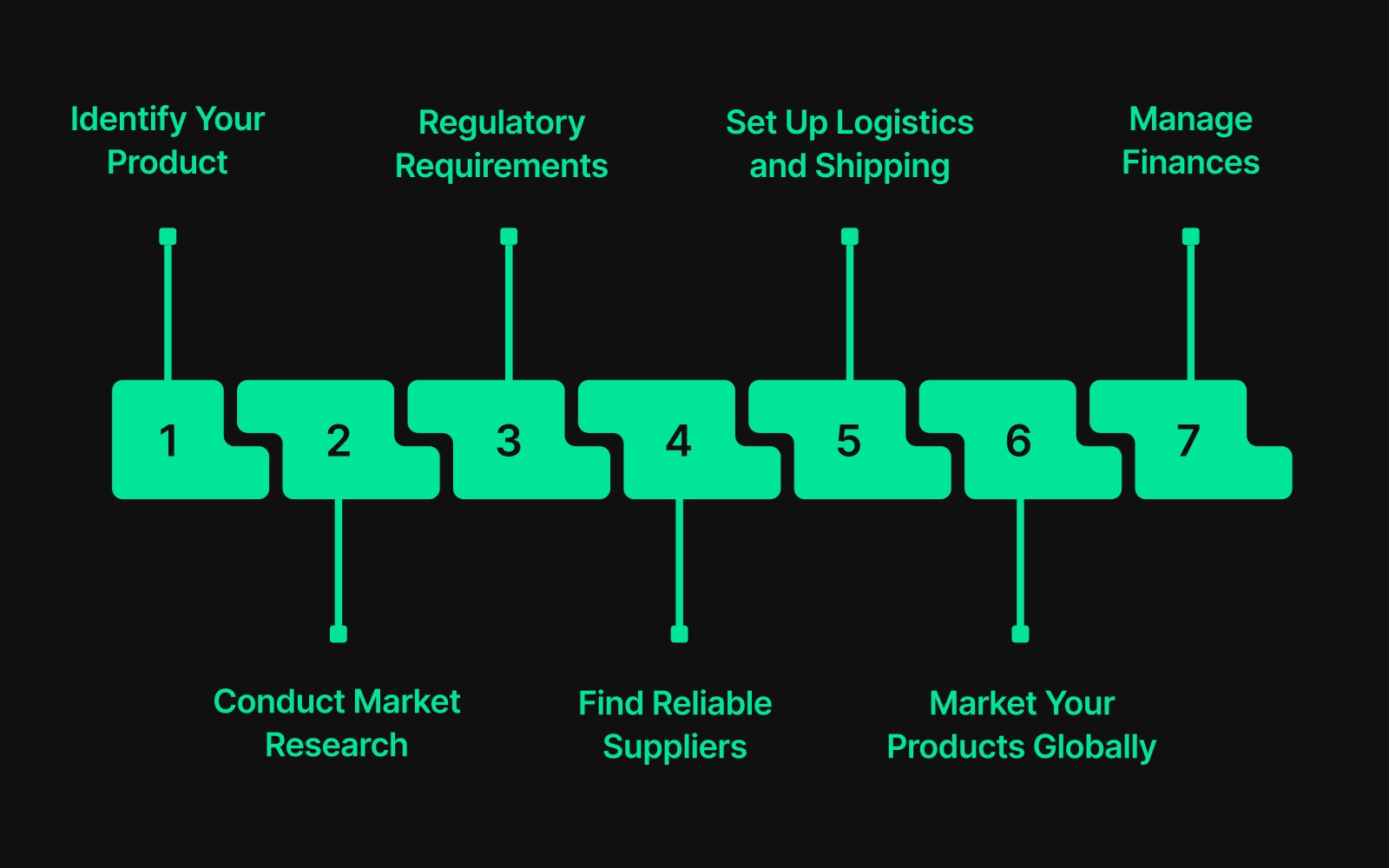
Starting an export business with minimal investment requires careful planning, market research, and efficient operations. Here’s a step-by-step approach for aspiring exporters:
Step 1: Identify Your Product and Niche
Choose products with low production costs, high demand, and export potential. Focus on niche markets like organic foods, handmade crafts, or eco-friendly goods for better profitability. Validate your product by researching global trends and competitor offerings.
Step 2: Conduct Market Research
Identify target countries, demand patterns, and pricing benchmarks. Understand buyer preferences, packaging requirements, and regulatory standards. Use tools like Export.gov, trade statistics, and B2B marketplaces for insights.
Step 3: Understand Regulatory Requirements
Register your business and obtain an Import Export Code (IEC) in India. Comply with product-specific certifications, quality standards, and labelling regulations. Stay updated on customs duty, excise duty (if applicable), and GST implications.
Step 4: Find Reliable Suppliers or Manufacturers
Source products locally or partner with small-scale manufacturers to minimise upfront costs. Evaluate supplier quality, production capacity, and reliability before finalising contracts. Negotiate favourable payment terms to preserve cash flow.
Step 5: Set Up Logistics and Shipping
Choose cost-effective freight forwarding options for international shipments. Understand packaging, labelling, and documentation requirements to prevent customs delays. Consider starting with courier services for small shipments to test international demand.
Step 6: Market Your Products Globally
Use online marketplaces (Amazon Global, Etsy, Alibaba) for international visibility. Build a professional website and use social media to showcase your products. Participate in trade fairs, B2B exhibitions, and virtual expos for networking.
Step 7: Manage Finances and Minimise Investment
Start with small production runs to reduce capital expenditure. Track expenses meticulously and optimise operational costs. Explore government schemes or export incentives for small exporters.
By following these steps, aspiring exporters can enter the global market with minimal investment, mitigate risks, and gradually scale their business.
Also Read: Guide to Export Shipping Container Sizes and Types
Tips to Maximise Profit in Low-Investment Export Businesses

Even with limited investment, exporters can maximise profits by focusing on efficiency, market insight, and value addition. Here are practical tips:
- Choose High-Margin Products: Focus on products that command premium pricing overseas, such as organic foods, handicrafts, or speciality textiles. Avoid low-cost commodities with tight margins, as shipping and regulatory costs can reduce profitability.
- Optimise Supply Chain and Logistics: Consolidate shipments to reduce freight costs. Use cost-effective packaging that protects products without increasing weight. Partner with reliable logistics providers to avoid delays and penalties.
- Use Government Schemes and Incentives: Utilise schemes like the Merchandise Exports from India Scheme (MEIS) or its replacements to reduce costs. Claim duty drawbacks, GST refunds, and export incentives whenever eligible.
- Build Strong Buyer Relationships: Maintain consistent quality and timely delivery to secure repeat orders. Offer flexible payment terms to build trust with international buyers. Collect feedback to improve product offerings and identify new opportunities.
- Focus on Branding and Differentiation: Highlight product uniqueness, sustainability, or handmade aspects to justify premium pricing. Invest in professional packaging and online presence to attract international buyers. Use storytelling to showcase the origin and value of your products.
By implementing these strategies, low-investment exporters can enhance profitability, minimise risk, and build a sustainable international business.
Common Challenges Faced by Low-Investment Exporters
Starting an export business with limited capital can be rewarding but also comes with unique challenges. Awareness and proactive strategies help mitigate risks.
- Limited Working Capital: Insufficient funds can restrict product sourcing, marketing, and logistics. Start with small batches, use pre-orders, and explore financing options like export credit or working capital loans.
- Navigating Compliance and Documentation: Export regulations, customs paperwork, and international standards can be confusing. Use checklists, consult export professionals, and consider digital export management platforms to streamline documentation.
- Building a Global Buyer Base: Finding trustworthy buyers without overspending on marketing can cause trouble. Utilise B2B marketplaces, attend trade fairs (virtual or physical), and use networking platforms to connect with verified buyers.
- Shipping and Logistics Hurdles: High shipping costs, delays, or damage during transit can affect profits. Partner with reliable freight forwarders, negotiate shipping rates, and choose cost-effective yet safe packaging.
- Quality Assurance: Inconsistent product quality can result in returns or loss of credibility. Implement quality checks, supplier audits, and ensure clear product specifications for international standards.
By identifying potential pitfalls and implementing practical solutions, low-investment exporters can minimise risks, maintain buyer trust, and scale their businesses sustainably.
How Pazago Supports Low-Investment Exporters Through Stronger Logistics Execution
Starting an export business with limited capital means margins are tight and timelines matter. While choosing the right product and market is important, freight costs, container access, and shipment reliability ultimately determine whether small exporters can scale sustainably.
This is where dependable logistics becomes a growth advantage.
Pazago supports low-investment exporters by strengthening freight planning, container coordination, and shipment visibility, helping them avoid costly disruptions and operate with greater predictability.
Here’s what that looks like in practice:
- Predictable freight pricing across key routes: Stable rate structures help new exporters protect margins and avoid sudden cost increases that can erode profitability on small consignments.
- Hands-on support before and after shipment: Guidance around shipment schedules, cargo readiness, document handovers, and BL processes reduces mistakes that can delay clearance or increase port charges.
- Confirmed container access and coordinated loading: Assured equipment availability and structured loading support prevent rollovers, especially during peak seasons when small exporters are most vulnerable.
- Clear shipment visibility through structured updates: Regular status reports covering container movement, ETD and ETA changes, and transhipments allow exporters to respond quickly to delays and keep buyers informed.
- Consistent logistics support regardless of shipment size: Whether managing a single LCL movement or expanding to multiple containers, exporters receive the same level of coordination and transparent communication.
By reducing freight uncertainty, preventing avoidable delays, and improving shipment visibility, Pazago helps low-investment exporters scale with greater confidence and operational control.
Conclusion
Starting an export business with limited capital is achievable when decisions are grounded in realistic cost planning and disciplined execution. While product selection and market demand create opportunity, freight costs, container access, and shipment reliability often determine whether small exporters can protect margins and deliver consistently.
Pazago helps low-investment exporters reduce avoidable delays and cost uncertainty through stable freight rates, confirmed container bookings, and structured shipment coordination before and after dispatch. With predictable freight planning and reliable container execution, small exporters can scale more confidently without incurring unnecessary operational risk.
Looking to strengthen the logistics foundation of your export business? See how Pazago supports exporters with assured bookings, stable freight rates, and clear shipment visibility across global routes. Get in touch to learn more.
FAQs
1. What is the minimum investment required to start an export business?
The minimum investment depends on the product, scale, and target market. Many small-scale exporters start with ₹50,000–₹2,00,000 by focusing on niche products and online marketplaces.
2. Which products are ideal for low-investment exports?
Handicrafts, textiles, organic food products, small-scale processed goods, and jewellery are popular low-investment export options with high global demand.
3. How can I find buyers for my export products?
Buyers can be sourced through B2B marketplaces, trade shows, online platforms, government export promotion agencies, and international buyer directories.
4. Do I need special licences to start an export business?
Yes, exporters must obtain an Import Export Code (IEC) and comply with product-specific certifications or approvals for international shipping.
5. How can technology help small exporters manage operations efficiently?
Logistics partners like Pazago help exporters stay informed through structured shipment updates, coordinated execution, and better visibility across freight movement.
6. Can I start exporting while keeping my domestic business running?
Yes, low-investment export businesses often run alongside domestic operations. Proper planning, outsourcing logistics, and using digital tools make this manageable.
7. Are government schemes available for small exporters?
Yes, India offers schemes like MEIS/SEIS, financial incentives, and export promotion programmes to help small exporters reduce costs and enter global markets.