.png)


Exporting from India to Russia: Opportunities, Restrictions & 2026 Outlook

Optimize your business: use unlimited savings with Pazago fulfilled now!
Get Started ->Russia, a market barely on your radar three years ago, is now importing $70.6 billion from India, a 9.2% increase in 2024 alone. But here's where it gets interesting: whilst Russia sends crude oil worth tens of billions to India, India's exports struggle to cross $4.88 billion.
Yet ask any exporter navigating India's export to Russia, and they'll tell you it's not simple. Western sanctions, payment nightmares involving rupee-ruble mechanisms. US tariff threats are already at 50% and potentially 500%, whilst your Russian buyer sits on billions of rupees they can't easily spend.
But hidden beneath this complexity lies a genuine opportunity. India’s exports to Russia represent one of the few corridors with virtually no Western competition. Buyers there are actively looking for alternatives to European suppliers. Government support from both New Delhi and Moscow is also driving this expansion.
This guide cuts through the noise. We'll show you exactly where the opportunities lie, which restrictions actually matter, what 2026 realistically holds, and how to operationalise India's export to Russia without drowning in compliance headaches.
Key Takeaways
- Russia imports $60+ billion more from India than it buys, creating supply gaps in pharmaceuticals, engineering goods, chemicals, and agriculture that Indian exporters can fill.
- Indian pharmaceutical exports reached $577 million in FY25, making India Russia's top supplier, but engineering goods ($90 million vs $2.7 billion market), chemicals, and agriculture offer underexploited potential.
- Over 90% of India-Russia transactions now use rupee-ruble settlements, though banking hesitation and currency conversion complexities mean you need experienced partners and careful payment structuring.
- Tariffs on Indian exports already stand at 50%, with proposed legislation threatening to raise them to 500%, requiring exporters to carefully separate Russian trade from Western market activities and maintain compliance documentation.
- Both governments are committed to achieving this target by identifying nearly 300 high-potential export products and streamlining regulatory pathways. Success requires operational systems that manage documentation, multi-currency payments, and logistics complexity.
Understanding India-Russia Trade in 2026: The Numbers That Matter
The India export to Russia story is nothing short of dramatic. Bilateral trade reached $68.7 billion in FY 2024-25, nearly 5.8 times the pre-pandemic level. Both nations have set an ambitious target of $100 billion by 2030.
But here's the catch: India's imports from Russia hover around $63.84 billion, whilst exports struggle to cross $4.88 billion. This creates a staggering trade deficit that tells you everything you need to know about where opportunities lie.
The Current Trade Snapshot
In 2024, India's exports to Russia stood at $4.84 billion, whilst imports reached $67.15 billion. Russia exports crude oil, fertilisers, and precious stones to India. India sends back pharmaceuticals, engineering goods, and chemicals, but nowhere near enough to balance the scales.
Despite export fluctuations, the long-term trend remains positive. Over the past few years, India-Russia trade has grown at an average annual rate of 8.4%. The message is clear: there's massive untapped potential for Indian exporters willing to navigate the complexities of India's export to Russia.
Also read: Advantages and Importance of International Trade
Top Opportunities for India's Export to Russia
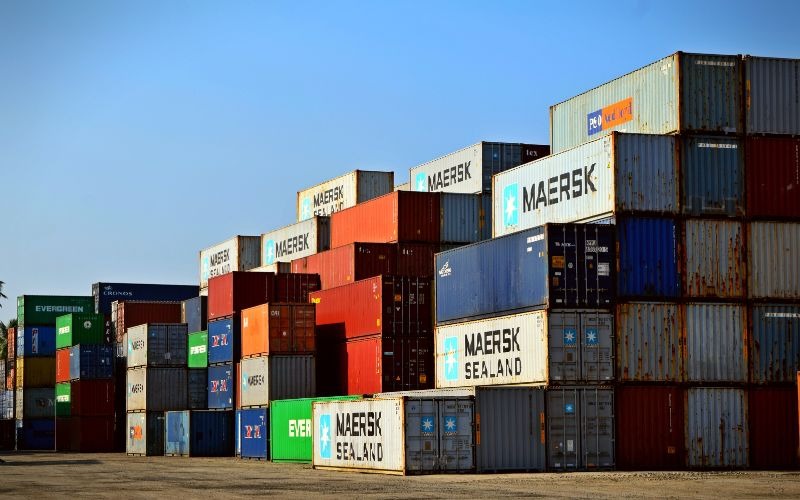
Russia's economic isolation from the West has created supply gaps across multiple sectors. For Indian exporters, these gaps represent once-in-a-generation opportunities.
Pharmaceuticals: India's Strongest Export Link
Pharmaceuticals remain India's strongest export to Russia. Drug formulations reached $577.22 million in FY25, with India now Russia's top pharmaceutical supplier, overtaking Germany.
Russian demand for pharmaceutical imports is $9.7 billion annually. India currently supplies only a fraction of this. That's a massive gap waiting to be filled by Indian generic manufacturers, API producers, and biotech companies. Russian government support for Indian pharmaceutical imports, streamlined regulatory pathways, and demand for affordable generics create ideal conditions for India's export to Russia in this sector.
Engineering Goods: The Most Underexploited Sector
India exports only about $90 million worth of engineering products to Russia, whilst Russian imports in this segment stand at $2.7 billion. Russia needs machinery, auto components, industrial equipment, and light engineering goods. India has the manufacturing capacity and cost competitiveness to supply them.
Chemicals, Agriculture, and Consumer Goods
India currently exports $545 million in organic and inorganic chemicals to Russia. Beyond traditional exports, Russia is increasingly demanding Indian agricultural products, including rice, marine products, spices, and processed foods. Electronics and textiles currently capture less than 1% of the Russian market, signalling massive headroom for growth in India's exports to Russia.

Navigating Restrictions: Sanctions, Payment Challenges, and Regulatory Hurdles
Now for the hard truth. India's export to Russia isn't a walk in the park. You'll face obstacles that require careful navigation.
Western Sanctions and Their Impact on Indian Exporters
The elephant in the room: US and EU sanctions on Russia.
On 6 August 2025, President Donald Trump imposed a 50% tariff on Indian imports, 25% under standard trade grounds and another 25% explicitly linked to India's continued purchase of Russian oil.
But it gets worse. The Sanctioning Russia Act of 2025 could trigger US tariffs on Indian goods as high as 500% if the proposal moves forward.
What does this mean for your India-to-Russia export business? Increased scrutiny on Russian trade activities, potential tariffs on exports to Western markets, banking complications for payment processing, and higher compliance costs. Indian banks are reportedly refusing to process payments to Russia, fearing potential loss of business in North America and Europe.
The Rupee-Ruble Payment Mechanism: Promise and Problems
To bypass dollar-based sanctions, India and Russia developed a rupee-ruble payment mechanism. Over 90% of India-Russia transactions are now conducted in rupees and rubles, but the system is under severe strain, with Russia holding billions of rupees in Indian banks that it cannot easily repatriate or spend.
Here's what you need to know about payment challenges for India's exports to Russia:
The accumulation problem: Nearly $60 billion in rupees have piled up in Vostro accounts because Russia imports far more into India than it exports to India. Russian exporters face liquidity crunches at home and prefer receiving payments in currencies they can actually use.
Banking hesitation: Some multinational banks of Indian origin reportedly refuse to accept payments from Russia or issue electronic Bank Realisation Certificates, citing concerns over potential loss of business in Western markets.
Currency conversion complexities: There's no direct rupee-ruble exchange rate, so two near-simultaneous transactions incur additional costs and forex risks.
Possible solutions being explored include monthly rupee-ruble exchange rate announcements, use of UAE dirhams and Chinese yuan as intermediary currencies, and BRICS Bridge payment mechanisms.
Must read: Top Private Ports in India for Efficient Export Operations
The 2026 Outlook: What's Realistic for India's Export to Russia
Let's cut through the noise and talk about what 2026 actually holds for India's exports to Russia.
The $100 Billion Target: Ambitious but Achievable?
Both countries have set a bilateral trade target of $100 billion by 2030. Is this realistic? Current bilateral trade sits at $69 billion. Required growth is $31 billion over five years. To hit this target, India's exports to Russia need to increase dramatically, potentially doubling or tripling from the current baseline.
Government Initiatives to Boost Exports
India recently identified nearly 300 high-potential export products ranging from engineering goods, pharmaceuticals, and agriculture to chemicals and plastics. This exercise allows Indian authorities to pinpoint areas where India's strengths align with Russia's unmet needs.
The government is also streamlining regulatory approvals for pharma exports, facilitating government-to-government cooperation, exploring a Free Trade Agreement with the Eurasian Economic Union, and strengthening payment confirmation mechanisms.
Sectoral Predictions for 2026
- Pharmaceuticals: Growth to $800 million-$1 billion as regulatory pathways streamline and co-production agreements accelerate.
- Engineering goods: Potential to reach $300-500 million if Indian companies aggressively pursue tenders and industrial partnerships.
- Chemicals and agriculture: Steady growth to $200-250 million as Russian industries seek alternatives to Western suppliers.
- IT services, textiles, and consumer goods: Modest gains as brand presence builds and distribution networks are established.
Total realistic export target for 2026: $1.5-2 billion in goods, plus $300-500 million in services. That's meaningful growth in India's exports to Russia, though it's still far from balancing the trade deficit.
Practical Steps to Start India's Export to Russia
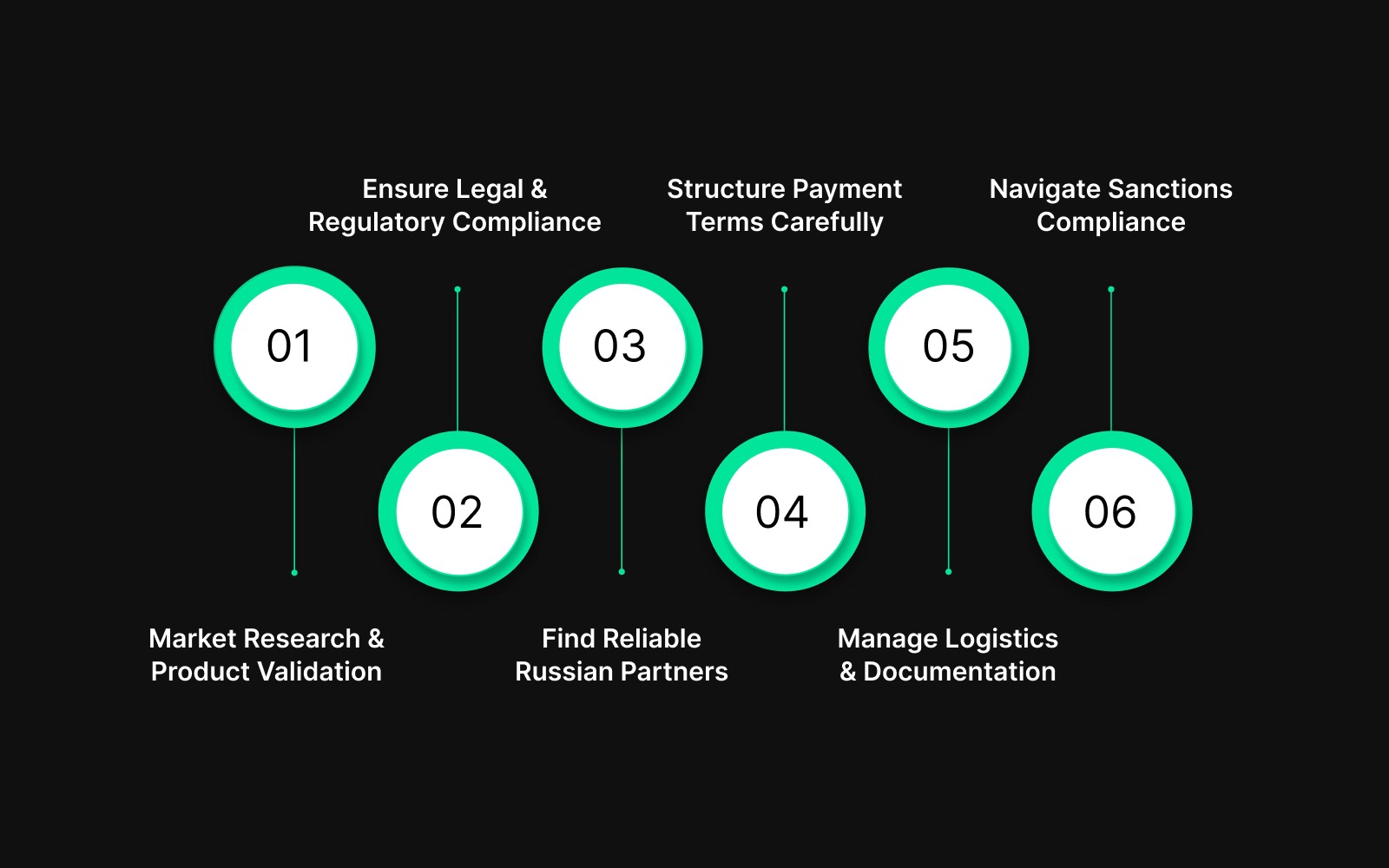
Ready to enter the Russian market? Here's your action plan.
Step 1: Market Research and Product Validation
Before anything else, validate demand. Research Russian import data for your product category, identify supply gaps created by Western sanctions, analyse competitor pricing, and understand Russian quality standards. Use resources like the Indian Trade Portal, Russian customs data, and sector-specific trade councils.
Step 2: Ensure Legal and Regulatory Compliance
For India's exports to Russia, you'll need your Import-Export Code (IEC) from DGFT, GST registration, product-specific certifications (GOST standards for Russia), Russian Sanitary and Epidemiological certificates (for food and pharma), and technical compliance documentation. Russian customs are strict; noncompliance results in cargo holds and penalties.
Step 3: Find Reliable Russian Partners
You'll need distributors or agents familiar with Russian market dynamics, customs brokers experienced in India-Russia trade, freight forwarders with established Russian logistics networks, and banking partners who handle rupee-ruble transactions.
Step 4: Structure Payment Terms Carefully
Given payment complexities, consider advance payment for initial orders, letters of credit through banks experienced in Russia trade, escrow arrangements for larger contracts, currency hedging to manage forex volatility, and partial payment in alternative currencies (dirhams, yuan) if needed. Document everything meticulously for compliance purposes.
Step 5: Manage Logistics and Documentation
For India's export to Russia, expect longer transit times (30-45 days for sea freight), complex documentation requirements, potential customs delays, and insurance requirements covering geopolitical risks.
Key documents include commercial invoice, packing list, bill of lading/airway bill, certificate of origin, product-specific quality certificates, Russian customs declaration, and insurance certificate.
Step 6: Navigate Sanctions Compliance
Protect your business by conducting due diligence on Russian buyers (sanctions lists), maintaining clear documentation of all transactions, consulting with legal advisors on sanctions exposure, separating Russian trade from Western market activities where possible, and continuously monitoring evolving sanctions landscapes.
The complexity of managing India's export to Russia, from multi-currency payments to sanction compliance, can feel overwhelming. That's exactly why exporters are turning to integrated platforms.
Also read: Understanding Shipment Delays in India: Causes & Solutions
How Pazago Supports Logistics Execution for India's Export to Russia?
Exporting from India to Russia is operationally complex. Long transit routes, limited routing flexibility, payment uncertainty, and heightened documentation scrutiny leave little margin for execution errors. In this corridor, most breakdowns happen after the commercial deal is signed, during booking, loading, transit, or post-dispatch coordination.
Pazago supports exporters at this logistics execution layer by bringing structure and predictability to freight movement and shipment coordination.
- Stable Freight Planning Across Volatile Routes: India–Russia trade often faces fluctuating freight availability and sudden cost changes, especially during peak seasons or geopolitical disruptions. Pazago works with established carriers and logistics partners to help exporters plan freight more predictably, reducing last-minute rebookings that disrupt delivery schedules and cost planning.
- Assured Container Booking and Coordinated Loading: Shipments to Russia frequently involve tight vessel windows and limited routing options. Pazago helps exporters secure confirmed container allocation, timely equipment release, and coordinated loading at the factory, CFS, or port. This minimises rollovers and missed sailings that can delay shipments by weeks.
- Daily Shipment Visibility for Long Transit Cycles: With transit times often extending 30–45 days, consistent visibility becomes critical. Pazago provides structured Daily Status Reports covering container movement, ETD and ETA changes, transshipment points, and bill of lading status. This helps exporters stay informed, manage buyer communication proactively, and plan internal follow-ups without relying on fragmented updates.
- Consistent Execution Support Regardless of Shipment Size: Whether exporters are testing the corridor with a single LCL shipment or moving repeated container volumes, Pazago provides consistent coordination and execution support. This is particularly valuable for SMEs entering the Russia market, where even small delays can impact cash flow and buyer confidence.
By strengthening control over freight execution, shipment visibility, and post-dispatch coordination, Pazago helps exporters reduce the operational risk that defines the India-Russia export corridor.
Final Thoughts: Should You Pursue India's Export to Russia in 2026?
India's export to Russia in 2026 offers massive opportunities, supply gaps worth billions, government support on both sides, long-term strategic partnership potential, and sectors where Indian products fit Russian needs perfectly.
But it's not for everyone. The complexities are real: Western sanctions and tariff risks, payment mechanism challenges, regulatory compliance requirements, logistics complications, and geopolitical uncertainties that could shift quickly.
Exporters who succeed in the India-Russia corridor do not rely on reactive logistics. They plan freight early, secure container availability, and maintain consistent shipment visibility across long transit cycles. If you want to evaluate how this execution discipline is built in practice, reaching out to Pazago can help you assess whether your logistics framework is ready for this route.

Frequently Asked Questions
Q1: Is India's export to Russia still profitable despite sanctions and payment challenges?
Yes, but it depends on your sector and risk tolerance. Pharmaceuticals, engineering goods, and chemicals are highly profitable due to strong Russian demand and limited competition. However, factor in compliance costs, payment delays, and potential risks in the Western market. Sectors with 15-25% margins can absorb these complications; lower-margin businesses may struggle.
Q2: What's the best way to receive payment for an export from India to Russia in 2026?
There's no perfect solution currently. Most exporters use a combination: advance payment for initial orders, letters of credit through experienced banks for larger contracts, and partial payment in alternative currencies (dirhams, yuan) to avoid rupee accumulation issues. Avoid 100% credit terms until you've established trust and payment track records.
Q4: Will US tariffs affect my India export to Russia business?
Potentially. The US has imposed 50% tariffs on Indian goods, partly citing Russian oil imports. The proposed Sanctioning Russia Act could push tariffs to 500%. If you export to both US and Russian markets, you face a strategic choice: separate business entities, accept tariff costs, or focus on one market. Consult legal and tax advisors before making major commitments.
Q5: How long does it take to ship goods from India to Russia?
Sea freight typically takes 30-45 days from Indian ports to Russian ports like Vladivostok or St. Petersburg. Air freight reduces this to 5-7 days but costs significantly more. Factor in customs clearance (3-7 days) and inland transportation. Total door-to-door time: 40-60 days for sea, 10-14 days for air.
Q6: Can small and medium exporters succeed in exporting to Russia from India?
Absolutely. SMEs actually have advantages: flexibility, specialisation in niche products, and the ability to move quickly. Start with smaller orders, validate demand, establish reliable partners, and scale systematically. Use platforms like Pazago to manage complexity without the need for large back-office teams.