.png)


Smart Ports: Bringing Predictability to Export Supply Chains
Optimize your business: use unlimited savings with Pazago fulfilled now!
Get Started ->Your export plan does not break at the factory gate. It breaks when port timelines stop behaving the way you were promised. You feel it when ships arrive bigger than your plan. A single ultra-large vessel can carry over 24,000 TEUs, and your yard has to absorb the surge.
You also face a scale that punishes slow handoffs. Global container throughput reached 815 million TEUs in 2023, so every missed slot turns into a visible queue.
That strain explains why smart ports moved from concept to budget. The smart port market is projected to reach USD 14.64 billion by 2030, because you need real-time decisions, not delayed updates.
In this article, you will see how ports use connected systems, automation, and smarter coordination to keep cargo moving without chaos.
Key Takeaways
- Smart ports turn ports from fragmented chokepoints into coordinated, data-driven ecosystems, reducing delays and making supply chains more predictable.
- Real-time visibility, automated decision-making, and seamless stakeholder coordination let ports handle higher volumes efficiently without costly expansions.
- They enable faster vessel turnaround, better inland transport planning, and leaner supply chains by reducing variability and unnecessary buffer times.
- Smart ports also enhance resilience, sustainability, and workforce modernisation, making them a strategic advantage for global trade.
Why Traditional Port Operations Are No Longer Sufficient
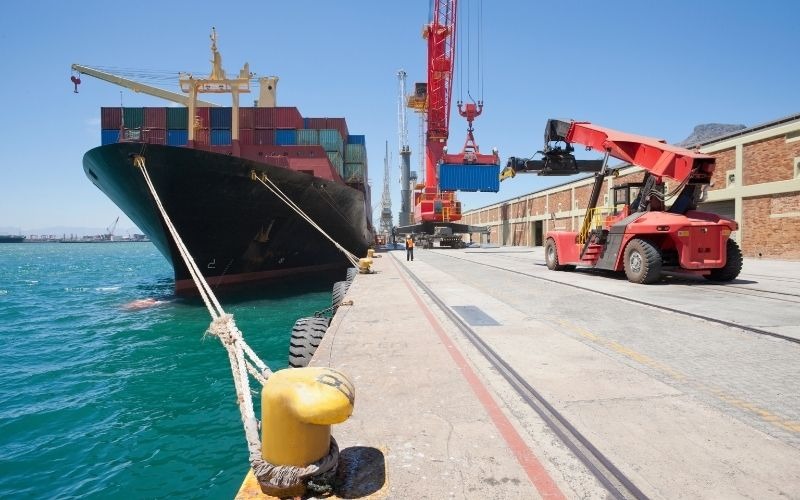
The real problem is fragmentation. Terminal operators, shipping lines, customs authorities, freight forwarders, and inland carriers all work on separate systems, timelines, and priorities.
When you’re coordinating berthing, discharge, inspections, and onward transport, that fragmentation results in dozens of manual handoffs, often managed via email and phone. Here’s how those gaps impact execution:
- You find out too late. Customs holds surface after containers are already stacked. By then, delays are unavoidable.
- Plans change without alignment. Equipment failures or berth shifts don’t reach every stakeholder in time.
- Schedules don’t reflect reality. Trucks arrive before cargo is cleared, leaving drivers idle and capacity wasted.
Each disconnect adds delay, and those delays turn into direct costs. You absorb port fees, miss delivery windows, and strain relationships with inland carriers whose drivers sit idle at the gate.
Because ports are supply-chain chokepoints, these delays don’t stay local. A two-day disruption at a major hub cascades into vessel schedule slippage, inventory shortages for just-in-time manufacturers, and penalties for freight forwarders who promised fixed arrival dates.
These challenges point to a clear conclusion: ports need a smarter, more integrated way to manage operations.
What Defines a Smart Port in Practice
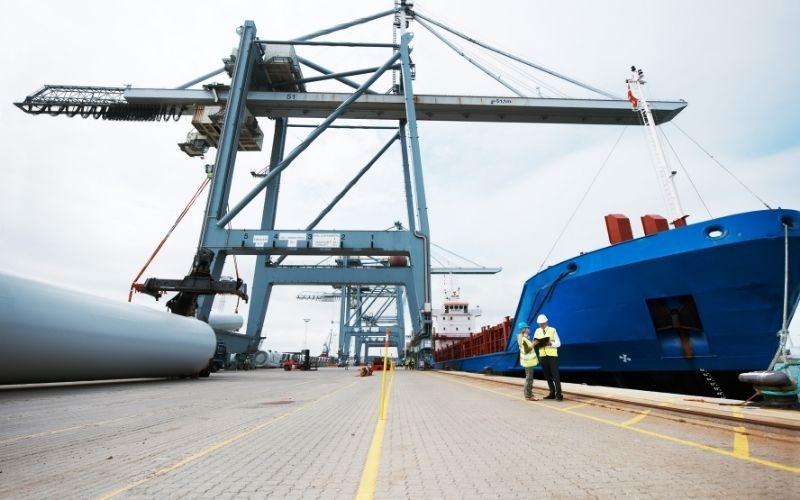
Most ports use digital tools, such as vessel tracking, terminal operating systems, and electronic documentation. But adopting technology in silos doesn’t make a port smart. What matters is whether those tools work as isolated upgrades or as a single operational intelligence layer that coordinates decisions across the port.
Think of the difference between checking multiple weather apps and having your schedule automatically adjust when the forecast changes. One gives you information. The other turns information into action.
A smart port works the same way. It functions as a decision-making ecosystem where changes in one area automatically trigger coordinated responses across others. This way, you’re not relying on calls, emails, or manual follow-ups to stay aligned. In practice, that looks like this:
- Arrival changes trigger immediate re-planning: When a vessel’s ETA moves up by hours, berth assignments and yard plans update automatically.
- Regulatory and operational teams stay synchronised: Customs receives revised inspection schedules based on the same data update.
- Downstream partners get accurate signals: Trucking companies receive adjusted pickup windows that reflect actual cargo readiness.
Instead of reacting after disruptions occur, you stay ahead of them by maintaining control across port and inland operations with shared, real-time intelligence.

Also Read: Top Private Ports in India for Efficient Export Operations
Behind this coordinated decision-making is a set of core capabilities that turn data into action across the port.
Core Capabilities That Enable Smart Port Operations
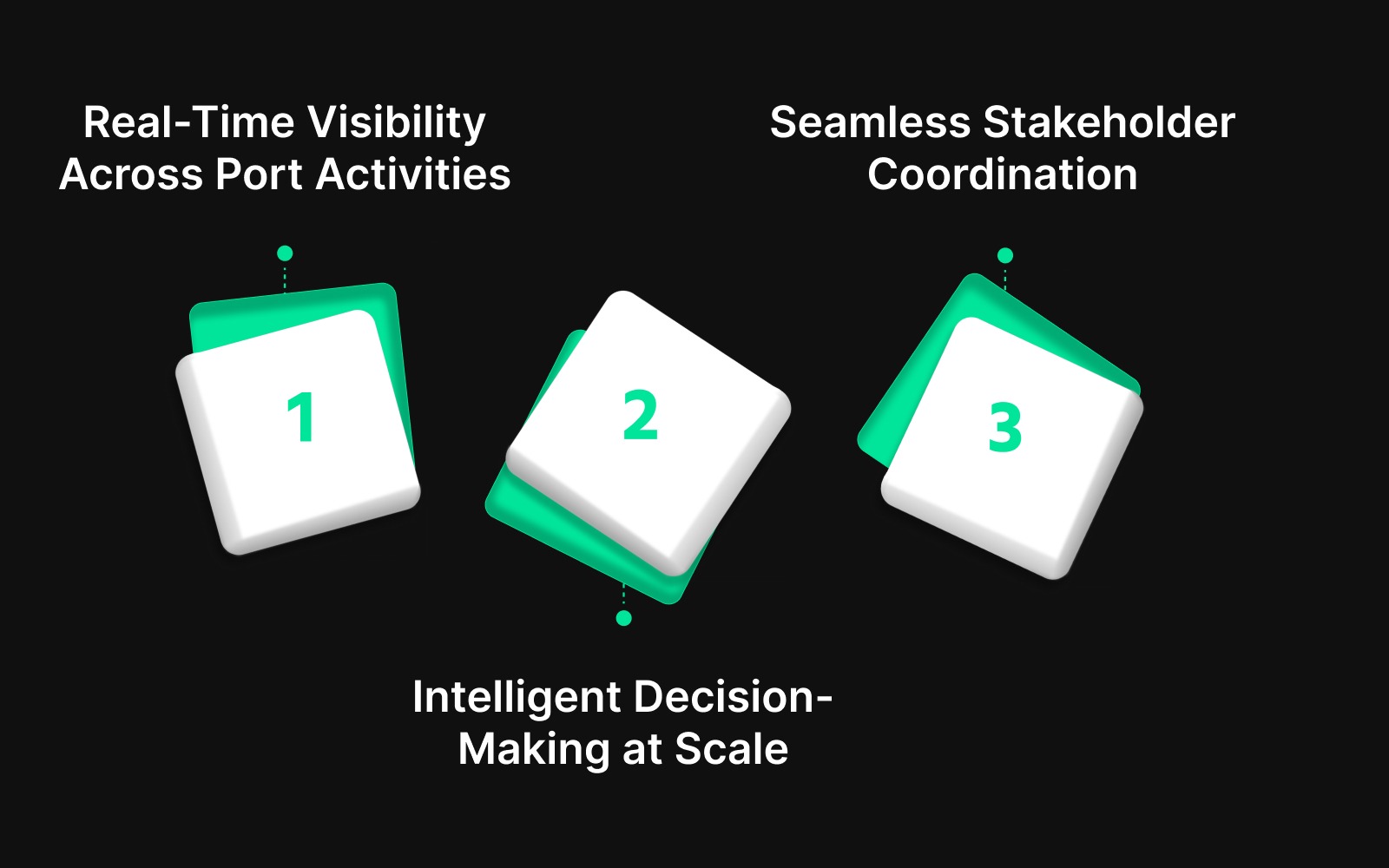
From real-time visibility to intelligent decision-making and seamless stakeholder alignment, these core functions enable ports to handle higher volumes with fewer delays.
1. Real-Time Visibility Across Port Activities
In a traditional port, a crane breakdown creates delays: containers sit idle, trucks wait, and yard space fills.
Smart port visibility changes that. The system instantly shows which containers are blocked, what equipment can take over, and how schedules should adjust. It predicts secondary effects, such as yard congestion, and resolves them before they occur.
It’s not just tracking location; it’s knowing operational state. For example, a container in row 14 matters less than knowing it’s scheduled for loading tomorrow at 0600 but blocked by three other containers.
2. Intelligent Decision-Making at Scale
Thousands of variables shift constantly in port operations. One vessel discharge may require 500 crane moves, each of which depends on yard space, transport, customs, and equipment. Humans can’t optimise all this in real time.
Computational decision-making handles complexity, offering clear options with trade-offs. For instance:
- Prioritising containers for urgent trucks: how does that affect berth occupancy?
- Sequencing moves to minimise crane repositioning: does that create congestion later?
You still make the call, but with insights humans alone couldn’t process.
3. Seamless Stakeholder Coordination
Every container move involves multiple parties: shipping lines, customs, trucking companies, and freight forwarders. Sequential handoffs create delays, errors, and miscommunication.
Smart ports remove handoffs. When customs clears a shipment, everyone relying on that info, including terminal operators, shipping lines, and truckers, sees it instantly. No waiting, no updates lost, no confusion. You can act immediately and efficiently.
Also Read: Guide To Understanding Common Port Charges And Dues
By combining visibility, intelligence, and coordination, smart ports are reshaping how goods move across global supply chains.
How Smart Ports Are Reshaping Maritime Logistics
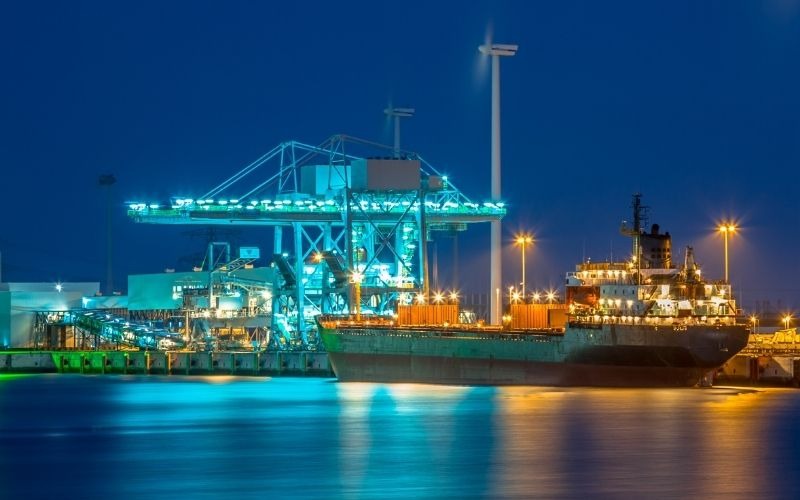
Smart ports transform maritime logistics by eliminating small operational delays that add up across thousands of vessel calls each year. They also let you synchronise sea-land logistics more effectively: trucking and rail operations can plan resources around actual cargo availability rather than built-in buffers for delays.
The result is a leaner, more reliable supply chain, where shippers, retailers, and manufacturers can reduce safety margins and operate closer to real-time schedules without risking disruptions. Here’s how smart ports reshape your logistics execution:
- Faster vessel turnaround: Each eliminated step, from berth assignment to departure clearance, reduces waiting time, improving overall operational efficiency.
- Better inland transport planning: You can dispatch trucks and schedule trains confidently, knowing cargo will be ready when expected.
- Lean supply chains: Tighter cargo arrival windows allow you to cut inventory buffers, optimise production planning, and coordinate just-in-time flows.
- Reduced variability: The port becomes a predictable node rather than a source of uncertainty, letting you manage your operations within tighter tolerances.
These operational improvements translate directly into both tangible and strategic benefits for businesses and the wider supply chain.

Operational and Strategic Benefits of Smart Ports
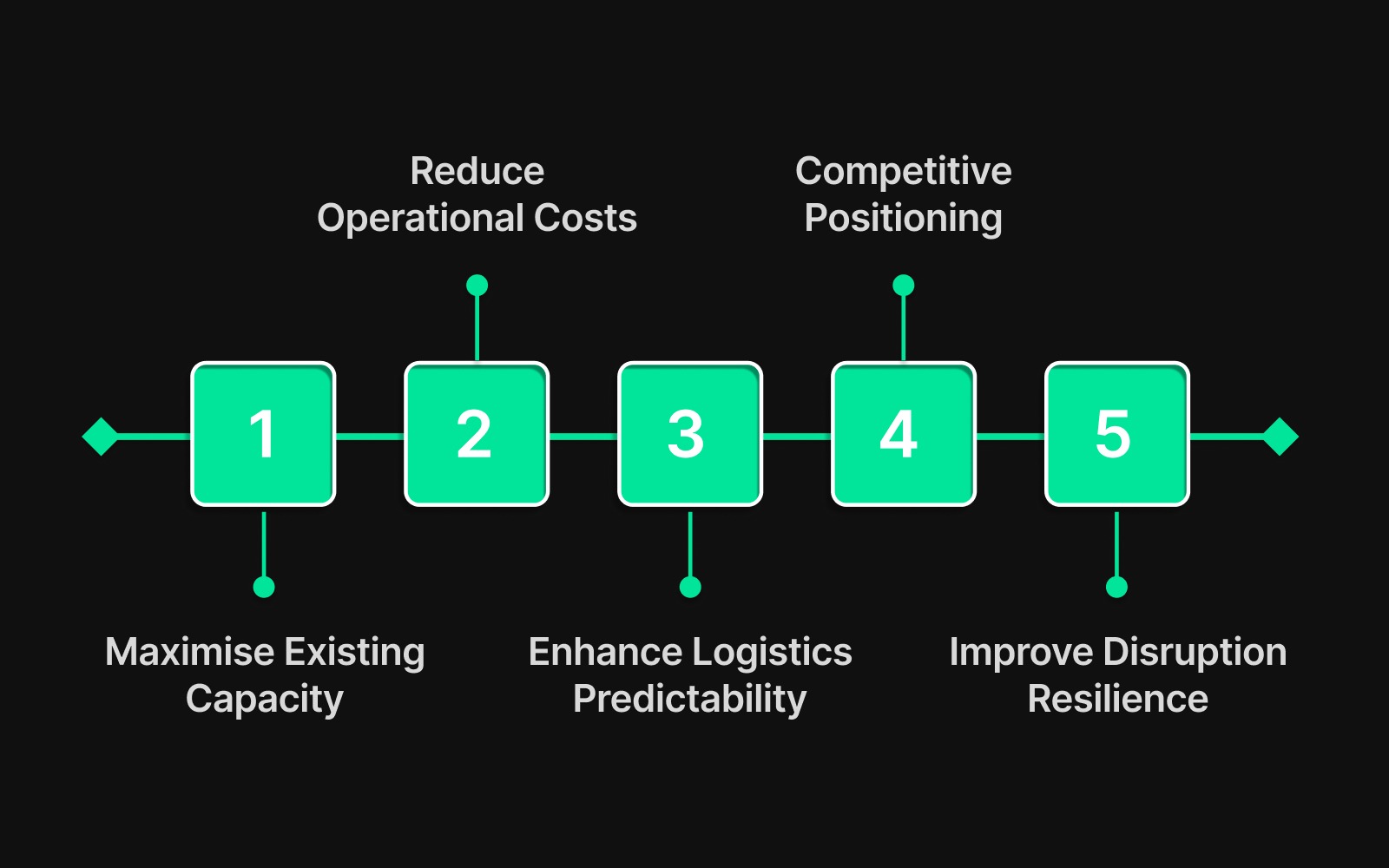
Smart ports let you handle more cargo without costly expansions. When operations run smoothly, vessels spend less time at the dock, containers move faster through storage, and equipment stays productive. This efficiency immediately improves throughput, reduces costs, and lets you plan logistics with confidence.
Here’s how smart ports deliver operational and strategic benefits:
1. Maximise Existing Capacity
Optimised sequencing and resource management let you move more cargo using the same berths, cranes, and yard space.
2. Reduce Operational Costs
Smoother flows reduce delays, idle time, and unnecessary moves, delivering results far faster and at a lower cost than building new infrastructure.
3. Enhance Logistics Predictability
Consistent performance means carriers stop padding schedules, shippers can promise tighter delivery windows, and freight forwarders cut contingency costs.
4. Strengthen Competitive Positioning
Reliable operations attract more business and higher trade volumes, making your port a strategic advantage for the regional supply chain.
5. Improve Disruption Resilience
Adaptive systems let the port reconfigure automatically during weather events, labour actions, equipment failures, or sudden volume spikes. Recovery is faster, and cascading delays are minimised.
Also Read: Shipping Management System in Global Trade
Pazago’s Role in Export Execution Beyond the Port
Pazago supports exporters by strengthening logistics execution around freight planning, container availability, and shipment visibility across international routes. The focus stays on reducing delays, maintaining predictable timelines, and keeping exporters informed throughout transit.
Here’s what that looks like in practice:
- Competitive freight rates through long-term industry relationships: Exporters benefit from stable and predictable freight rates across key trade lanes, helping them plan shipments confidently even when port congestion or seasonal pressure increases.
- Comprehensive pre-shipment and post-shipment support: Exporters receive hands-on coordination around schedules, cargo readiness, BL processes, and post-shipment follow-ups, ensuring continuity beyond the booking stage.
- Assured container booking and smooth loading coordination: Confirmed container availability, timely equipment release, and coordinated loading at factory, CFS, or port locations help prevent rollovers and missed sailings.
- Daily Status Reports (DSRs) for complete shipment visibility: Regular updates covering container movement, vessel ETD and ETA, transhipment milestones, BL status, and alerts keep exporters informed once cargo moves beyond the port.
- Support for exporters of all sizes: Whether managing a single shipment or high-volume container movements, exporters receive consistent attention, transparent pricing, and logistics coordination aligned to their scale.
Pazago works alongside port systems and shipping lines, supporting exporters with freight execution, container coordination, and clear shipment visibility as cargo moves across global supply chains.
Conclusion
Smart ports bring greater predictability to vessel movements, yard operations, and port-side coordination. As global trade volumes rise, this predictability only delivers value when exporters can align their freight planning, container execution, and shipment follow-ups beyond the port gate.
For exporters, Pazago supports this shift by helping reduce delays through stable freight rates, assured container bookings, hands-on pre- and post-shipment support, and clear shipment visibility once cargo is in transit. This allows exporters to plan more confidently, respond faster to disruptions, and keep international logistics running smoothly alongside smarter port infrastructure.
Looking to improve shipment predictability beyond the port? Contact us to understand how Pazago helps exporters manage freight execution, container coordination, and daily shipment visibility across global routes. Get in touch to learn more.
FAQs
1. How do smart ports impact environmental sustainability?
They reduce emissions by optimising vessel and truck schedules, improving energy efficiency with automated systems, and monitoring resource use in real time.
2. Can smart ports enhance cybersecurity?
Yes. They use encrypted data, real-time network monitoring, and strict access controls to protect sensitive cargo, financial, and customs information.
3. How do smart ports support workforce development?
They create tech-focused roles and provide training in robotics, AI, and data analytics, helping staff adapt to increasingly digital port operations.
4. What role do smart ports play in trade compliance?
They automate data capture and reporting to meet customs, safety, and environmental regulations, reducing risks of fines, delays, and shipment errors.
5. How do smart ports aid disaster preparedness?
Real-time monitoring and predictive analytics enable early hazard detection and rapid response planning, minimising disruptions to port operations and supply chains.